


Online Catalog

This volume is the first illustrated archaeological atlas of Easter Island (Rapa Nui). Discovered by Polynesian explorers ca. 900 CE, Rapanui society encountered the Western world for the first time in 1722, an event followed by 48 years of isolation until the next foreign ship appeared on the...
About the middle of the first millennium BC, continental East Asia saw the rise of a market economy in which a metallic currency was beginning to play an important role. The following centuries were a time of unprecedented economic florescence. Technological innovations and intensification in the...
The Chengdu Plain Archaeological Survey (CPAS), was an international collaborative archaeological project that took place over the course of five field seasons starting in 2005 under the direction of Rowan Flad (Harvard), Pochan Chen (National Taiwan University), Gwen Bennett (Washington University...
Dunefield Midden on South Africa’s west coast is one of the world’s largest and best-preserved campsites of past foragers. Covered by windblown sand soon after abandonment, it provides a snapshot of domestic life for some of the subcontinent’s last precolonial peoples. The site’s shallow, intact...
This volume presents a study of local landscape histories in the Kahramanmaraş valley—a previously understudied, but pivotal, crossroads along the Syro-Anatolian frontier. The Holocene vegetation history is explored in relation to climatic changes and human impact through the pollen analytical...
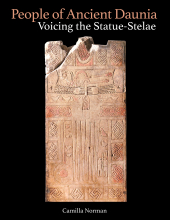
The statue-stelae of Early Iron Age Daunia (north Apulia, Italy), a group of stone slabs, are each incised to represent the garb and accoutrements of a person. They detail the clothing and adornment worn by men and women in full regalia, plus, through additional figurative images drawn on the robes...

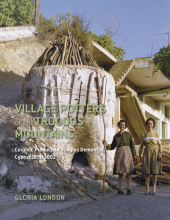
This volume is a study of four generations of female potters working in a remote Cypriot mountain village. Their coil-built jars, jugs, cookware, beehives, ovens, and decorative pots are the subject of Gloria London’s ethnoarchaeological research, including her quantitative data on pot dimensions,...
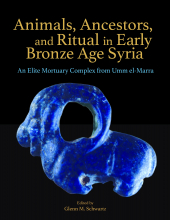
This book is a final report of the excavation of Early Bronze Age remains at Tell Umm el-Marra (perhaps ancient Tuba) on the Jabbul plain of northern Syria, conducted 1994–2010. In the Early Bronze Age, urban, complex societies first emerged in Syria. By focusing on a “second tier” urban center,...
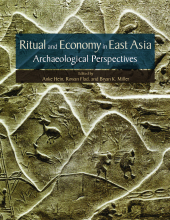
In commemoration of Lothar von Falkenhausen’s 60th birthday, this volume assembles eighteen scholarly essays that explore the intersection between art, economy, and ritual in ancient East Asia. The contributions are clustered into four themes: “Ritual Economy,” “Ritual and Sacrifice,” “Technology,...
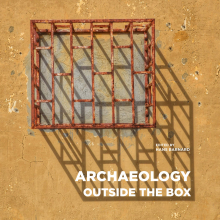
Archaeology Outside the Box is an examination of archaeology from some surprising and unexpected points of view by anthropologists, archaeologists, architects, and artists, including subjects as up to the minute as the Covid-19 pandemic and the Black Lives Matter movement, homelessness, and...
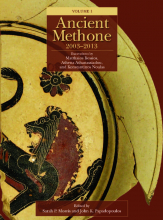
Excavations at ancient Methone since 2003 by the Greek Ministry of Culture have uncovered remains from the Late Neolithic period through the fourth-century B.C. destruction by Philip II of Macedon. These discoveries extend the history of the city, a colony of Eretria (Euboia) since the late eighth...
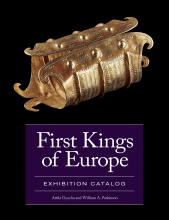
This catalog accompanies an international exhibition, "First Kings of Europe," and another volume, First Kings of Europe: From Farmers to Rulers in Prehistoric Southeastern Europe, that examine the artifacts and cultures of this area from the Neolithic to the Iron Age. Over several millennia, early...

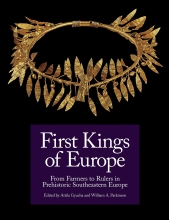
Over several millennia, early agricultural villages in southeastern Europe gave rise to tribal kingdoms and monarchies, replacing smaller, more egalitarian social structures with complex state organizations led by royal individuals invested with power. In this book, which accompanies an...
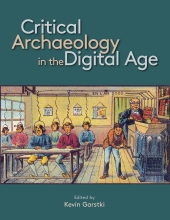
“This well-edited volume successfully investigates several of the pre-eminent challenges facing contemporary archaeology, in particular those posed by archaeology’s growing reliance on digital archives and data-heavy analytical tools.”- Iain MacDonald, Institute of Archaeology, University College...

Winner of the 2023 Society of African Archaeologists Book AwardKirikongo is an archaeological site composed of thirteen remarkably well-preserved discrete mounds occupied continually from the early first to the mid second millennium AD. It spans a dynamic era that saw the growth of large settlement...
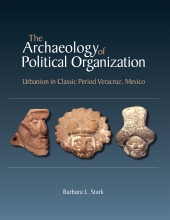
In this volume, Barbara Stark examines settlement in the coastal plain of lowland Mesoamerica, which was richly endowed with fertile soil and valued tropical resources such as jaguars, cacao, avian species with bright plumage, and cotton. The book provides basic archaeological data about regional...
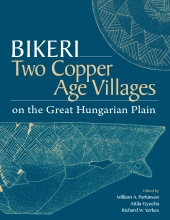
The transition from the Neolithic period to the Copper Age in the northern Balkans and the Carpathian Basin was marked by significant changes in material culture, settlement layout and organization, and mortuary practices that indicate fundamental social transformations in the middle of the fifth...

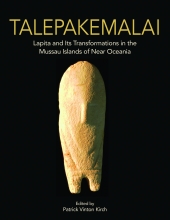
"This volume has admirably achieved it stated aims, providing us all and future generations with one of the most detailed analyses of a major Lapita site anywhere." - Dr. Stuart Bedford, Australian National University for Archaeology in OceaniaThe Lapita Cultural Complex—first uncovered in the mid-...

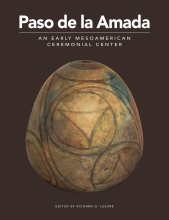
"The sheer amount of contextual information reported, the excellent imagery, and the rich detail added to the published literature for early village life in Mesoamerica combine to make this volume indispensable for the scholar of the Early Formative period."- Dr. Guy David Hepp, CSU Santa Barbara...


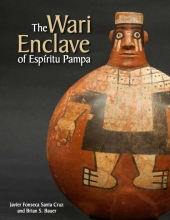
The Wari State was the first expansionistic power to develop in the Andean highlands. Emerging in the area of modern Ayacucho (Peru) around AD 650, the Wari expanded to control much of the central Andes by the time of their collapse at AD 1000. This book describes the discovery and excavation (...


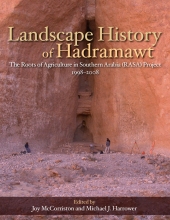
Winner of the AIA 2022 Anna Marguerite McCann Award for Fieldwork ReportsThe rugged highlands of southern Yemen are one of the less archaeologically explored regions of the Near East. This final report of survey and excavations by the Roots of Agriculture in Southern Arabia (RASA) Project addresses...


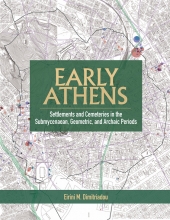
“... presents all the relevant contexts in detail, including the original plans, within which Dimitriadou’s three phases of interest (Submycenaean, [Proto-]Geometric and Archaic) as well as the ensuing Classical phases have been highlighted in different colors. This will make her book a major...


Emanating from a colloquium in pre-Columbian art and archaeology held at the University of Chile in Santiago, Images in Action presents interpretations of a large corpus of art and iconography from the Southern and South-Central Andes, bringing together some of the most esteemed scholars in the...

“offer[s] a rich context, with a social historical rigour that provides an insightful backdrop to contemporary political events, as well as being a welcome addition to the growing literature on the histories of imperial and colonial archaeology practiced worldwide” — Uzma Z. Rizvi, Antiquity, 2019“...

Since 2007 the Jaffa Cultural Heritage Project, under the direction of Aaron A. Burke and Martin Peilstöcker, has endeavored to bring to light the vast archaeological and historical record of the site of Jaffa, Israel. Continuing the effort begun with The History and Archaeology of Jaffa 1, this...



Winner of the 2014 John Collier Jr. Award for Still PhotographyRecipient of the Jo Anne Stolaroff Cotsen PrizeLife at Home in the Twenty-First Century cross-cuts the ranks of important books on social history, consumerism, contemporary culture, the meaning of material culture, domestic architecture...

“This well-presented volume is a very timely addition to the growing body of literature on the prehistory of Northeast Africa. It illustrates the value of using the landscape and local approaches in understanding prehistoric archaeology. The multidisciplinary nature of the project has allowed the...

“Archaeologist Patrick Kirch here cuts through an archaeological situation of uncertainty to find a mother-lode – a site that immediately throws an immense amount of light on a prehistoric situation that was hitherto obscure.” — Peter Bellwood, The Journal of Island and Coastal Archaeology, 2017“...


“Comprehensive in its research, careful in its construction, this well-written volume brings together an extraordinary breadth of information with clarity and authority. It is both enjoyable and informative, and provides a substantial contribution to the field.” — Barbara Borghese, International...

“In all it is a thorough piece of reporting, efficiently compartmentalized, with all the evidence needed to support the discussion and conclusions clearly laid out. The editors and authors are to be congratulated in presenting such a range of complex data in so accessible a way.” — Barry Cunliffe,...

“As a whole, this volume is an invaluable contribution to the study of the cultural processes following the first encounters between Europeans and indigenous Americans. It captures the complexities characterizing the emergence of the early modern Atlantic world and should thus be of interest to...

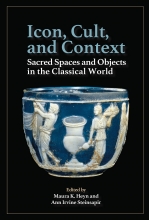
This festschrift honors UCLA professor emerita Susan Downey and her meticulous scholarship on religious architecture and imagery in the Roman/Hellenistic world. The iconography of gods and goddesses, the analysis of sacred imagery in the context of ancient cult practices, and the design and...

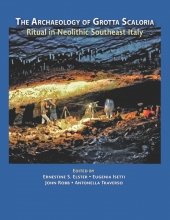
“The excavation was never fully published. This volume is the product of efforts to correct that fact. And it is much more. The team, led admirably by Dr. Ernestine S. Elster of UCLA, pulled together (not without strain) the “legacy data” and applied extensive analyses, including new scientific...


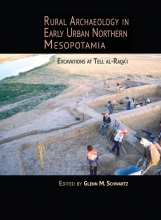
ASOR 2017 winner of the G. Ernest Wright Award“… Schwartz provides a masterful updated overview of the points of comparison and contrast amongst the Khabur rescue sites. This new publication provides a stimulating research framework, and adds a huge amount of detail. Schwartz and his team are to be...

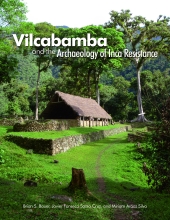
"The authors’ new survey and excavation work stands on its own, but it also makes an invaluable contribution to the growing literature on indigenous life in the early colonial Andes. From a historiographic perspective, Bauer and colleagues provide a complete overview of the essential early colonial...

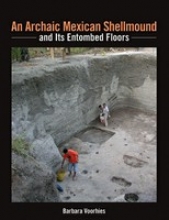
Tlacuachero is the site of an Archaic-period shellmound located in the wetlands of the outer coast of southwest Mexico. This book presents investigations of several floors that are within the site's shell deposits that formed over a 600-800 year interval during the Archaic period (ca. 8000-2000 BCE...

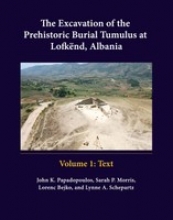
“The largely American team have worked closely with Albanians (both senior scholars and students), demonstrated great sensitivity to local history, politics and culture, and they have expended considerable time and effort on the conservation of finds, the analysis of local environment and survey, a...

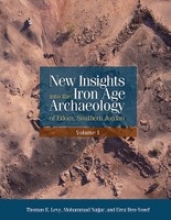
“This two volume report is not only an outstanding benchmark for integrating the wide range of high tech anthropological tools now available to the excavator, it also strongly affirms the important role that ancient texts, such as the Hebrew Bible, fulfill when interpreting artifacts and data from...

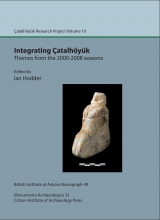
This volume discusses general themes that have emerged in interpretation of the results of the 2000–2008 excavations, synthesizing the results of research described in other volumes in the same series. Subsistence analysis and the examination of human remains yielded data on landscape use and...

Archaeology of the Chinese Bronze Age is a synthesis of recent Chinese archaeological work on the second millennium BCE-the period associated with China’s first dynasties and East Asia’s first “states.” With a focus on early China’s great metropolitan centers in the Central Plains and their...

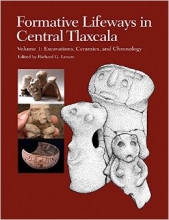
The transition to the Formative in the relatively high-altitude study region of Tlaxcala, Mexico is later than it was in choice regions for early agriculture elsewhere in Mesoamerica. From 900 BCE, however, population growth and sociopolitical development were rapid. A central claim in the research...

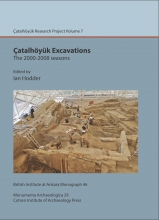
Çatalhöyük Excavations presents the results of the excavations that took place at the site from 2000 to 2008 when the main aim was to understand the social geography of the settlement, its layout, and social organization. Excavation, recording, and sampling methodologies are discussed as well as...
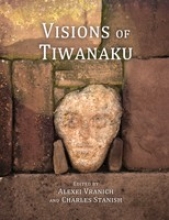
“What was Tiwanaku?” This question was posed to a select group of scholars that gathered for an intensive two-day conference at the Cotsen Institute of Archaeology at UCLA. For over half a millennium, the megalithic ruins in the highlands of the Andes mountains have stood as proxy for the desires...

The Neolithic site of Çatalhöyük in Turkey has been world famous since the 1960s, when excavations revealed the large size and dense occupation of the settlement, as well as the spectacular wall paintings and reliefs uncovered inside the houses. Since 1993, an international team of archaeologists, ...
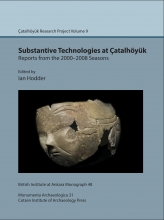
The ways in which humans became increasingly engaged in their material environment, such that “things” came to play an active force in their lives, is the subject of this volume in the Çatalhöyük series. The alluvial clays surrounding the site were extremely important in this dynamic involvement....
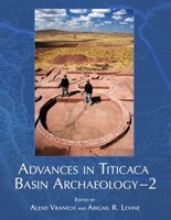
This volume, the second in a series of studies on the archaeology of the Titicaca Basin, serves as an excellent springboard for broader discussions of the roles of ritual, authority, coercion, and the intensification of resources and trade for the development of archaic states worldwide. Over the...

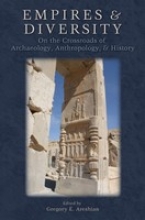
For more than four thousand years, empires have been geographically the largest polities on Earth, shaping in many respects the human past and present in different epochsand on different continents. Covering the time span from the second millennium BCE to the sixteenth century CE, and geographic...

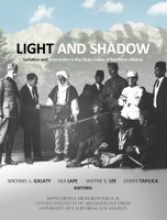
Winner of the 2014 Society of American Archaeology Book Award in the Scholarly CategoryThere are few places in Europe as remote as the Shala Valley of northern Albania. The inhabitants appear lost in time, cut off from the outside world, a people apart. But this careful interdisciplinary study of...

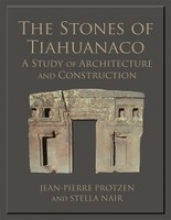
The remains of the artful gateways, platforms, walls, and sculpture at Tiahuanaco, an important Middle Horizon site at the southern end of Lake Titicaca in Bolivia, have for centuries sparked what has seemed like unanswerable questions about how they were made. The masons’ highly sophisticated...

The Classic Maya of the Central Lowlands crafted one of the ancient world’s great civilizations in what is today Belize, northern Guatemala, and Yucatan, Mexico. Although the Maya have long been known for their artistic and architectural achievements, the economic and agricultural base of this...


Honoring Jane Buikstra’s pioneering work in the development of archaeobiological research, the essays in this volume stem from a symposium held at an annual meeting of the Society for American Archaeology. Buikstra’s redefinition of the term “bioarchaeology” to focus specifically on human skeletal...

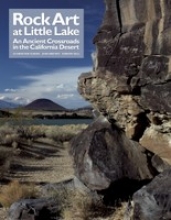
The product of ten years of fieldwork at Little Lake Ranch in the Rose Valley, the southern gateway to the Owens Valley, this book presents the results of intensive rock art analyses carried out by the interdisciplinary research team of the UCLA Rock Art Archive. The research attempts to establish...
Occupied from around 7500 BC to 5700 BC, the large Neolithic and Chalcolithic settlement of Çatalhöyük in Anatolia is composed entirely of domestic buildings; no public buildings have been identified. First excavated in the early 1960s, the site was left untouched until 1993. During the summers of...
Scholars from Aristotle to Marx and beyond have been fascinated by the question of what constitutes value. The Construction of Value in the Ancient World makes a significant contribution to this ongoing inquiry, bringing together in one comprehensive volume the perspectives of leading...

The last quarter century has seen extensive research on the ports of the Red Sea coast of Egypt, the road systems connecting them to the Nile, and the mines and quarries in the region. Missing has been a systematic study of the peoples of the Eastern Desert—the area between the Red Sea and the Nile...

Lake Titicaca and the vast region surrounding this deep body of water contain mysteries that we are just beginning to unravel. The area surrounding the world’s highest navigable lake was home to some of the greatest civilizations in the ancient world. These civilizations were created by the...
Winner of the Choice 2013 Award for Outstanding Academic TitleArchaeologists are increasingly recognizing the early Pueblo period as a major social and demographic transition in Southwest history. In Crucible of Pueblos: The Early Pueblo Period in the Northern Southwest, Richard Wilshusen, Gregson...

How does the practice of archaeology benefit from faunal analysis? Michael Glassow and Terry Joslin's Exploring Methods of Faunal Analysis: Insights from California Archaeology addresses this question. Contributors to this volume demonstrate how faunal remains can be used to elucidate subsistence,...

Christopher Donnan's Chotuna and Chornancap: Excavating an Ancient Peruvian Legend, explores one of the most intriguing oral histories passed down among ancient Peruvians: the legend of Naymlap, the founder of a dynasty that ruled the Lambayeque Valley of northern Peru centuries before European...

How is the Web transforming the professional practice of archaeology? And as archaeologists accustomed to dealing with “deep time,” how can we best understand the possibilities and limitations of the Web in meeting the specialized needs of professionals in this field? These are among the many...

Negev focuses on two primary purposes, one theoretical/methodological and the second substantive. Briefly stated, the book comprises a case study of excavations at an early (ca. 2800 B.C.) pastoral site in the Negev, providing detailed analyses and a synthetic overview of a seasonal encampment from...
ASOR 2011 winner of the G. Ernest Wright AwardIn 2007 the Jaffa Cultural Heritage Project (JCHP) was established as a joint research endeavor of the Israel Antiquities Authority and the Cotsen Institute of Archaeology at the University of California, Los Angeles. Among the project’s diverse aims is...

Information and Its Role in Hunter-Gatherer Bands explores the question of how information, broadly conceived, is acquired, stored, circulated, and utilized in small-scale hunter-gatherer societies, or bands. Given the nature of this question, the volume brings together a group of scholars from...
The Incas carried out some of the most dramatic ceremonies known to us from ancient times. Groups of people walked hundreds of miles across arid and mountainous terrain to perform them on mountains over 20,000 feet high. The most important offerings made during these pilgrimages involved human...
In AD 1438 a battle took place outside the city of Cuzco that changed the course of South American history. The Chanka, a powerful ethnic group from the Andahuaylas region, had begun an aggressive program of expansion. Conquering a host of smaller polities, their army had advanced well inside the...
The Soconusco region, a narrow strip of the Pacific coast of Mexico and Guatemala, is the location of some of the earliest pottery-using villages of ancient Mesoamerica. Mobile early inhabitants of the area harvested marsh clams in the estuaries, leaving behind vast mounds of shell. With the...
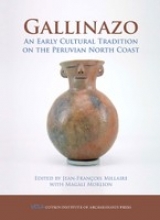
Over the last decades, considerable effort has been directed towards the study of early complex societies of northern Peru, and in recent years archaeologists have expressed a strong interest in the art and archaeology of the Moche, Lambayeque and Chimú societies. Yet, comparatively little...

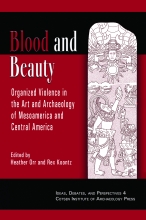
Warfare, ritual human sacrifice, and the rubber ballgame are the traditional practices through which scholars have most often examined organized violence in the artistic and material records of ancient Mesoamerica and Central America.This volume expands them to include such activities as...

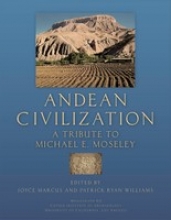
This volume brings together exciting new field data by more than two dozen Andean scholars who came together to honor their friend, colleague, and mentor, Michael E. Moseley. These new studies cover the enormous temporal span of Moseley’s own work from the Preceramic era to the Tiwanaku and Moche...

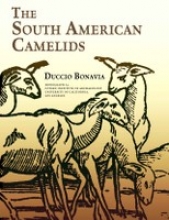
One of the most significant differences between the New World’s major areas of high culture is that Mesoamerica had no beasts of burden and wool, while the Andes had both. Four members of the camelid family—wild guanacos and vicuñas, and domestic llamas and alpacas—were native to the Andes. South...

“This work is not so much a book as a database with extensive commentary.” — L. Richardson, Jr., American Journal of Archaeology, 2005Studies of Pompeian material culture have traditionally been dominated by art historical approaches, but recently there has been a renewed and burgeoning interest...

A majority of laymen, politicians and scholars consciously or subconsciously understand settled living as the highest rung on the evolutionary ladder. Accounts of people surviving and even thriving in peripheral areas are often instrumental to construct and maintain the dichotomy between 'the...

During the Late Intermediate period (AD 1100-1470), the lower Cañete Valley of Peru was controlled by the walled Kingdom of Huarco. While inland sites produced irrigated crops, the seaside community of Cerro Azul, 130 km south of Lima, produced fish for the rest of the kingdom. Cerro Azul's noble...
This book is the first in more than a decade to provide new information on the Chavín phenomenon of ancient Peru. Thought by some to be the "Mother Culture" of ancient Peruvian cultures, Chavín is remarkable for its baroque, sophisticated art style in a variety of media, including finely carved...

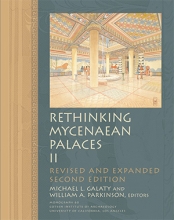
This revised and expanded edition of the classic 1999 edited book includes all the chapters from the original volume plus a new, updated, introduction and several new chapters. The current book is an up-to-date review of research into Mycenaean palatial systems with chapters by archaeologists and...

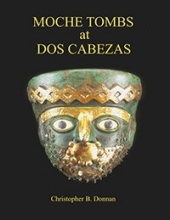
Moche civilization flourished on the north coast of Peru between approximately AD 100 and 800. Although the Moche had no writing system, they left a vivid artistic record of their beliefs and activities in beautifully modeled and painted ceramic vessels, remarkable objects of gold, silver, and...
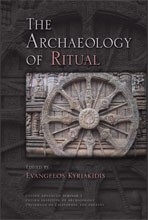
This book is the fruit of the third Cotsen Advanced Seminar conducted at the Cotsen Institute of Archaeology at UCLA. A wide spectrum of scholars, historians, art historians, anthropologists, students of performance and of religion, archaeologists, cognitive scientists, and linguists were all asked...

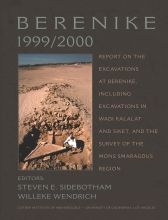
Excavations at Berenike, a Greco-Roman harbor on the Egyptian Red Sea coast, have provided extensive evidence for trade with India, South-Arabia and sub-Saharan Africa. The results of the 1999 and 2000 excavations by the joint mission of the University of Delaware, Leiden University and UCLA, have...
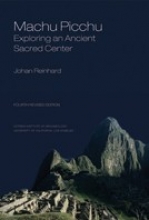
Machu Picchu, voted one of the New Wonders of the World, is one of the world’s most famous archaeological sites, yet it remains a mystery. Even the most basic questions are still unanswered: What was its meaning and why was it built in such a difficult location? Renowned explorer Johan Reinhard...

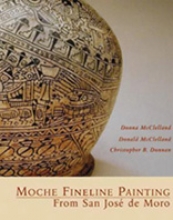
Moche civilization flourished on the north coast of Peru from AD 200 to 800. Although the Moche had no writing system, they left a vivid artistic record of their beliefs and activities on intricately painted ceramic vessels, several thousand of which are scattered in museums and private collections...
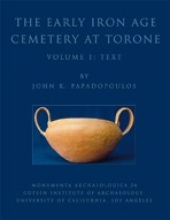
This volume publishes the excavation and analysis of the Early Iron Age cemetery at Torone in Chalkidike, in the north Aegean, Greece. Spanning the period between the twelfth or eleventh century down to ca. 850 BC, the cemetery represents one of the few burial grounds of theperiod in Greece to have...
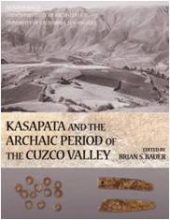
Although the Cuzco Valley of Peru is renowned for being the heartland of the Incas, little is known concerning its pre-Inca inhabitants. Until recently it was widely believed that the first inhabitants of the Cuzco Valley were farmers who lived in scattered villages along the valley floor (ca. 1000...
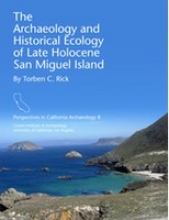
California’s northern Channel Islands have one of the longest and best-preserved archaeological records in the Americas, spanning some 13,000 calendar years. When European explorers first traveled to the area, these islands were inhabited by the Chumash, some of the most populous and culturally...
This volume of essays dedicated to Robert McCormick Adams reflects both the breadth of his research and the select themes upon which he focused his attention. These essays written by his students and disciples focus on issues in Near Eastern archaeology but range as far afield as the Indus Valley...

Winner of the 2009 Society for American Archaeology Book AwardRecipient of the Jo Anne Stolaroff Cotsen PrizeThe Late Bronze Age (ca. 1000-250 BC) was a crucial period during which the Chinese Classics came into being and famous thinkers such as Confucius (ca. 551-479 BC) laid the intellectual...

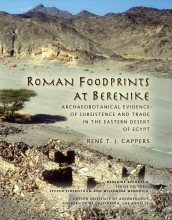
During the Graeco-Roman period, Berenike served as a gateway to the outside world together with Myos Hormos. Commodities were imported from Africa south of the Sahara, Arabia, and India into the Greek and Roman Empire, the importance of both harbors evidenced by several contemporary sources....
This volume brings together a diverse set of new studies--archaeological, ethnohistoric, and ethnographic—that focus on agricultural intensification and hydraulic systems around the world. Fifteen chapters—written by many of the world's leading experts—combine extensive regional overviews of...

This volume brings together the work of some of the most prominent archaeologists to document the impact of Jeffrey R. Parsons on contemporary archaeological method and theory. Parsons is a central figure in the development of settlement pattern archaeology, in which the goal is the study of whole...

This volume brings together a corpus of scholars whose work collectively represents a significant advancement in the study of prehistoric ethnicity in the Andean region. The assembled research represents an outstanding collection of theoretical and methodological approaches, and conveys recent...

Advances in Titicaca Basin Archaeology-I is the first in a series of edited volumes that reports on recent research in the south central Andes. Volume I contains 18 chapters that cover the entire range of human settlement in the region, from the Early Archaic to the early Colonial Period. This book...

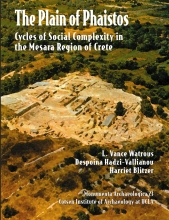
The volume presents the results on an interdisciplinary regional field project (1984 - 1987) carried out on the island of Crete. This volume traces the changing patterns of settlement and cycles of social complexity from the Late Neolithic period to the present day within the heartland of the...

“The volume looks very good and represents a significant contribution toward California prehistory. The Cotsen Institute is to be commended for the quality of publications and for providing the means whereby these scholarly articles are available to other researchers and the public.” — Patricia...
A comprehensive work, combining traditional zooarchaeological reports and various state-of-the-art summaries of methods and theoretical perspectives. This combination of detailed discussions of basic zooarchaeological data with reviews of important themes in Maya zooarchaeology emphasizes the...

Shortly after 800 B.C., a village was founded in the wetland and riverine habitat of northern Belize. Now called K’axob, this Maya community grew and prospered through Formative and Classic times. A millennial-long record of Formative life has been investigated archaeologically by peeling back the...
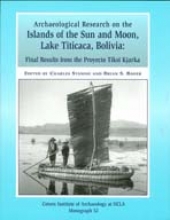
“Stanish and Bauer’s publication provides an excellent overview with selected details of survey and excavation of the islands… It is recommended to Andeanists and other scholars interested in early complex societies and their ritual systems.” — Mary Glowacki, Antiquity, 2005Beginning in 1994, the...

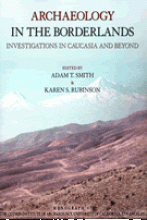
Set on a broad isthmus between the Black and Caspian Seas, Caucasia has traditionally been portrayed as either a well-trod highway linking southwest Asia and the Eurasian Steppe or an isolated periphery of the political and cultural centers of the ancient world. Archaeology in the Borderlands:...
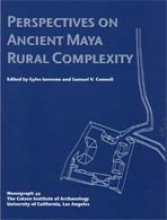
Settlement archaeology in the Maya area has focused much of its attention on the polar extremes of the settlement continuum. As a result of this urban/rural bias, a whole range of complex rural settlements remain under-explored. The chapters in this volume highlight the variable quality of these "...
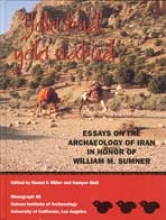
“… the first comprehensive publication on Iranian archaeology since Frank Hole’s 1987 collection of articles The Archaeology of Western Iran… this collection of essays is a timely reminder of the present state and requirements of Iranian archaeology.” — Gabriele Puschnigg, Journal of Field...

“Tres Zapotes has long been recognized as a major Olmec site. Surveys by Pool and colleagues now provide more systematic context.” — Antiquity, 2005This volume presents new information from a program of intensive archaeological survey and surface collection at an important Olmec and Epi-Olmec...
The Sydney Cyprus Survey Project (SCSP) devoted five seasons of fieldwork (1992-1997) to an intensive archaeological survey in the north-central foothills of the Troodos Mountains on the eastern Mediterranean island of Cyprus. The survey covered 65 square kilometers in and around the modern...
Recipient of the Jo Anne Stolaroff Cotsen Prize“The Sitagroi project is a heritage from a past archaeological era, a successful heritage due to the high quality of the material analyses accomplished, and the conclusive discussion presented in this substantial volume...” — Nikos Efstratiou,...
Theory and Practice in Mediterranean Archaeology: Old World and New World Perspectives brings together leading scholars from the Old World and the Americas to discuss some of the most pressing issues facing archaeology today. These topics include archaeology and text, the future of large-scale...
The use of instrumental neutron analysis (INAA) in ceramic research in the American Sothwest has become widespread over the last ten years. This volume presents case studies of Southwestern ceramic production and distribution in which INAA is used as the primary analytical technique. These studies...
The obsidian prismatic blade is one of the sharpest cutting implements ever produced in the prehistoric world. This volume explores the social and economic processes involved in its manufacture in ancient Mesoamerica. Contributors examine the variation in the way obsidian prismatic blades were...
Essays in this volume explore the last three and one half millennia of the long history of the California Coast, focusing on the archaeological signatures of emergent cultural complexity. Organized geographically, they provide a mosaic of archaeological, historic, and ethnographic findings that...

Although the concepts and patterns of ritual varied through time in relation to general sociopolitical transformations and local historical circumstances in ancient Mesoamerica, most archaeologists would agree that certain underlying themes and structures modeled the ritual phenomena of this...

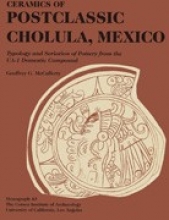
As the center for the religious cult of Quetzalcoatl, Cholula played a prominent role in shaping events of central Mexico’s Postclassic period. Yet confusion over historical events in Cholula itself have limited its place in recent archaeological considerations of Mesoamerica. Since ceramic...
This volume presents translations of essays by three German scholars who were preeminent in the social and natural science study of Central America in the early part of the twentieth century. Their research areas included ethnology, archaeology, geography, linguistics, and epigraphy. Their detailed...

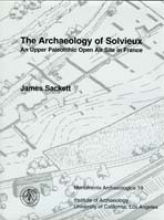
Few open-air sites of this age have the same extent, complexity and diversity of deposits, as was found at the site of Solvieux in South-west France. The complexities of the site and the intensity of the archaeological investigation called for new and novel methodologies to be devised which are...

The twenty-eight contributors to this book show how experimental and ethnographic approaches are being used to shed new light on the process of domestication, and harvesting techniques, tools and technology in the period just before and just after the appearance of agriculture. The book takes an...

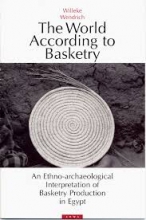
On the basis of two different archaeological sites, namely Tell el-’Amarna in Middle Egypt (about 1350 BC), and Qasr Ibrim in Nubia (mainly third century BC to sixth century AD), this book deals with the production of basketry in ancient Egypt. Use is also made of a study of contemporary basket...

This volume includes the results of a five-year excavation (1983-1987) at Pacatnamu, Peru, combining archaeological excavation with physical anthropology, botany, zoology, textile analysis, ethnography, and ethnohistory. Focuses on the period of Moche occupation. Bilingual in English and Spanish.
The result of twenty years of searching out and recording ancient designs on rocks in Oregon and Washington, Pictographs and Petroglyphs of the Oregon Country is now in a convenient, one-volume edition. The authors, Malcolm and Louise Loring, began their monumental task in the early 1960s as...

“… a fascinating glimpse of a vital part of America’s heritage” — Mark Michel, American Archaeology, Winter 1997-98In 1933, the demolition of the thriving Los Angeles Chinatown for the construction of Union Station sealed the remains of this intact community 14 feet below the railroad tracks. The...

Reports on excavations at Little Pico Creek in San Luis Obispo County and assesses the temporal components and issues of cultural chronology, subsistence, mobility, and social structure.
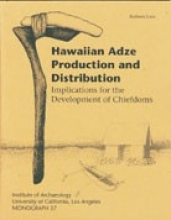
Using a study of stone adzes of the precontact period on the island of Hawai'i, Lass examines the role of a material resource in the development of cultural complexity. Archaeological evidence is used to analyze the hypotheses that embrace the adaptationist and political approaches to increased...

Conservation treatments and techniques for the archaeologist in the field, emphasizing how to conserve an excavated object before it is taken to a trained conservator offsite. Safety procedures and conservation supplies and materials are recommended. Techniques for lifting, cleaning, consolidating...

The contributors to this volume have addressed issues of systematics in pottery analysis that perplex archaeologists wherever they work. These issues are not approached by setting forth rules or by adopting a how-to approach but rather by example as the various researchers give the background to...

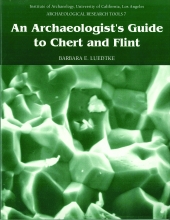
For at least 2.5 million years, humans have been using tools, and until just a few thousand years ago their most important tools were of stone. The single most important and widely used stone in nearly every part of the world was chert, also known as flint. It was widely available, easily worked,...
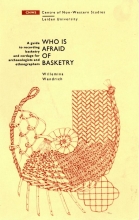
Who is Afraid of Basketry is a guide to recording basketry and cordage for archaeologists and ethnographers. This is a very practical, well-illustrated step-by-step explanation on how to describe, draw, photograph and handle archaeological basketry. Originally published in 1991, the book has been...

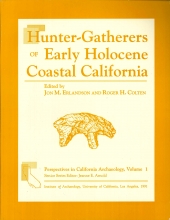
This volume is the first to bring together a number of studies on the Early Holocene of the California coast (ca. 10,000 to 6600 BP). Erlandson and Colten haveassembled contributions that may be of interest to a broad spectrum of scholars whose research pertains to any of the following: early sites...

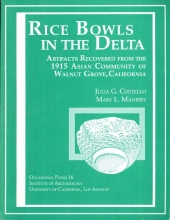
The artifacts recovered from the Walnut Grove are a significant addition to the research of the late nineteenth- and early twentieth-century Asian material culture. Of particular significance is the large collection of recovered Japanese ceramics. Deposited en masse following a devastating fire in...

This volume presents the results of the first three years (1983-1985) of a five-year excavation at Pacatnamu, Peru, combining archaeological excavation with physical anthropology, botany, zoology, textile analysis, ethnography, and ethnohistory. Focuses on the period of Lambayeque occupation....
The first of 2 volumes reporting on excavations at a middle neolithic to early bronze age site in northeast Greece. Vol. 1 presents the full sequence of culture exposed by excavation of this settlement mound, 10.5 m deep. Further studies define the environment during the 3 millennia of occupation...


Chinese Archaeological Abstracts 4 completes the account of what transpired during the decade of Chinese archaeology from 1972 to 1981. A compilation of abstracts of over 140 articles appearing in Wenwu and Kaogu during this period, it describes excavations ranging from Six Dynasties through Post-...
An account of the remarkable decade of Chinese archaeology from 1972 to 1981, as abstracted from Chinese journals. Volume 2, Prehistoric to Western Zhou, contains abstracts of over 110 articles describing excavations at sites ranging from Paleolithic through Western Zhou. Liberally illustrated with...
Chinese Archaeological Abstracts 3 continues the account of what transpired during the decade of Chinese archaeology from 1972 to 1981. Containing absracts of over 130 articles appearing in Wenwu and Kaogu during this period, it is arranged in chronological order and describes excavations ranging...
Chinese Archaeological Abstracts is an invaluable resource for those interested in Chinese archaeology. For the first time, non-Chinese-speaking scholars can have ready access to data published in three major Chinese journals, Kaogo Xuebao (The Chinese Journal of Archaeology), Kaogo (Archaeology),...

The Lloyd Cotsen Study Collection of Chinese Bronze Mirrors is a 2009 co-publication of the Cotsen Occasional Press and the UCLA Cotsen Institute of Archaeology Press. Volume I, The Lloyd Cotsen Study Collection of Chinese Bronze Mirrors: Catalogue, includes an engaging foreword by Lloyd Cotsen, an...