


Past Events
Interested in Cotsen events? Sign up for our mailing list.Speaker: Merrick Posnansky, UCLA Professor Emeritus
Black Lives Matter has been a contentious political and Social concern in recent years but most of the heat has concerned the present situation of Police violence on Black youth in the USA. My own concern is with the general decrease of interest in the lives of poorly documented Blacks before the 1960's. Archaeology has been the key for understanding much of the nature of the transplantation and acculturation of Africans in the New World. This presentation seeks to review the history of and growth of African American archaeology from the 1940's when it was realized that much of African culture and behavior survived the Atlantic Slave Trade. UCLA doctoral research has been in the forefront of American research and has covered plantation societies in the Caribbean and Louisiana, the nature of free maroon societies in remote parts of the Caribbean and South America, the nature of free African life in both the Caribbean and the United States and the excavation of landmark sites such as the Harriet Tubman house. Though reference will be made to current research, including biogenetic studies and the extension of Diasporan archaeology to both maroon (runaway slaves) societies in the New World and to the West African points of departure, the talk seeks to emphasize that more work urgently needs to be done in Africa American Archaeology. It is vital that African American archaeology, as well as the archaeology of other American minorities, be integrated into University courses both in Anthropology and History courses dealing with the early histories of peoples in North America.
Contact Matthew Swanson
Email mswanson@ioa.ucla.edu
Phone
Speaker: Dr. Cathy Costin, California State University, Northridge
Although some have suggested that North Coast ceramics are characterized by a stable technological style over thousands of years, evidence indicates that several aesthetic and technological styles "coexisted" with one another; they waxed and waned in popularity depending in large measure on the social and political environments in which ceramics were made and used. In this presentation, I consider how choices made in the production of decorated ceramics on the North Coast of Peru influenced and were influenced by the use of these vessels as information technology. Choices about forming, decorating, and firing processes conditioned how pottery looked and felt and affected the efficacy and efficiency of wares used to convey information about individual identity, social group affiliation, and important ideological concepts. I discuss those technological and aesthetic choices that relate specifically to appearance within their broader sociopolitical contexts, focusing on how pottery was used to encode symbolic messages and visually transmit significant messages.
Contact Matthew Swanson
Email mswanson@ioa.ucla.edu
Phone

Contact
Phone
Speaker: Scott Fitzpatrick, University of Oregon

For many island societies worldwide, the acquisition and exchange of prized resources was fundamental to developing and maintaining social, political, and economic relationships. The patchiness of resources like stone, clay, tempering agents, shell, and animals often led to differential access which then helped to fuel the rise of social complexity. This presentation considers questions of resource acquisition as mediated by oceanographic and wind conditions, comparing results from archaeological projects in the Pacific and the Caribbean
.
Contact Matthew Swanson
Email mswanson@ioa.ucla.edu
Phone

Fowler OutSpoken Talk
Tua Pittman on Traditional Sea Voyaging and Navigation
Saturday, April 30, 1:30 pm
Internationally recognized as a traditional voyaging seafarer, Tua Pitman has navigated canoes for over thirty years without the use of modern instruments. He uses a traditional navigation system based on observations of the stars, sun, moon, the ocean swells, the flight patterns of birds and other natural signs.
Contact Cotsen Institute of Archaeology
Email ioaadmin@ioa.ucla.edu
Phone 310-206-8934
Speaker: Dr. Owen Doonan, California State University, Northridge
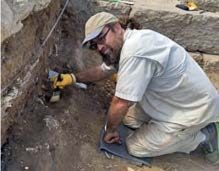 Ancient Sinop was the crossroads of the ancient Black Sea, which has been itself described by the distinguished historian Georges Bratianu as the "Turntable of Eurasia."
Owen Doonan has led an interdisciplinary archaeological expedition to the Sinop region since the mid-1990s and through that research program has established a basic sequence of settlement, economic and cultural history in the region. The research has significant implications for the understanding of: (1) the entanglement of colonial and indigenous communities (ca. 630-200 BC); (2) the establishment of Roman infrastructure (1st – 3rd centuries AD) in a remote region of Asia Minor (the Roman term for modern Turkey); (3) the impact of the establishment of Constantinople (modern Istanbul) as the seat of a world empire, ca. 330-600 AD; and (4) the mysterious collapse of the flourishing Byzantine rural system ca. 650 AD.
Starting in the summer of 2015 Dr. Doonan's team has initiated a long-term program of excavations at Sinop kale, the heart of the ancient port and colony. He will speak on the new excavations in the context of the systematic survey and broader cultural and economic trends in the region.
Contact Matthew Swanson
Email mswanson@ioa.ucla.edu
Phone
Speaker: Jacob Bongers, PhD Candidate, UCLA
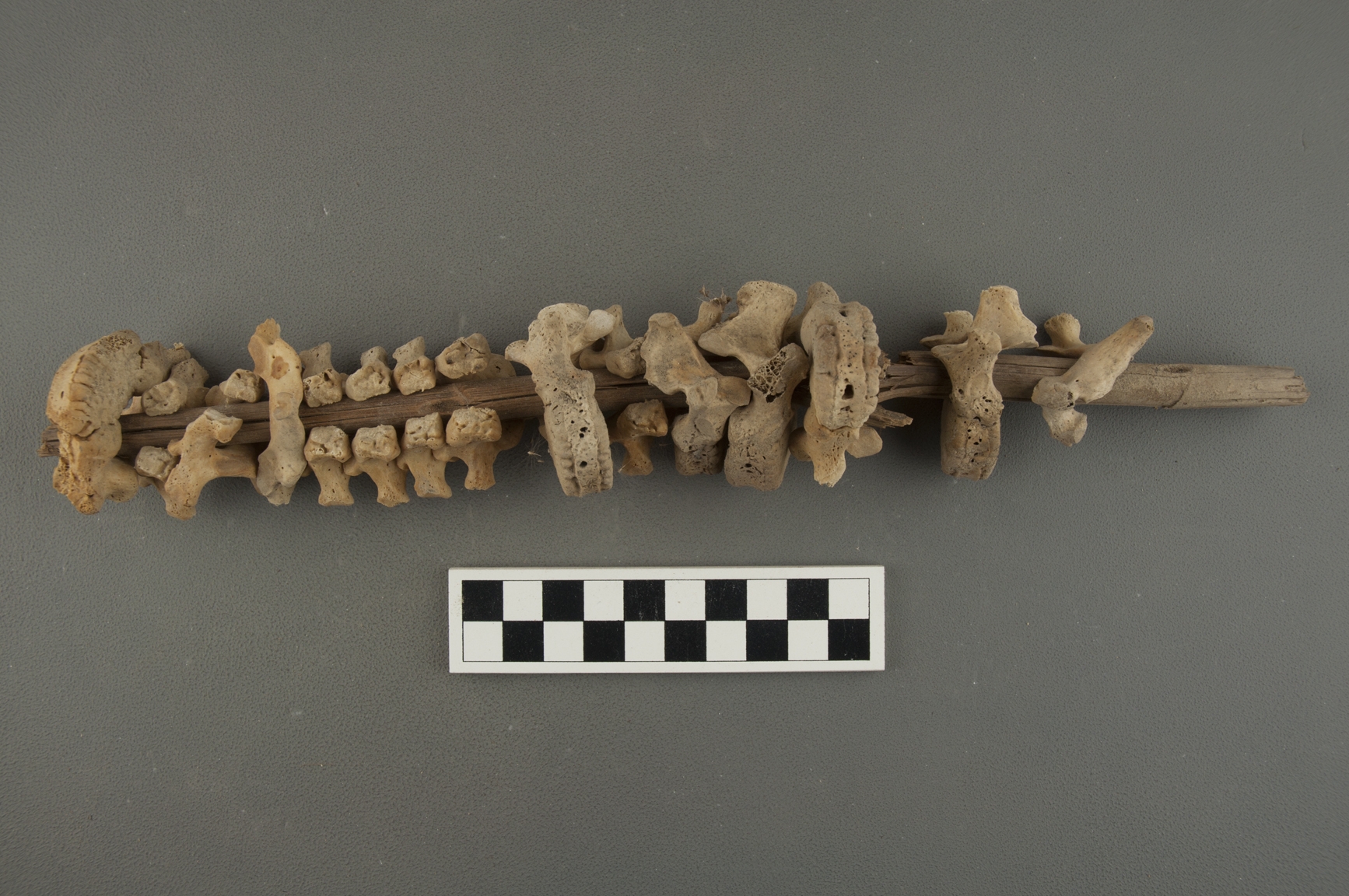
This talk addresses local mortuary practices in the mid-Chincha Valley, Peru dating from the Late Intermediate Period, or LIP (AD 1000 – 1476) to the Late Horizon (AD 1476 – 1532). Ethnohistorical documents state that a complex, centralized state known as the Chincha Kingdom dominated the Chincha Valley from the LIP until the Late Horizon, when the Inca conquered and consolidated the Chincha. Here, we summarize mortuary data from three years of fieldwork (2013-2015) in the mid-Chincha Valley. We demonstrate a mortuary landscape of over 600 well-preserved tombs. We recognize two broad tomb types: above-ground and semi-subterranean chullpas and subterranean cists. We will highlight differences in mortuary architecture and treatment of the dead between these tombs. Notable finds include peculiar evidence of postmortem body manipulation, including human remains with red pigment, cut marks, and reed posts with human vertebrae. Existing radiocarbon dates indicate that at least one cist is pre-Inca and one chullpa is Inca in date, suggesting possible diachronic changes in mortuary practice that coincide with Inca conquest. We will marshal these data in an effort to characterize and explain the nature and variability of local, late prehistoric mortuary practices in the mid-Chincha Valley.
Contact Matthew Swanson
Email mswanson@ioa.ucla.edu
Phone
Speaker: Dr. Heather Miller, University of Toronto
Archaeological interest in technological change focuses on both invention and production by craftspeople, and on social issues related to adoption of new technologies. We recognize that technological change involves both motivations and mechanisms for change, with respect to both the invention and innovation/adoption ends of the spectrum. The possible motivations and mechanisms for the development and spread of the faience materials found across western Eurasia provides an excellent third millennium BCE case study.
A bewildering assortment of materials utilizing siliceous pastes were used to make small objects such as figures, beads and containers, in ancient Egypt, Mesopotamia, the Indus Valley, the Mediterranean, and regions beyond and between. From very early beginnings in the sixth millennium BCE or earlier in some regions, the assortment of these materials reached great diversity of production technique and material in the third and second millennia BCE, with much less diversity of appearance. In places where these materials have seen more analytical study, such as Egypt and the Indus Valley, similarities but also striking differences occur in the regional assortments of materials and techniques employed to produce quite similar appearing materials, used to make objects clearly belonging to the local corpus of style and topic. The Indus Valley case will be the special focus of my talk, where we must speak of it as a talc-faience complex due to the entwined nature of these materials in the Indus Civilization corpus.
What was involved in the spread of these materials and their manufacture? Technological change includes both new ideas or products, and the adoption of those new ideas or products, both invention and innovation (sensu Torrence and van der Leeuw 1989). For the example of the Indus case, can we find clues to the social process involved in the innovative development of these materials from analysis of the objects and their production?
Contact Matthew Swanson
Email mswanson@ioa.ucla.edu
Phone
Speaker: Marilyn Kelly Buccellati, UCLA
2010 was our last excavating season in the ancient city of Urkesh in the northeastern corner of Syria although we went to the site in December 2011 to meet with the local staff to assure continuing their work on conservation and site presentation. With the impossibility of excavating at Urkesh during the war, and in view of the affinities between the third millennium at Urkesh and the Kura-Araxes culture I decided to actively return to my early interests in the southern Caucasus and join an excavation in the Republic of Georgia. In 2013 I began to participate in the Aradetis Orgora excavations of Ca’ Foscari led by Elena Rova. Elena is excavating the third millennium strata and her Georgian partner, Iulon Gogoshidze continues the Georgian excavations of the Late Hellenistic-Early Imperial period palace on the summit of the mound. The strata from the end of the fourth millennium and the early third millennium consist in a number of dwellings containing the characteristic Kura-Araxes ceramics and hearths. The talk will highlight the contributions being made by this area of Shida Kartli (Inner Georgia) to the concept of the “Outer Fertile Crescent.”
Contact Matthew Swanson
Email mswanson@ioa.ucla.edu
Phone
Speaker: James Brady, Cal State University, Los Angeles
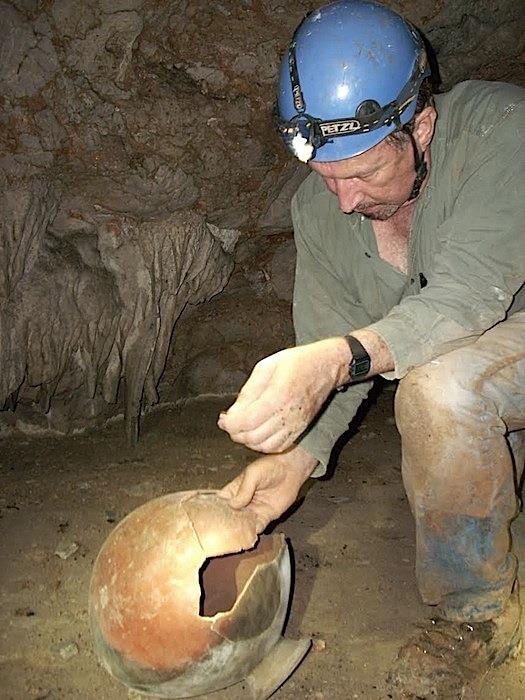
During the last decade of the 19th century, four cave studies of exceptional quality were produced. The best was Eduard Seler’s report on Quen Santo in Huehuetenango, Guatemala because of the exceptional finds still associated with the cave at that time. As a grad student at UCLA, Brady became fascinated with the site after Ted Gutman of the Friends of Archaeology translated the report from German. In 2006 new road construction opened this remote area of the Maya Highlands and permitted a restudy of the caves. Combining 21st century cave archaeology with Seler’s 19th century reporting provides rich portrait of an important Chuj Maya pilgrimage site.
Contact Matthew Swanson
Email mswanson@ioa.ucla.edu
Phone
- ‹ previous
- 48 of 52
- next ›