


Past Events
Interested in Cotsen events? Sign up for our mailing list.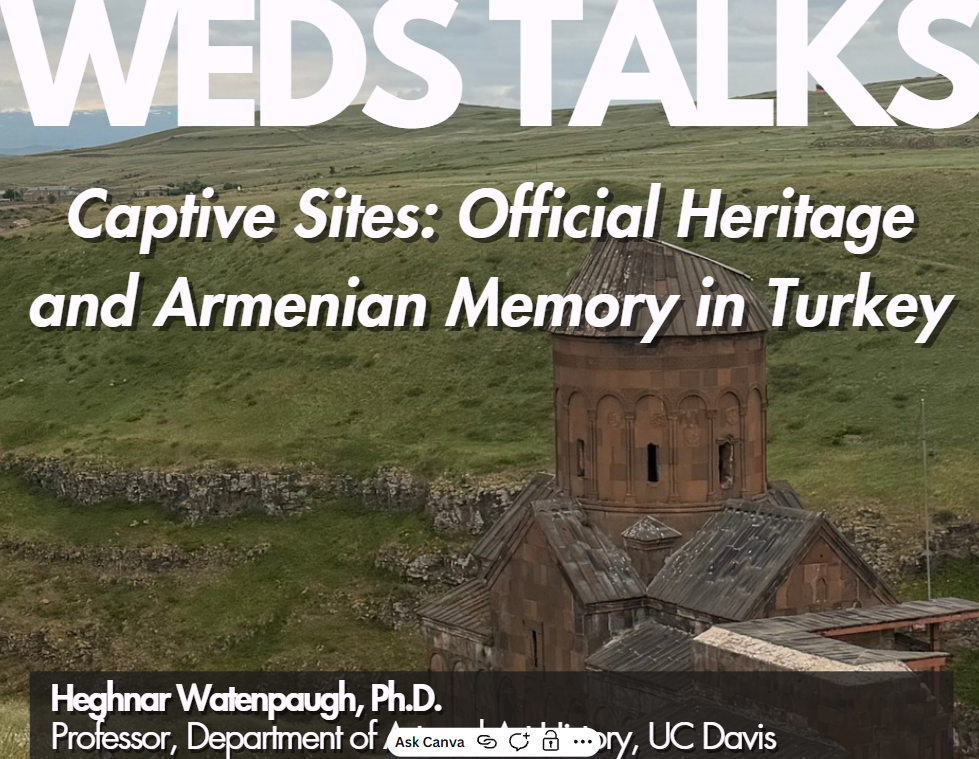
ABSTRACT: How can we think critically about minoritization in relation to official processes of heritage-making? Is the culture of the minoritized community included in the official state heritage, is it excluded, erased or appropriated? What are the implications for the cultural heritage sector in general, and for specific sites in particular? The history and cultural heritage of Armenians in the Ottoman Empire and Turkey over the course of the 20th century shed light on the long-term impacts of genocide, minoritization, and state power. During the Genocide and its aftermath, sites associated with Armenian culture, particularly religious sites, were destroyed, or repurposed, appropriated, sold or transferred. Some of them eventually became cultural heritage sites as part of state patrimony and were sundered from their connection to any remaining Armenian communities. The Pulitzer-prize winning poet and writer Peter Balakian named “captive sites” those cultural heritage sites in Turkey that have historic links to Armenians yet with which Armenians are prevented from having an organic or even accessible relationship. The case study is Ani, a medieval city located today on the border between Armenia and Turkey, which was listed on the UNESCO world heritage list in 2016.
BIO: Heghnar Zeitlian Watenpaugh is Professor of Art History at the University of California, Davis. She researches the diverse visual cultures of the Middle East, including architectural preservation, museums, and cultural heritage.
Contact Sumiji Takahahshi
Email sutakahashi@ioa.ucla.edu
Phone 310-825-4169

Please join us for a special Weds “FLASH” Talks at our annual Fall Open House! Get the pulse on what is happening at the Cotsen. We will have mutiple speakers, facutly, students and staff, give rapid fire talks about current research, projects, and summer travels.
Contact Sumiji Takahashi
Email sutakahashi@ioa.ucla.edu
Phone 310-825-4169
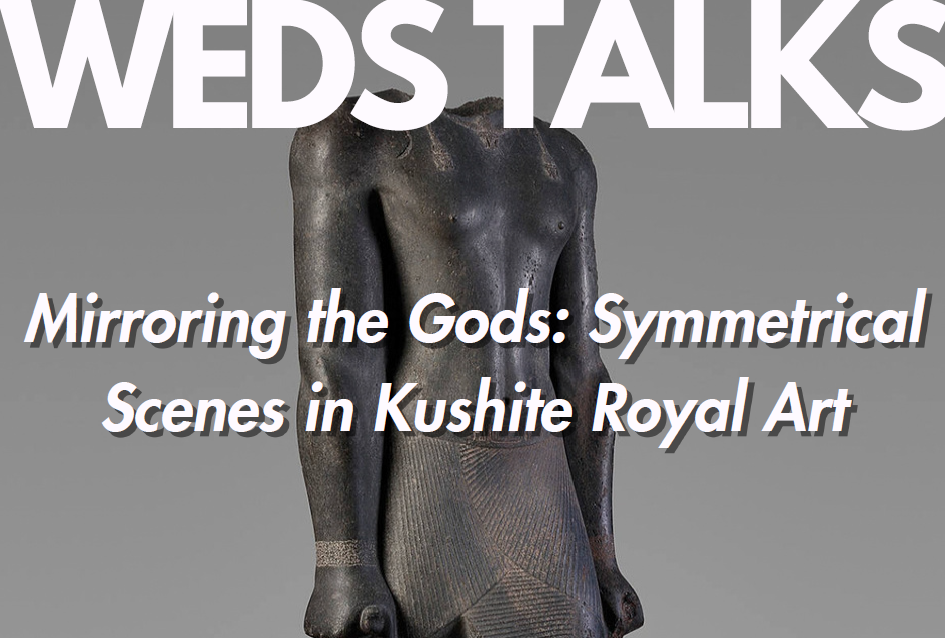
ABSTRACT: This presentation examines the frequent use of symmetrical offering scenes in Kushite royal art from the Napatan Period. In this artistic arrangement, a scene is divided in half vertically, and the section on the right reflects that on the left with mirrored symmetry. However, certain visual and textual elements are intentionally differentiated from their counterpart on the other side. I argue that this arrangement is intended to depict and describe the two complementary halves of each Kushite ruler and the kingdom itself, an idea arising during the Twenty-Fifth Dynasty’s control over both Nubia and Egypt as one “Double Kingdom.” These pieces suggest a new kind of dual kingship, where one Kushite ruler embodies both “ruler of Kush” and “ruler of Egypt” and envisions each land as equal constituent parts in one kingdom.
BIO: Christopher Cox is an Egyptologist and Nubiologist who studies the ancient Nubian Kingdom of Kush, Nubians in ancient Egyptian society, and the reception of ancient Egypt and Nubia by Black people since the 18th century. He obtained his PhD in Egyptology from Brown University in 2025, MA in Africana Studies from Brown in 2022, and BA from Whitman College in 2018. He is currently a President's Postdoctoral Fellow at UCLA.
Contact Sumiji Takahahshi
Email sutakahashi@ioa.ucla.edu
Phone 310-825-4169
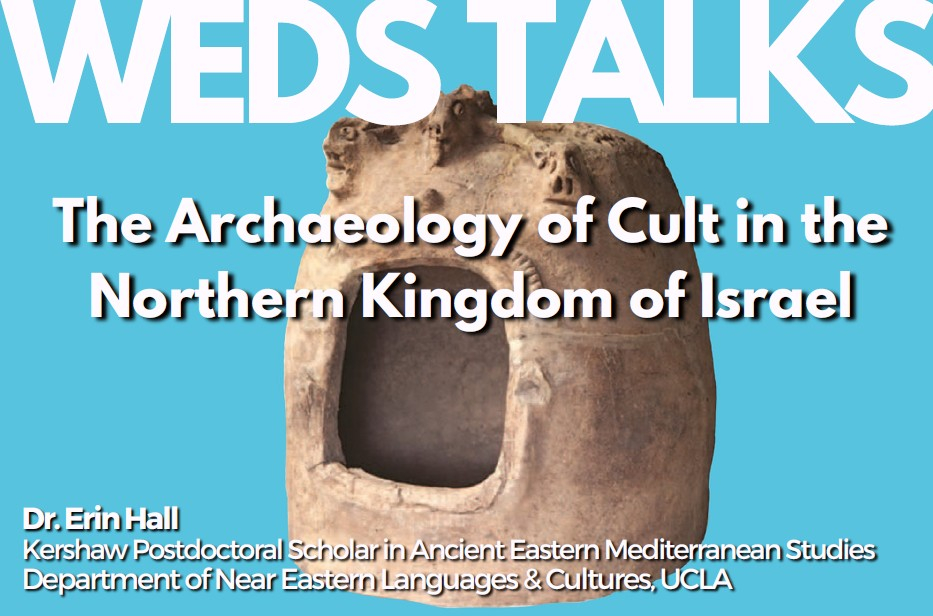
ABSTRACT: Cult in the Late Bronze Age southern Levant is characterized by worship in temples, most notably in temples of the “Midgal” type that are famously found in places like Megiddo, Pella, and Shechem. In the Iron Age, a diversity of cult places is attested, with typologies in the past tracking various types of cultic contexts known to us from the archaeological record. While cult in the Iron Age notably differs in many ways from Bronze Age traditions, certain aspects of worship continue from earlier periods. Continuities can be seen, for instance, in the types of cultic paraphernalia found in both Bronze Age and Iron Age contexts. Shrine models, ceramic altars, and cult stands are some examples of paraphernalia in continuous use. The primary aspects of worship, including animal sacrifice, incense offerings, “idol” veneration, libation, and feasting also carry on from earlier periods. On the other hand, many have argued that temple-based worship ceased in the Iron Age. Drawing from previous work, my goal is to explore cultic buildings in the northern Kingdom of Israel in the late Iron Age IIA—a period that experienced a “boom” in cult activity. The differences between Bronze Age temples, typically referred to as “houses of the deity”, and Iron Age cultic buildings is thus explored. It is argued that, based on the similarity of certain building types to domestic houses, that the concept of “God’s dwelling” changed in the Iron Age. It is also stressed that some aspects of Canaanite worship continued into the late Iron Age IIA in the north, but that this ceases in the Iron Age IIB after Hazael’s destructions.
BIO: Dr. Erin Hall earned a PhD in Archaeology and Ancient Near Eastern Cultures from Tel Aviv University (2021). In her recent book Ritual and Power in Northern Israel: The Late Bronze and Iron Ages (2024), Erin explores continuity and change in cultic practice from a long-term and interregional perspective. As a postdoctoral fellow at UCLA, Erin is interested in the intersection of material culture with the formation of individual and collective identity. Her focus is on the Iron Age kingdoms of Israel and Judah and how material culture played an active role in shaping social, political, and economic selfhood and group uniformity.
Contact Sumiji Takahahshi
Email sutakahashi@ioa.ucla.edu
Phone 310-825-4169
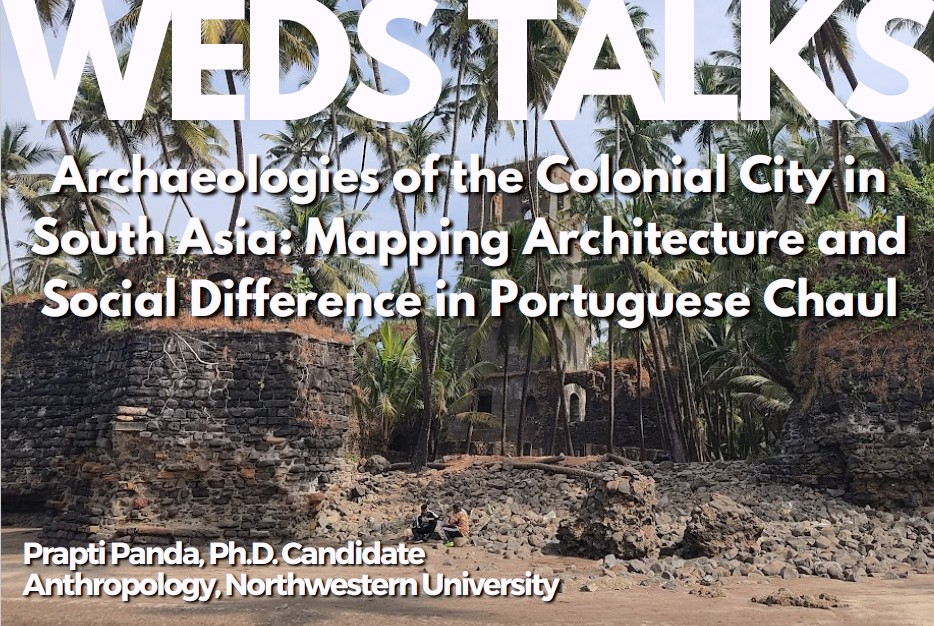
ABSTRACT: Between the sixteenth and eighteenth centuries, port-cities in the Indian Ocean became critical nodes in expanding trade networks linking Africa, the Middle East, South Asia, and Europe. Among these were emerging European colonial settlements, where imperial regimes attempted to order large and mobile populations of merchants, artisans, fishermen, religious communities, and landholders whose labor sustained global exchange. Scholarship on these early colonial cities in South Asia has largely emphasized forts, churches, and administrative architecture, drawing on colonial archives that foreground elite European perspectives. This talk revisits colonial urbanism in South Asia through the archaeological landscape of Chaul, a Portuguese port-city on India’s western coast (occupied 1510-1740). Drawing on ongoing archival and archaeological work, I explore how the built environment can offer new ways of approaching social difference and inequality during colonial expansion, focusing on the configuration of domestic architecture and neighborhoods. Although imperial regimes often aspired towards ordered and legible urban landscapes, the cities that emerged through colonial settlement were by no means homogenous. Through the case of Chaul, I explore how historical archaeology can illuminate the plural resident communities and everyday spatial negotiations that shaped colonial urban life in early modern South Asia.
BIO: Prapti Panda is a PhD candidate in Anthropology at Northwestern University. Trained as a historical archaeologist, her research focuses on colonial urbanism, heritage politics, and architectural history in coastal western India. Her ongoing doctoral research has received support from institutions including the Luso-American Development Foundation and the American Philosophical Society.
Contact Sumiji Takahahshi
Email sutakahashi@ioa.ucla.edu
Phone 310-825-4169
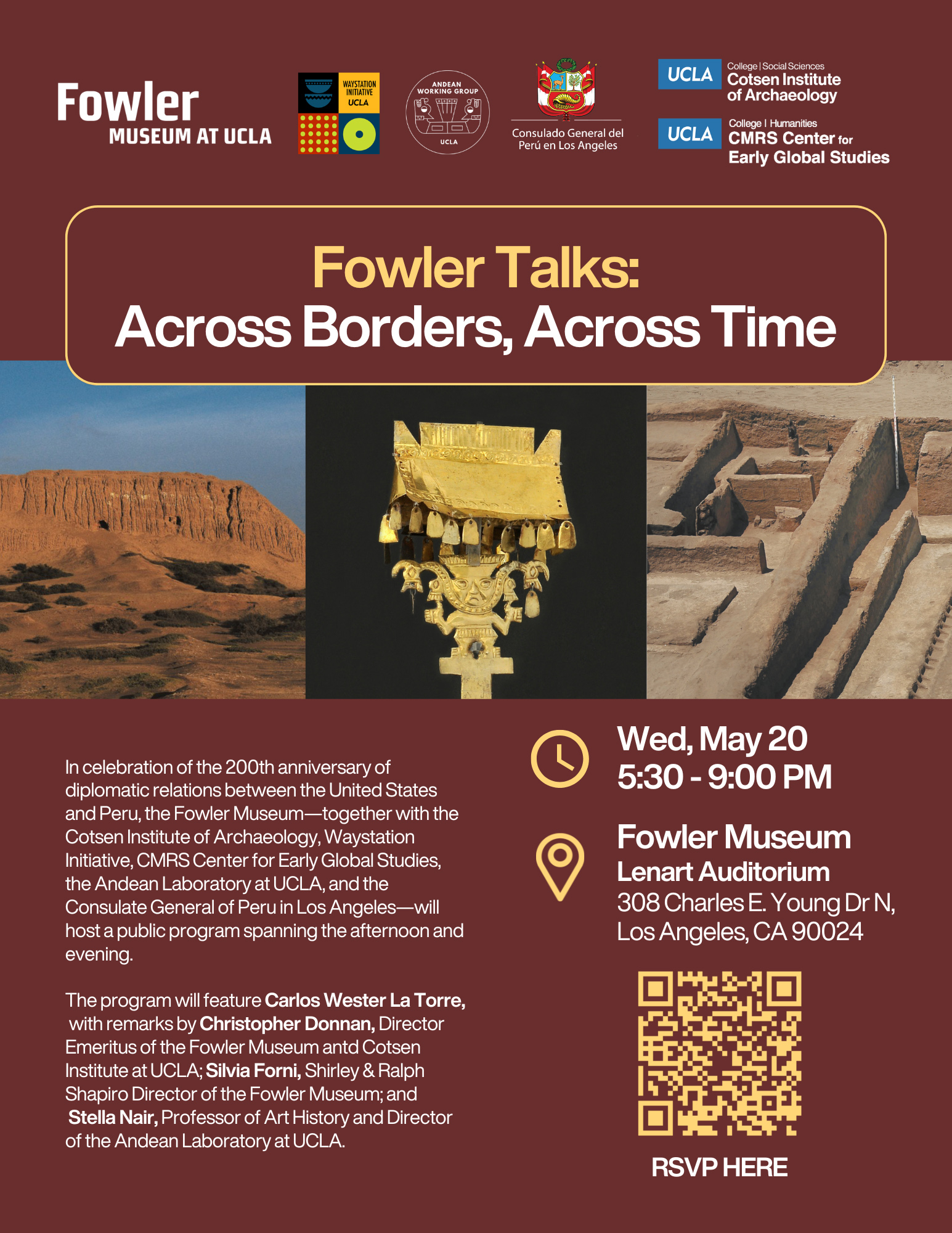
In celebration of the 200th anniversary of diplomatic relations between the United States and Peru, the Fowler Museum, in collaboration with the Cotsen Institute of Archaeology, Waystation Initiative, CMRS Center for Early Global Studies, Andean Laboratory at UCLA, and the Consulate General of Peru in Los Angeles, will host "Fowler Talks: Across Borders, Across Time." The event will feature Carlos Wester La Torre and remarks by Christopher Donnan, director emeritus of the Fowler Museum and Cotsen Institute at UCLA, Silvia Forni, Shirley & Ralph Shapiro Director of the Fowler Museum, and Stella Nair, professor of art history and director of the Andean Laboratory at UCLA.
This presentation and conversation will explore the historical and contemporary dimensions of U.S.–Peru relations through UCLA’s scholarly and fieldwork collaborations on the north coast of Peru. The discussion will reflect on the past, present, and future of archaeological research and cultural exchange between the two countries. The program will be conducted in English and Spanish with live translation.
Register here.
Contact Fowler
Email https://fowler.ucla.edu/events/fowler-talks-across-borders-across-time/
Phone
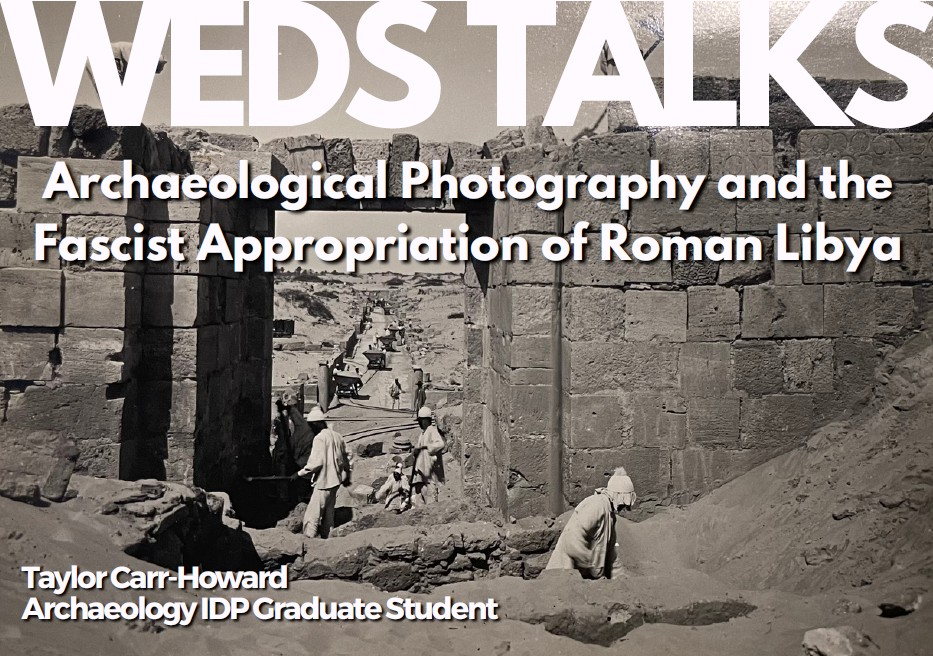
ABSTRACT: Roman archaeological material played a central role in Italian Fascist propaganda: Mussolini presented his regime as an extension or rebirth of the Roman empire and sponsored major excavation and restoration projects in and beyond Rome. Italian colonial archaeology in Libya extended this project and archaeological remains were positioned as Italian cultural heritage and mobilized to justify colonial occupation by drawing explicit parallels between ancient Roman and modern Italian

expansion. This talk examines the important role photography played in this Fascist appropriation of the Roman past in Libya; by tracing histories of the production, circulation, reception, and assembly into archives of such images, I argue that archaeological photographs were not merely documentary objects but rather functioned aspolitical tools which transformed Libya’s archaeological heritage into monumental symbols of Italian Fascism.
BIO: Taylor Carr-Howard is a Ph.D. candidate in Archaeology at UCLA. Her dissertation, “Archaeological Photographs and the (De)Colonial Imagination,” examines the role that archaeological photography played in the history of French and Italian colonial archaeology in North Africa and,drawing on this history,explores theways in which this photographic archivecan be used to decolonize the discipline of classical archaeology. Her research has been supported by the Archaeological Institute of America.
Contact Sumiji Takahahshi
Email sutakahashi@ioa.ucla.edu
Phone 310-825-4169
The Architecture Working Group is pleased to announce that our next event will be held on Thursday, May 14, 2026 at 12:00 PM PT via Zoom. With the support of the Cotsen Institute of Archaeology, the CMRS Center for Early Global Studies, and the UCLA Department of Art History, we will be joined by Dr. Luis Gordo Peláez, Associate Professor in the School of Art, Design and Art History at California State University, Fresno. Dr. Peláez is an architectural historian who studies the history of cultural production and built environment of the early modern transatlantic Hispanic world. Dr. Peláez will present a talk entitled “Building Guanajuato: Architecture and Infrastructure in a Late Colonial Mining City.”
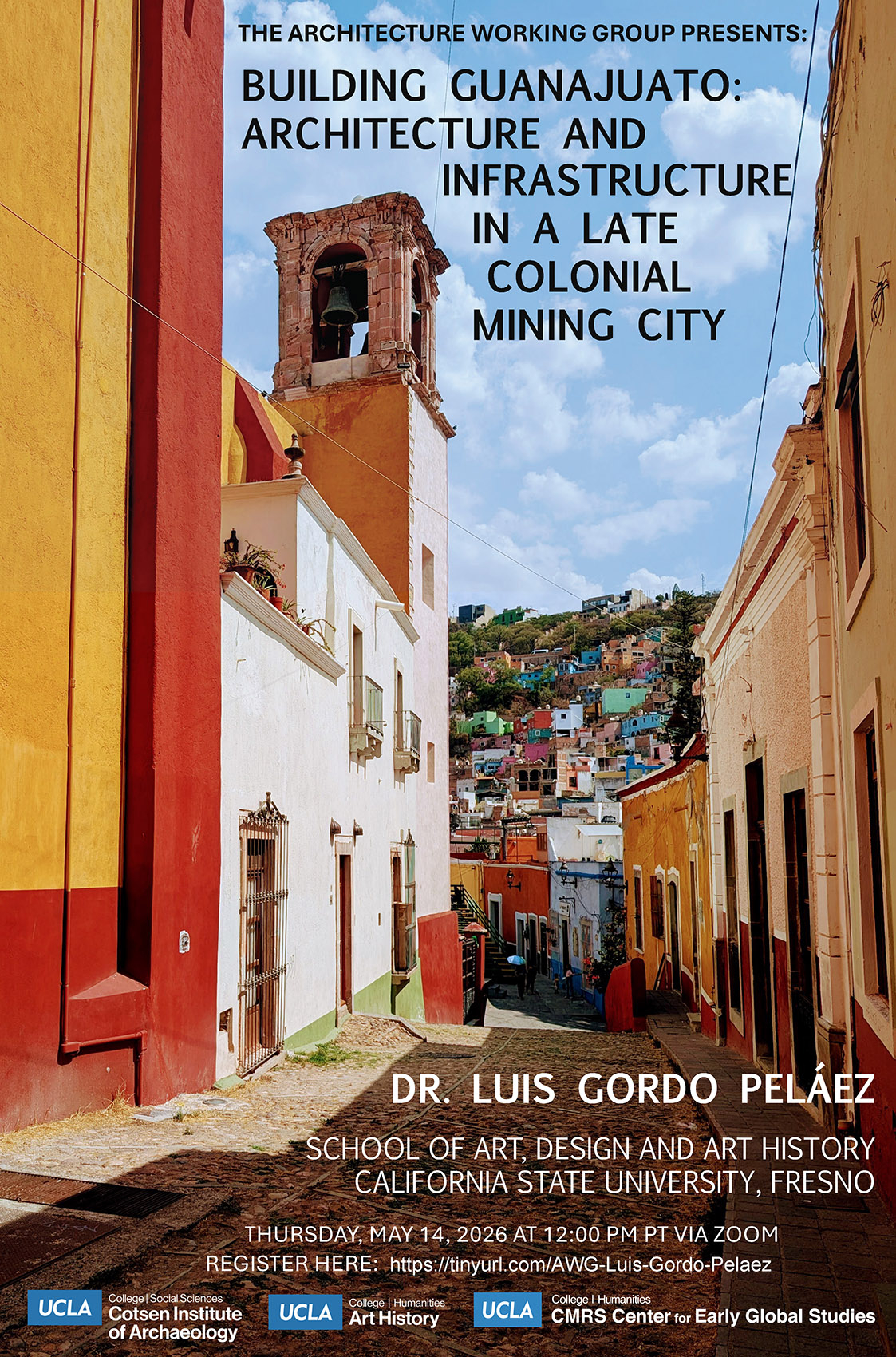
Please register in advance for the talk using this link: https://tinyurl.com/AWG-Luis-Gordo-Pelaez.
Contact Sarah Ortiz-Monasterio
Email somonasterio@g.ucla.edu
Phone
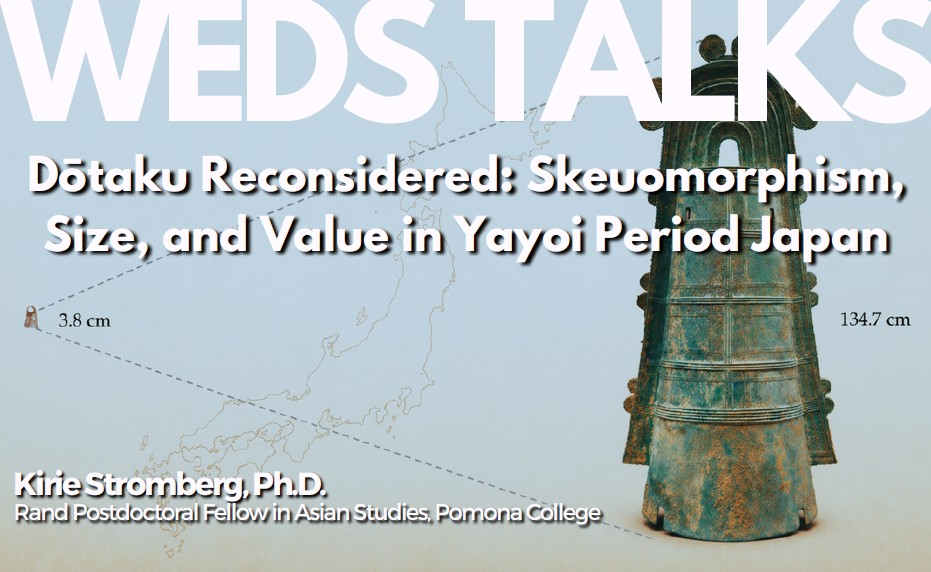
ABSTRACT: Over 500 dōtaku (銅鐸) bronze bell-shaped objects, traditionally dated to the late-middle Yayoi until the beginnings of the Kofun period (ca. 200 BCE-250 CE), have been excavated predominately from the central Kinki region of the Japanese archipelago. However, this number does not include so-called “small dōtaku” (小銅鐸) or pottery miniatures (銅鐸形土製品), seldom included in analyses of larger examples. Adopting a macroscopic geographic and chronological perspective on a historically circumscribed topic, this presentation and (re)considers dōtaku of all sizes and materials within the framework of early East Asian skeuomorphism, as related to the development of the broader Bronze Age economy.
BIO: Kirie Stromberg completed her PhD at the Cotsen Institute of Archaeology at UCLA in 2023 and currently serves as the Rand Postdoctoral Fellow in Asian Studies at Pomona College. She was a recipient of the US Department of Education Fulbright-Hays Doctoral Dissertation Research Abroad fellowship for her dissertation (“Music and Political Authority in Early China and Japan: Pre- and Protohistory”), for which she was was based at Kyushu University in Itoshima, Japan. Her work elucidates the relationship between musical material culture and the formation of complex society across early East Asia. She is currently writing the first monograph in a Western language about Yayoi period (ca. 900 BCE-250 CE) dōtaku bronze bells, as well as their reception in medieval and early modern Japan.
Contact Sumiji Takahahshi
Email sutakahashi@ioa.ucla.edu
Phone 310-825-4169
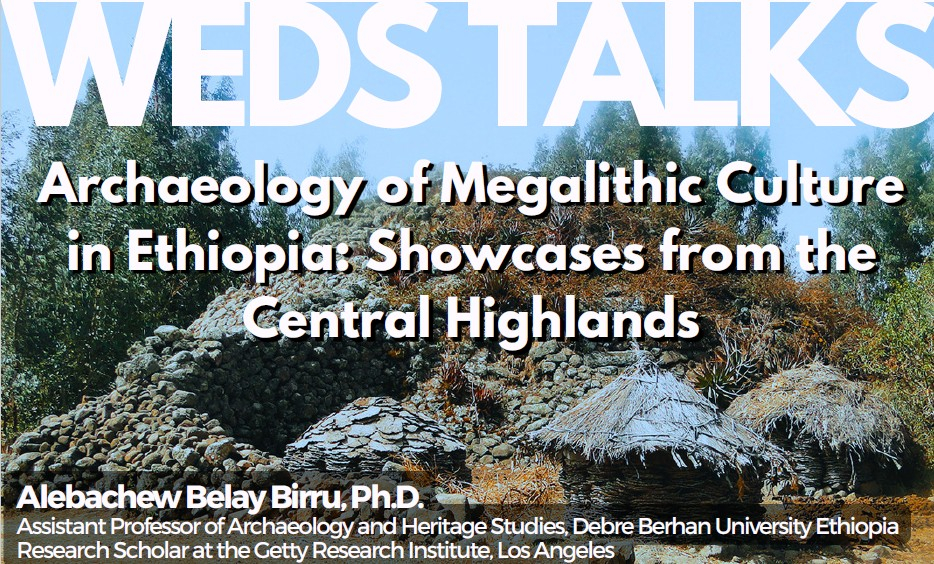
ABSTRACT: Ethiopia hosts one of the world’s longest‑standing and most diverse megalithic traditions, a heritagethat has earned it the designation “land of megaliths.” From later prehistory onward, communities across theEthiopian landscape constructed monumental stone features that appear in striking density along the Great EastAfrican Rift. Recent archaeological research has begun to clarify this picture through the identification of a distinctconstellation of monuments in the central highlands now termed the Shay Culture, named after the Shay River,where these clusters were documented. From 2016 to 2020, Dr. Alebachew Belay Birru conducted a doctoralproject at the University of Toulouse under the supervision of François‑Xavier Fauvelle, combining intensive fieldsurvey, spatial analysis, and typological study to define the cultural boundaries, architectural characteristics,settlement patterns, and exchange networks associated with these monuments. This work refines the spatial andtypological definition and illuminates the relationships among megaliths, landscapes, and the societies thatproduced them. It also demonstrates how local syncretic religious memories—layered across Pagan, Christian, andMuslim traditions—preserve echoes of long‑standing regional networks that transcend both time and beliefsystems. The seminar will present the major findings of this research, situating the Shay Culture within broaderdebates on monumentality, mobility, and social complexity in the region. It will also outline how communities inthe Ethiopian highlands participated in wider circuits of movement and exchange linking the interior to theMediterranean and Indian Ocean worlds.
BIO: Alebachew Belay Birru is an Assistant Professor of Archaeology and Heritage Studies at Debre BerhanUniversity in Ethiopia and a Connecting Art Histories Research Scholar at the Getty Research Institute. He earned hisPhD in Archaeology from the University of Toulouse in 2020 and has since held several prestigious internationalfellowships, including at I Tatti – The Harvard Center for Italian Renaissance Studies, the Africa‑Oxford Initiative atOxford University, the Excellence in Humanities Fellow at the Université Grenoble Alpes, and now at the Getty. Hisresearch explores Ethiopia’s medieval multi‑religious landscapes, with a particular focus on the mobility of sacredobjects—such as glass beads and crosses—between the Horn of Africa and the Mediterranean world.
Contact Sumiji Takahahshi
Email sutakahashi@ioa.ucla.edu
Phone 310-825-4169
- 1 of 53
- next ›