


Past Events
Interested in Cotsen events? Sign up for our mailing list.Speaker: Dr. Willeke Wendrich
UCLA’s Shire Archaeological Project works in the north of Ethiopia, in an area where perhaps Ethiopia’s most ancient town once stood. The site is badly destroyed because of modern gold diggers who pan the soil for tiny flecks of gold. In November and December 2016 our archaeological research went hand-in-hand with community outreach to explain why the ancient remains are important, which resulted in many new friends and a new catchy chant.
Contact Sonali Gupta-Agarwal
Email sonaliga@ioa.ucla.edu
Phone
Speaker: Deidre Whitmore, Cotsen Institute of Archaeology
The Digital Archaeology Lab (DAL) aims to support the technological needs of the Cotsen faculty, students and staff by providing facilities, advice, and training. This talk will provide an overview of the facilities including the equipment that is available and how to access it (both in-person and remotely), and the consulting services offered by the lab manager. The topics and dates for the first workshops and training sessions will be announced and the audience will have a chance to request additional topics. For more information about the DAL visit www.ioa.ucla.edu/labs/dal.
Contact Matthew Swanson
Email mswanson@ioa.ucla.edu
Phone
Recent archaeological discoveries have begun to challenge the prevailing view of the Early Iron Age (ca. 1200-900 BCE) as an era of cultural devolution and ethnic strife, or a ‘Dark Age’, in the eastern Mediterranean, as depicted in the Homeric epics and the Hebrew Bible. This illustrated talk will highlight the exciting discoveries of the University of Toronto’s ongoing excavations at ancient Tayinat.
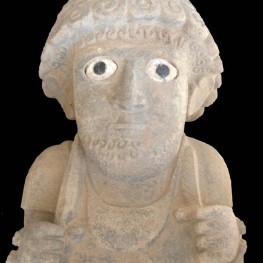
TIMOTHY HARRISON
(University of Toronto)
Cosponsored by the
UCLA Department of Near Eastern Languages & Cultures
UCLA Cotsen Institute of Archaeology
Please send RSVPs to cjsrsvp@humnet.ucla.edu.
Contact
Email cjsrsvp@humnet.ucla.edu
Phone (310) 267-5327
Speakers: Dr. James Snead, California State University, Northridge; Austin Ringelstein, National Park Service
Archaeologists working within they landscape paradigm have increasingly begun directing attention toward the subject of movement. Recent work has underlined the centrality of "motion" to the human experience, creating a body of theoretical and empirical literature that has wide application. This presentation will discuss new fieldwork on Yap, in the Eastern Caroline islands of Micronesia. Famous among anthropologists for "stone money" (or rai), the remarkable built environment of Yap also includes hundreds of kilometers of stone paths. Documentation of these features, including physical mapping as well as the collection of ethnographic information, is being conducted in collaboration with the Historic Preservation Department of Yap State. More than mere routes of convenience, the paths have been called "roads of social responsibility" and are fundamental organizational elements of Yapese society. Their study, supported by the Cotsen Institute, provides a distinctive case study for landscape archaeology.
Contact Matthew Swanson
Email mswanson@ioa.ucla.edu
Phone
Speaker: Dr. Richard Lesure, Cotsen Institute of Archaeology
Lesure will report on the work of a team of archaeologists from the UCLA Anthropology Department and Cotsen Institute of Archaeology who are trying to understand the demographic impact of the transition to agriculture at a continental scale. The area of interest is Greater Middle America, roughly from southern Utah (USA) to the Panama Canal. We build on recent studies of the Agricultural Demographic Transition (or ADT) and on efforts to trace expansions by early farmers on scales approaching the continental. Our argument in this paper is that the ADT in Middle America was long and bumpy, involving at least two eras of very rapid population growth. In much of Middle America, those periods of highgrowth can be identified as the demographic effects of, in succession, an Early-Maize Formative and a Maize-Staple Formative. The Early-Maize Formative tended to lead to localized population concentrations (including villages of more than 10 ha) within a larger landscape still sparsely populated. Well attested radial expansions of farmers from agricultural heartlands are instead a recurring feature of the Maize-Staple Formative; their spatial extents prove to be significantly smaller than continental. We suggest that, in Middle America, analysis at a macroregional scale of 10-40,000 km² is crucial in the effort to understand continental-scale patterns in the transition to agriculture.
Contact Matthew Swanson
Email mswanson@ioa.ucla.edu
Phone
Speaker: Dr. Pierre Lemmonier, Centre National de Rechereche Scientifique
Technologie culturelle designates the strain in the anthropology of objects and techniques first developed in France in the early 1970s. This approach gives a prominent place to the physical actions of people making and doing things, to the way things are made and physically used, and to technological processes. This talk deals with contemporary methods and results in the field.
After a series of trials, errors, and dead-ends – notably the difficulty of combining Leroi-Gourhan’s methodological propositions with Marxism and structuralism – technologues, and later scholars in “material culture studies” have produced hundreds of useful and remarkable studies of the “effects” of objects and techniques on social life, and analysis of the “style-related” inscriptions in objects (in materials, form, decoration) of identity, power, gender, etc.
For decades, however, when it came to materiality, scholar had simply no idea of the kind of material item – materials, gestures, actions on matter, mechanical principles, physical characteristics, etc. – that might “say” something about a social organization, sets of cultural practices, or representations. In other words, Mauss’ program on techniques: Why and how this way of making, producing, physically using things, here and now? The question of what people do with objects, including “merely” building or reinforcing social relations through the use of artefacts, was left aside.
Recently, a series of scholars showed that some objects, their physical properties, and their material implementation are wordless expressions of fundamental aspects of a way of living and thinking. Those objects and practices are even sometimes the only means of rendering visible pillars of social order that are otherwise blurred, if not hidden. Mauss’ program is at last implemented. But those studies also deal with a very general issue in anthropology: that of understanding the specific ways in which the spheres of our social existence, that we scholars arbitrarily compartmentalize, interact.
It has now been shown how particular objects, in their very materiality and physical use, help the members of a society perceive and share the life they live collectively; how they conceive their unique world of rules and unspoken social givens, their unique system of ideas and ways of doing things, their unique material world, as well as how they conceive itsjustifications. Among other such objects, the talk will focus on Ankave mortuary drums and ceremonies.
Contact Matthew Swanson
Email mswanson@ioa.ucla.edu
Phone
Speaker: Dr. David Scott, Cotsen Institute of Archaeology
Due to unforeseen circumstances, this Pizza Talk has been cancelled. We will work to reschedule it in the new year.
Contact Matthew Swanson
Email mswanson@ioa.ucla.edu
Phone
Speaker: Dr. Barbara Horejs, Director of the Institute for Oriental and European Archaeology, Austrian Academy of Sciences
The excavations of Çukuriçi Höyük at the Aegean coast of Turkey revealed intensive metallurgical activities dating to the Early Bronze Age I period in early 3rd millennium BC. Beyond a high number of metal artefacts, the complete chaîne opératoire of metal production can also be reconstructed based on raw materials, slags, crucibles, a variety of tools and half-finished products. These finds and metallurgical remains have been analysed by using various analytical methods to describe the "geochemical fingerprint" of the metals used, mainly arsenical copper. The data will be discussed in relation to the known copper ore deposits in Turkey and the Aegean in order to identify the provenance of the metals. The second focus of this paper is set on the intensity of metal production at Çukuriçi Höyük and its further socio-cultural interpretation. The evidence of around 50 metal workshops embedded within several settlement districts give clear hints for the impact of this specialized production to the local community. Further archaeological indicators like faunal remains and textile technology will be discussed in relation to the potential division of labour, specialization and off-site activities, supported by aspects of spatial analyses of Çukuriçi Höyük settlements IV and III (2900–2750 calBC).
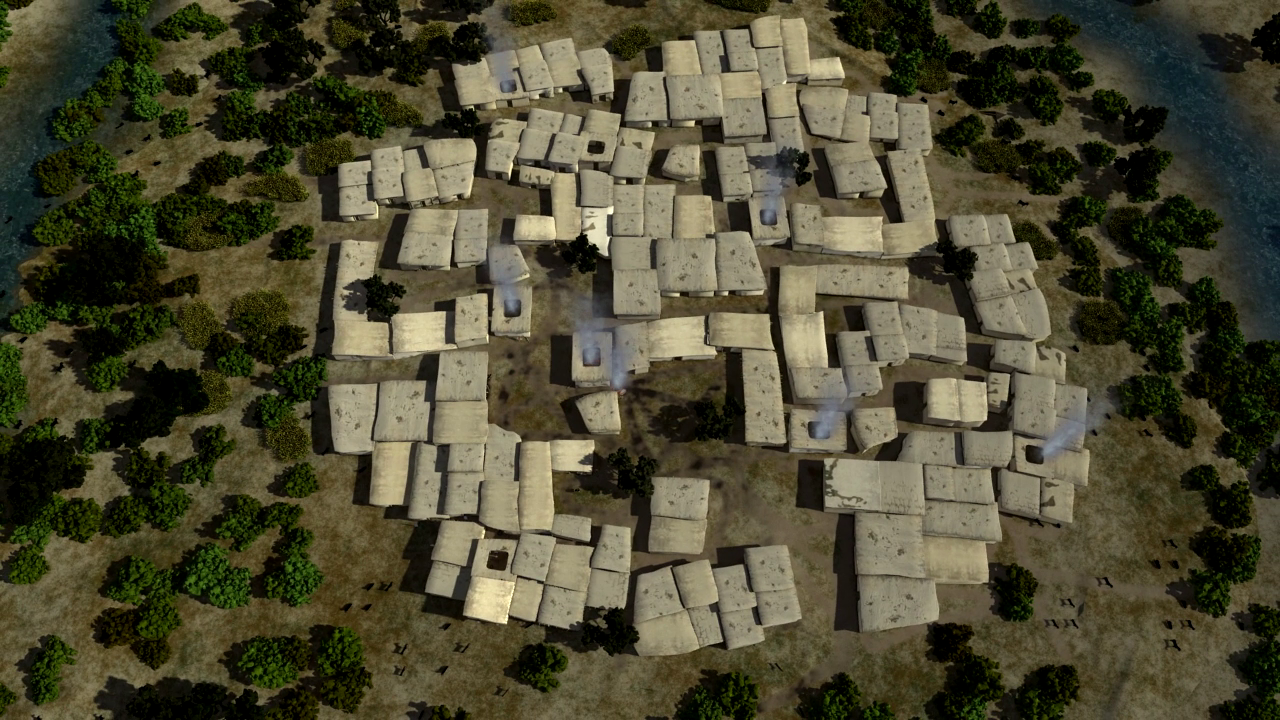
Fig.: Visualization of the EBA 1 settlement at Çukuriçi Höyük based on excavation results and geophysical surveys (©ERC Prehistoric Anatolia/7 reasons).
Contact Matthew Swanson
Email mswanson@ioa.ucla.edu
Phone
Speaker: Dr. Laurie Wilkie, UC Berkeley
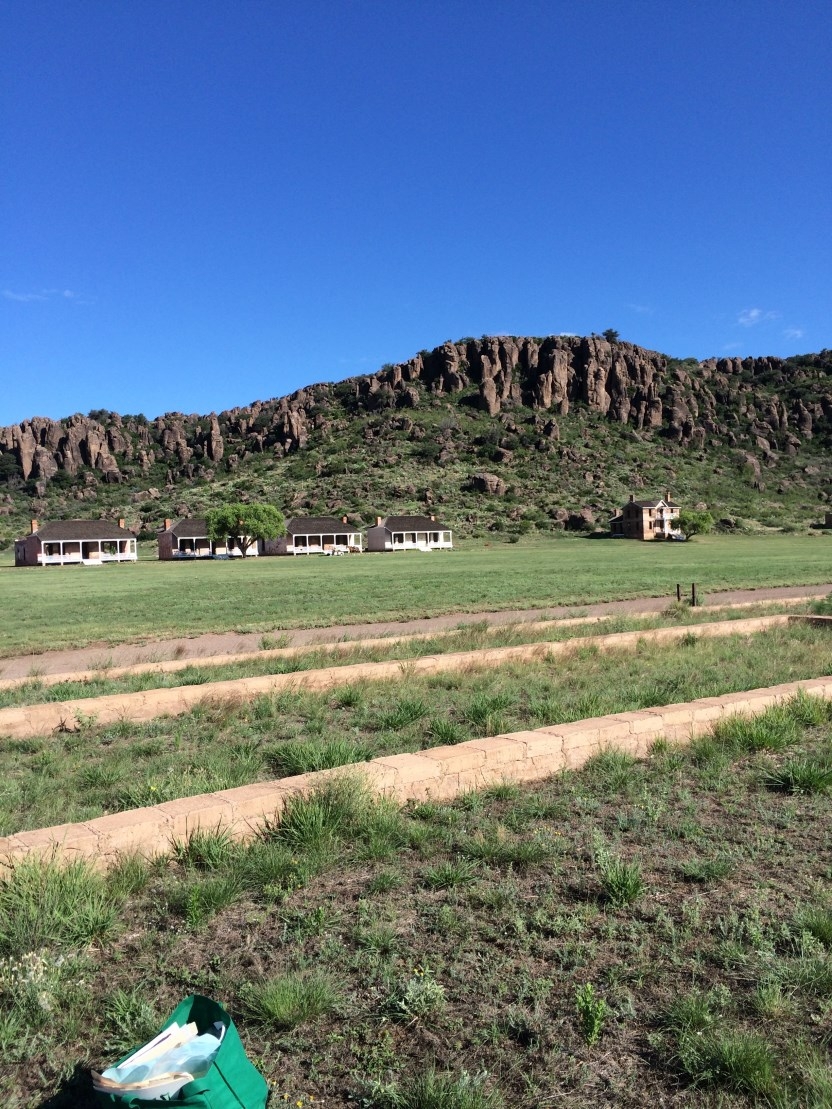
While the black regulars (otherwise known as Buffalo Soldiers) have been a compelling subject in popular culture, scholarly study into the lives of the African American men who chose to serve in the frontier military has been comparatively sporadic and unsustained. This is particularly true in the field of archaeology, where the complexities of preservation and resource management, and associations with US imperialistic policy, have made this soldier demographic an under-explored part of African Diaspora Archaeology. In this talk, I will discuss the unique challenges of military site archaeology, introduce archaeological research undertaken at Fort Davis, Texas, a post where each of the black infantry and cavalry units cycled through during the period of 1867-1885. Focusing on materials associated with the 1869-1875 period of occupation, I will talk about the ways that men of the post navigated a racially fraught landscape while creating a space for new constructions of black manhood in national discourses on citizenship rights, manliness and manifest destiny.
Contact Matthew Swanson
Email mswanson@ioa.ucla.edu
Phone
Speaker: Dr. Mary Louise Hart, Getty Museum
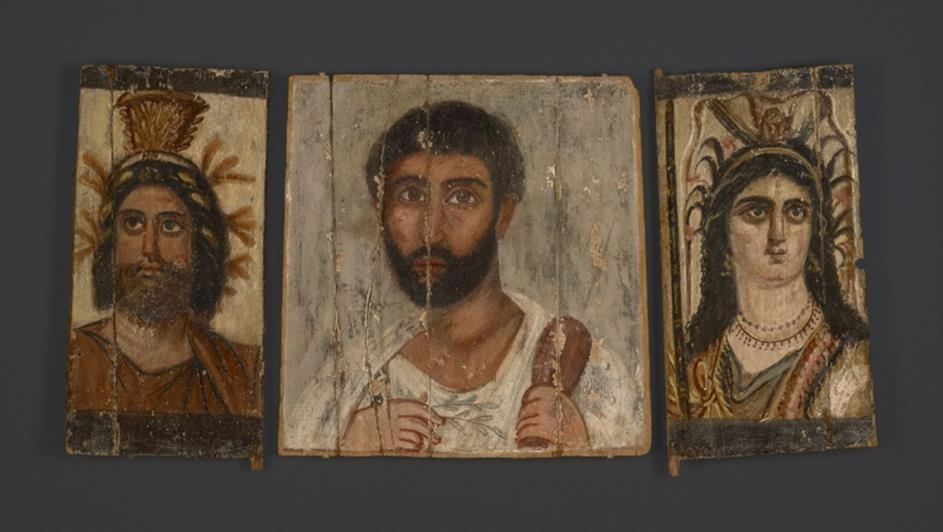
The last several years have seen extensive research and conservation of the Getty Villa’s collection of Romano-Egyptian panel paintings, which contain a good collection of mummy portraits dating from around AD 50 to about AD 220, the in situ portrait of a red-shroud mummy, and a “group” of Isis and Serapis flanking a square portrait of a mortal man (above). Recently this group – cataloged as a triptych by the museum upon its acquisition in 1974 – underwent an analytical update [published in “A Portrait of a Bearded Man Flanked by Isis and Serapis” published in Icon, Cult and Context (Cotsen, 2016), 79-89]. Past analytical work focused on understanding the materials and authenticity of the panels but had not presented new information about their ancient context or function. More recent organic analysis has revealed a number of different components assuring the ancient integrity and commonality of the panels but has also uncovered evidence of modern restoration in need of clarification. The complex story of origin, restoration, conservation and display inspired the organization of an international exhibition of Romano-Egyptian mummy portraits, shrouds, and associated artifacts (including mummies) for the Getty Villa in the fall of 2019.
Contact Matthew Swanson
Email mswanson@ioa.ucla.edu
Phone
- ‹ previous
- 45 of 52
- next ›