


Past Events
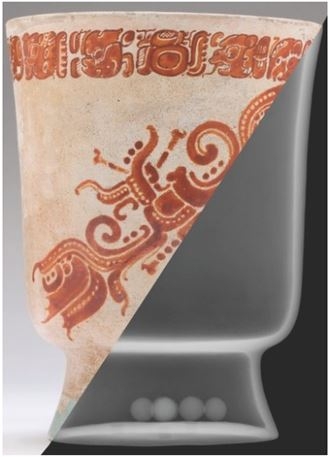
Interested in Cotsen events? Sign up for our mailing list.Speakers: Dr. Megan O'Neil, Associate Curator, Art of the Ancient Americas, LACMA; Laura Maccarelli, Andrew W. Mellon Fellow in Conservation Science, LACMA"
This presentation features the Maya Vase Research Project, a collaboration of LACMA's (Los Angeles County Museum of Art) Conservation Center and the Art of the Ancient Americas Program, which is studying Classic-period Maya ceramics in the LACMA collection . Using new technical imaging and a variety of analytical tools, this multidisciplinary research project is examining Maya vessels in new ways, studying materials and manufacturing techniques in relation to art historical, epigraphic, and archaeological analyses.
Contact Matthew Swanson
Email mswanson@ioa.ucla.edu
Phone
Contact
Phone
Speaker: Dr. Tamara L. Bray, Professor, Department of Anthropology, Wayne State University
New understandings of matter and materiality are being driven by recent theoretical developments in the realm of science, particularly physics and ecology. These evolving orientations are, in turn, contributing to new philosophical thinking on the nature of being and reality. The trickle-down effects of these developments are, in part, responsible for what has been termed “the ontological turn,” a trend clearly visible in recent archaeological discourse. In combination with new relational and symmetrical approaches guiding investigations into constitution of “the social,” the door has been opened to imagining logics and ontologies different from our own in our studies of past peoples. In this paper, I work from the basis of the imperial Inca ceramic assemblage to consider how these distinctive objects were deployed in the task of
empire-building and what insights they provide into native Andean and Inca ontology during the late pre-Columbian period. I develop the argument that imperial pots were construed as animate bodies and agents of the State based on an analysis of vessel morphology and iconography. The study brings to the fore the mutually constituted nature of the imperial Inca project, which I contend involved armies of both people and things working collectively in the construction of a new social order

Contact Matthew Swanson
Email mswanson@ioa.ucla.edu
Phone
Speaker: Dr. Paul Burtenshaw, Director, Projects, Sustainable Preservation Initiative
The Sustainable Preservation Initiative (SPI) attempts to "Build Futures and Save Pasts"-simultaneously protecting tangible cultural heritage and enhancing the lives of the people who live around it. To do this, we develop sustainable local businesses, which are connected to archaeology and provide real and long term incomes to communities .Through this, we hope to create new economic opportunities and allow people to leverage historic sites responsibly .This talk will explore the rationale behind SPI's approach to heritage preservation and sustainable development and reviews our successes, failures, and lessons from our projects in Peru, Guatemala, and Jordan.
Contact Matthew Swanson
Email mswanson@ioa.ucla.edu
Phone
Speakers: Noemi Mafrici and Michela Mezzano, Ph.D. Candidates, Architecture and Landscape Heritage, Politecnico di Torino
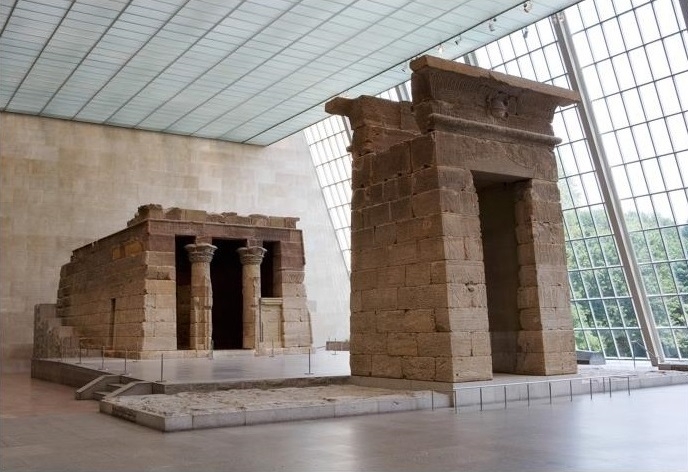
This talk will present the first outcomes of the ongoing joint research project between POLITO and UCLA. The project "Cultural Heritage in context: digital technologies for the humanities" concerns the UNESCO campaign of the 1960s for the rescue of the Nubian temples that risked being flooded .The aim of the project is to reconstruct the lost context of the Nubia heritage and to visualize the relocation of the temples involved in the salvage campaign .The case of the temple of Dendur will be presented through its three contexts: the lost original Nubian landscape, the relocated space at the Metropolitan Museum of Art, and the Virtual Reality reconstruction context.
Contact Matthew Swanson
Email mswanson@ioa.ucla.edu
Phone
Speaker: Dr. Bernd Mueller-Neuhof, Visiting Postdoctoral Fellow, Cotsen Institute of Archaeology
Contact Matthew Swanson
Email mswanson@ioa.ucla.edu
Phone
Speakers: Dr. Marilyn Kelly-Buccellati, Visiting Professor, Cotsen Institute of Archaeology; Giorgio Buccellati, Professor Emeritus, Near Eastern Languages and Cultures, UCLA
"These forty years now I've been speaking in prose without knowing it!" Unlike Moliere 's Monsieur Jourdain, we knew we were "speaking prose" ... Our "prose" was community archaeology, which we undertook to implement since the beginning of our excavation projects in Syria. Having embarked on an effort that relied on a common sense type of approach, very much down to earth as it befits an archaeological endeavor, we have come to reflect more and more on its theoretical implications. And the current war in Syria has put to a severe test our presuppositions . We will first review the main aspects of our specific case of "community archaeology" at Tell Mozan, ancient Urkesh, and we will then share our reflections on its theoretical import. This is particularly meaningful now, at a moment when the concept is beginning to gain traction on the one hand, while on the other we find ourselves physically separated from our "community."
Contact Matthew Swanson
Email mswanson@ioa.ucla.edu
Phone
This workshop will begin with a demonstration of two handheld 3D scanners, the Artec Eva and Space Spider. Andy Greyson will walk through how to set up the environment, capture the data, and process the scans. He will also provide tips to efficiently utilize the variety of tools included in the software.
The second half of the workshop will focus on 3D printing during an interactive Q&A with Doug Daniels. You will also see two 3D printers from the UCLA Library Lux Lab in actions: the MakerBot 5th Gen (a fused deposition modeling printer) and Form 2 (stereolithographic printer).
Technologists from the Digital Research Consortium will also be available to discuss 3D modeling for research projects.
RSVP at http://bit.ly/2nDpPd0 by Monday, April 3, 2017.
Header image from the Smithsonian X 3D collection:
Lidded ritual ewer (zun) in the form of an elephant with masks and dragons
Written by Vince Rossi
China, possibly Hunan province
Shang dynasty, ca. 1100-1050 BCE
Bronze, 17.2 x 10.7 x 21.4 cm
Freer Gallery of Art, F1936.6a-b
Contact Deidre Whitmore
Email dal@ioa.ucla.edu
Phone
Speaker: Dr. Annelou van Gijn, Professor of Archaeological Material Culture and Artefact Studies, Faculty of Archaeology, Leiden University
Contact Matthew Swanson
Email mswanson@ioa.ucla.edu
Phone
Speaker: Dr. Meredith Cohen, UCLA Art History
Contact Matthew Swanson
Email mswanson@ioa.ucla.edu
Phone
- ‹ previous
- 42 of 52
- next ›