


Past Events
Interested in Cotsen events? Sign up for our mailing list.Speaker: Dr. Timothy Murray, Charles La Trobe Professor of Archaeology, La Trobe University
In this talk, Dr. Murray will briefly outline the essence of a new interdisciplinary research project exploring the historical archaeology of extensive pastoralism in Australia, with a particular focus on the Western Division of New South Wales. Core elements of the project span conventional ecological history (especially the impact of sheep and cattle grazing on the rangelands of the region), as well as the history of wool as a global commodity, the impact of the dispossession of indigenous people by European settlers, and the impact of new technologies such as fencing, railways, but particularly drilling for artesian water. The research project thus considers many elements of a more general inquiry into the ecological and economic impacts of the creation of both national and imperial entities (and identities) during the nineteenth and early twentieth centuries around the globe.
Contact Matthew Swanson
Email mswanson@ioa.ucla.edu
Phone
Speaker: Dr. Matthew Robb, Chief Curator, Fowler Museum, UCLA
In 1963, the chance discovery at the Teotihuacan compound known today as La Ventilla of a four-part composite sculpture marked with interlaced-scrolls more typically associated with sites like El Tajín firmly established connections between ancient Teotihuacan and its contemporaries on the Gulf Coast. The discovery of a smaller, intact object of similar form in 1987 in Tikal’s Mundo Perdido provided new evidence for Teotihuacan’s involvement with Tikal and the Maya. Other studies focused on similar objects appearing in the visual culture of Classic period Veracruz have identified them as stone versions of feathered banners, and drawn connections with the appearance at Teotihuacan of interlaced-scrolls on murals at other buildings at La Ventilla and early structures at the Edificios Superpuestos. This lecture will document the chronological and cultural discrepancies between framing an object as a marker of Teotihuacan influence at 4th century Tikal, but as a marker of 6th century Gulf Coast connections at Teotihuacan. It will explore the archaeological, aesthetic, and social contexts of these objects and suggest new avenues for their interpretation based on recent discoveries at the site.
Contact Matthew Swanson
Email mswanson@ioa.ucla.edu
Phone
Speaker: Dr. Di Luo, Postdoctoral Fellow, Center for Global Asia, New York University Shanghai
Buddhist architecture in China since the 11th century has often featured miniature pagodas and pavilions in the interior. These downsized "buildings," appearing in ceiling domes and murals and sometimes functioning as altars, bookcases, and reliquaries, assumed the role of the "holy of holies" of the space. My study of these miniatures focuses on the scaling principles they adhered to, the woodworking tradition they epitomized, and the religious significance of the phenomenon of miniature-making. The downscaling procedure, I argue, was not a purely technological problem, but deeply rooted in the Buddhist view of the composition and formation of our world. This Buddhist ideal was best demonstrated by a hierarchical set of numerals found in miniature architecture. With the assistance of digital tools, we are able to expose and scrutinize the fascinating numerical relationships existed in Buddhist architecture.
Contact Matthew Swanson
Email mswanson@ioa.ucla.edu
Phone
Speaker: Debby Sneed, PhD Candidate, Cotsen Institute of Archaeology, UCLA
In this talk, Debby will use literary and archaeological evidence to argue that ancient Greeks not
only tolerated the birth of deformed and disabled infants, but also expressed optimism about their futures and actively attempted to accommodate their needs. Modern studies tend to resolve this issue quickly, relying heavily on references by Plutarch, Aristotle, and Plato. These authors’ statements about the fate of deformed infants, however, bear no easy or straightforward relationship with the reality of the ancient world. If we situate these authors and their works within their appropriate contexts, we recognize that their presentations of infant exposure and infanticide are prescriptive, not descriptive. By expanding our analysis to the Hippocratic physicians, as well as to other works within the Aristotelian corpus, we find a wide range of evaluations of infants born with congenital deformities. What is more, the production of feeding bottles from the Late Bronze Age through the Roman period also demonstrates active efforts to accommodate infants (and sometimes children and adults) who were premature, weak, ill, or presented severe orofacial deformities such as cleft palate. Finally, an argument from absence: bioarchaeologists have produced no positive proof for the killing of deformed infants from any population in Greece. Taken together, the evidence demonstrates that the exposure of deformed and disabled infants was far from the rule in ancient Greece
Contact Matthew Swanson
Email mswanson@ioa.ucla.edu
Phone
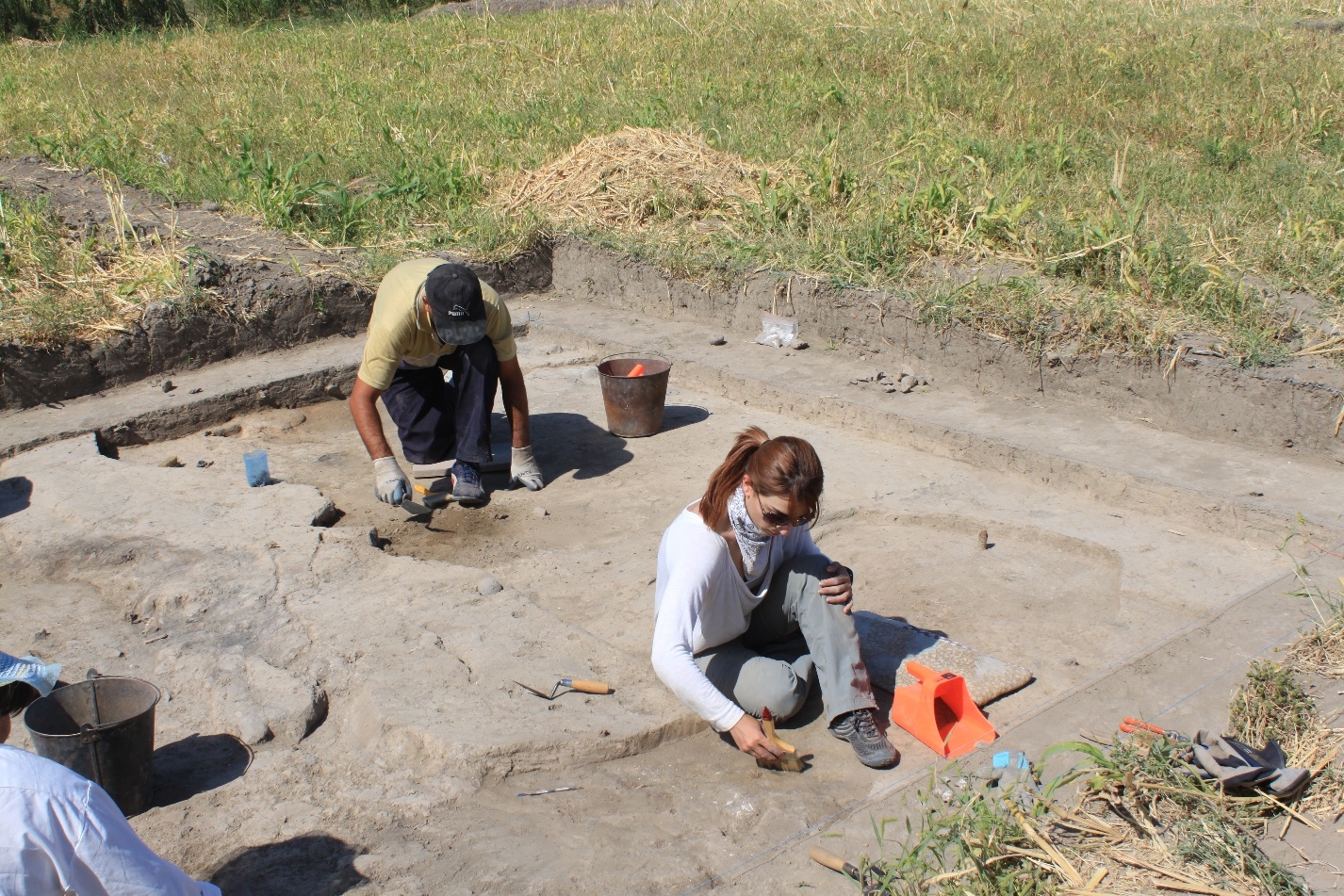
Speaker: Kristine Martirosyan-Olshansky, Ph.D. Candidate, Cotsen Institute of Archaeology, UCLA
This talk is a summary of field research conducted by Cotsen/UCLA doctoral student Kristine Martirosyan-Olshansky at Masis Blur, Armenia, over the course of three seasons from 2012-2014. Excavations at Masis Blur have unearthed Neolithic habitation layers (ca. 6200 – 5400 cal.BC) belonging to the Shulaveri-Shomutepe culture, with a rich material culture and several important new discoveries. Many questions have been raised concerning the origins and sudden appearance in the Southern Caucasus of sedentary communities having fully domesticated plants and animals. The abrupt abandonment of their settlements at the end of the Neolithic period is also still just as obscure. Certain cultural elements and fragments of imported pottery within otherwise Aceramic settlements attest to relations with societies in northern Mesopotamian area. This talk highlights findings from recent fieldwork at Masis Blur and discusses the new data within the framework of Neolithization processes in the Southern Caucasus.
Contact Matthew Swanson
Email mswanson@ioa.ucla.edu
Phone
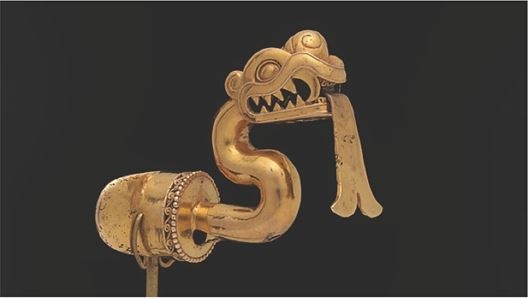
Speaker: Dr. Patrick Hajovsky, Associate Professor, Art History, Southwestern University
Taking a critical perspective, I argue that Aztec "luxury" objects worn or held on the body linked valor and value to tonalli, the heat-life energy that manifests personality and fate, and yollotl, the heart, source of blood and center of human life. The Aztecs explored the equivalences and differences between luxury materials--lapidary, gold, feather--through synesthetic metaphors that tied visual art to Nahuatl poetry. Forms made of these materials further emphasize these essential connections between person and object, which allowed the object to become a surrogate of the owner's agency. This is important to consider in the Aztec economy of sacrifice and the logic of state of control.
Contact Matthew Swanson
Email mswanson@ioa.ucla.edu
Phone
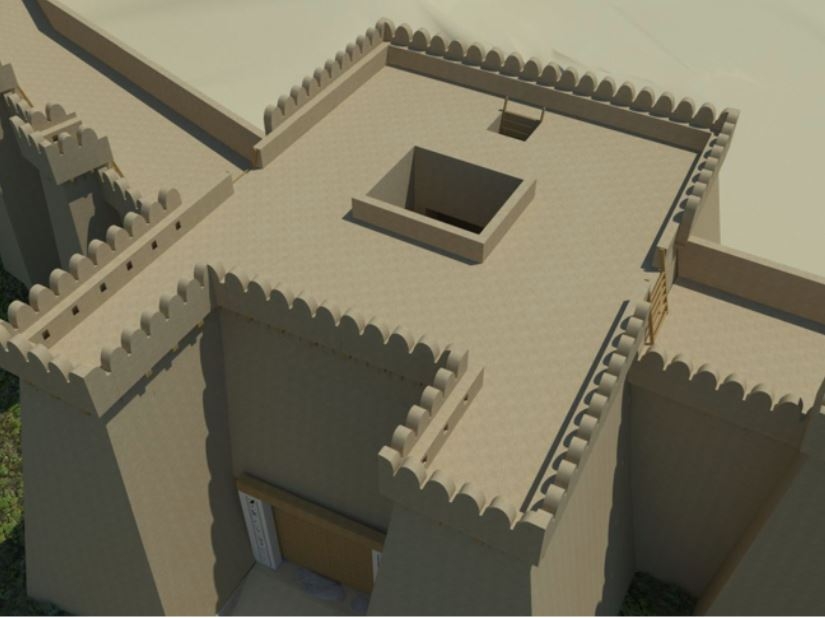
Speaker: Jeremy Williams, Ph.D. Candidate, Near Eastern Languages and Cultures, UCLA
The practice of digitally modelling archaeological sites has grown more and more common in recent years. Well-known ancient sites such as the Temple of Karnak, Khirbet Qumran, and the Roman Forum have benefited from such models.The recent digital model of the Late Bronze Egyptian fortress at Jaffa has provided various insights that deepen our understanding of the function and design of this site.This presentation will demonstrate the process of modelling the fortress, focusing on important aspects of the reconstruction and the modelling itself . It will also include some brief demonstrations of the software used to create the digital model in order to show the accessibility and benefits of such models.
Contact Matthew Swanson
Email mswanson@ioa.ucla.edu
Phone
Speakers: Morgan Burgess and Marci Burton, M.A. Students, Conservation of Archaeological and Ethnographic Materials, UCLA
This study focuses on a privately owned, autographed, first edition (c. 1959) BarbieTM doll made from poly(vinyl chloride) (PVC) plastic. Contrary to “sticky-leg syndrome”, where plasticizer migrates from the PVC and deposits to the surface as a tacky liquid, this doll exhibits a bloom of a fugitive, waxy, white solid on the legs from the mid-thighs to the ankles. In addition, the doll was autographed by Ruth Handler, the designer of BarbieTM and a cofounder of the Mattel corporation. Her signature and the date are now barely legible as the once sharp lines of ink have migrated within the PVC plastic.
Multi-spectral imaging and x-radiography were performed on the doll in order to non-invasively, non-destructively examine the plastic and gain an understanding of the manufacturing procedures. In addition, with collaboration from the Museum Conservation Institute (MCI) of the Smithsonian, computed tomography, Fourier transform Infrared spectroscopy, and Raman spectroscopy data were collected on the plastic components of the BarbieTM doll. The results collected from the analysis provided insight into the process of manufacture, material composition and structural integrity of the doll, as well as determined the agents of degradation and identified the waxy bloom compound observed locally on both PVC plastic legs, but absent on other plastic components of the doll. After the removal of the waxy bloom, the (c.1959) BarbieTM, along with her clothing, accessories and case, was housed with archival materials and kept in a monitored environment to slow the degradation process and prevent another waxy bloom outbreak on the PVC plastic.
Contact Matthew Swanson
Email mswanson@ioa.ucla.edu
Phone
Speaker: Dr. Lothar von Falkenhausen, Professor of Art History, UCLA
The Presidential Cultural Property Advisory Committee is charged with implementing the 1970 UNESCO convention in order to curb the illegal inflow of cultural property into the United States. Lothar von Falkenhausen has served on this Committee since 2012. He will report on the legal framework under which the Committee does its work, as well as on his experiences so far.
Contact Matthew Swanson
Email mswanson@ioa.ucla.edu
Phone
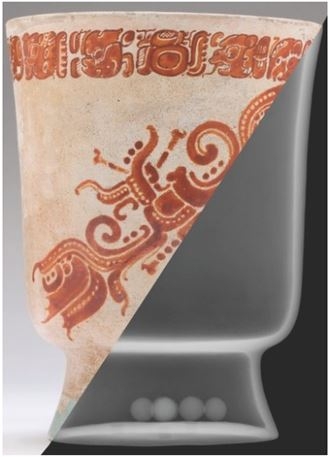
Speakers: Dr. Megan O'Neil, Associate Curator, Art of the Ancient Americas, LACMA; Laura Maccarelli, Andrew W. Mellon Fellow in Conservation Science, LACMA"
This presentation features the Maya Vase Research Project, a collaboration of LACMA's (Los Angeles County Museum of Art) Conservation Center and the Art of the Ancient Americas Program, which is studying Classic-period Maya ceramics in the LACMA collection . Using new technical imaging and a variety of analytical tools, this multidisciplinary research project is examining Maya vessels in new ways, studying materials and manufacturing techniques in relation to art historical, epigraphic, and archaeological analyses.
Contact Matthew Swanson
Email mswanson@ioa.ucla.edu
Phone
- ‹ previous
- 18 of 23
- next ›