


Past Events
Interested in Cotsen events? Sign up for our mailing list.Speaker: Dr. Kenneth Seligson, Lecturer, Department of Anthropology, USC
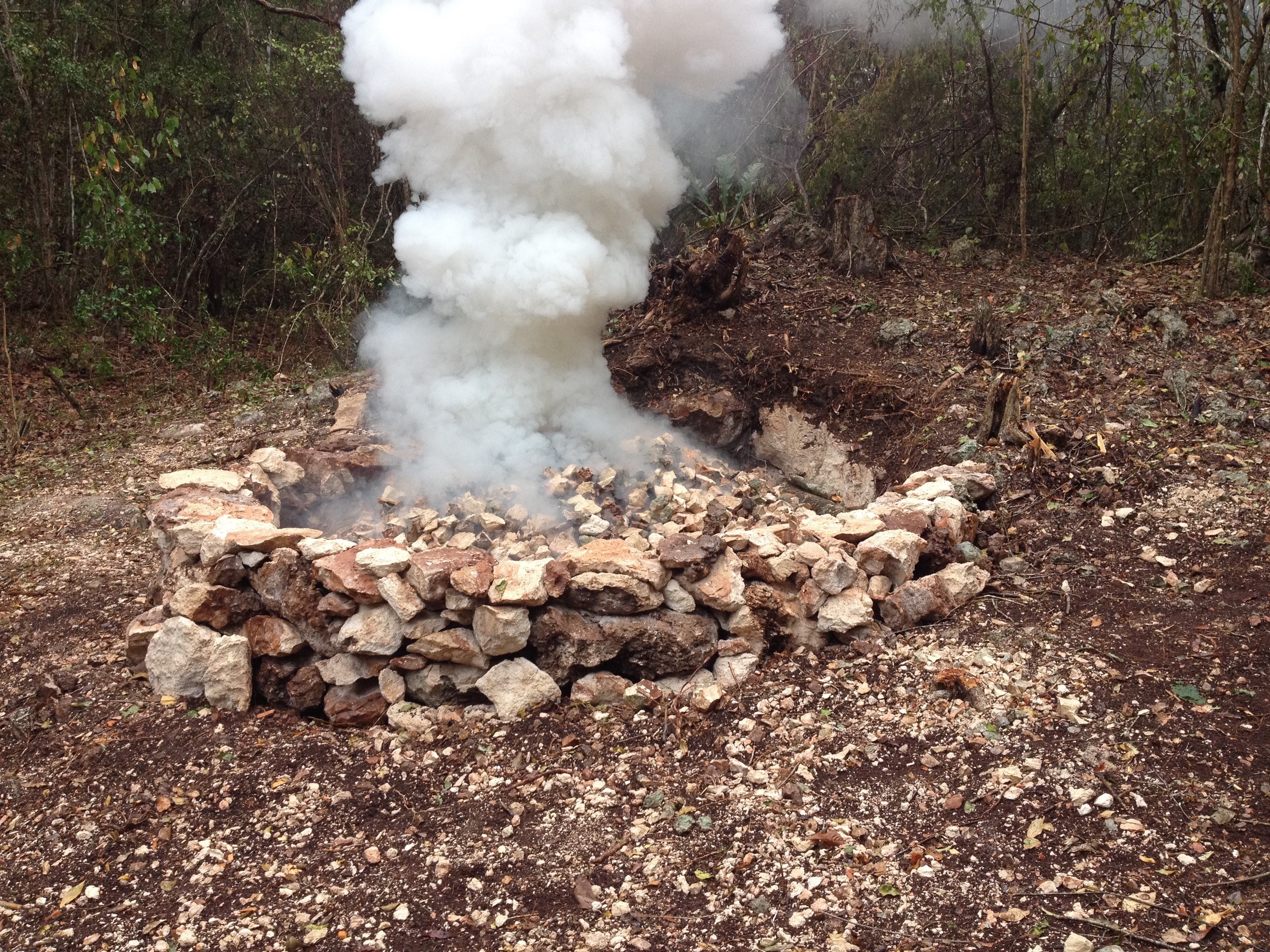
Burnt lime was one of the most significant materials in the daily lives of the Prehispanic Maya, and yet archaeologists have uncovered relatively little evidence of production methods or locales prior to the Spanish Conquest. This talk presents the investigation of a series of pit-kilns in and around the Prehispanic site of Kiuic in the Puuc Region of the northern Maya Lowlands and highlights the multiple lines of evidence that identify these structures as lime production features. This sub-regional pit-kiln technology has implications for understanding resource management practices and the socio-economic organization of a significant Prehispanic Maya industry.
Contact Matthew Swanson
Email mswanson@ioa.ucla.edu
Phone 310-825-4169
Speaker: Dr. Jennifer Meanwell, Lecturer, Department of Materials Science and Engineering, MIT
Copper and copper alloy artifacts were valued commodities at the Postclassic period (AD 1150-1500) Maya capital of Mayapán, and are found as a variety of luxury items, most commonly small ornamental bells. Due to the lack of ore deposits near Mayapán, metal must have been imported from elsewhere in Mesoamerica, entering as a raw material for shaping into desired objects or as already finished goods. As at other Maya sites, the assemblage of metal objects at Mayapán favors common commodities such as bells, tweezers, rings, and miniature axes, but the high frequency of casting errors and the unusual preference for miniaturized bells suggest local production of desired objects using re-cast metals. The past two decades of excavation at the site has unearthed a small but growing assemblage of ceramic fragments that seem to have served as remelting crucibles and as metallurgical molds for casting.
Our ongoing analysis of an exported sample of metallurgical ceramics investigates the raw materials used in manufacture, the modes of production, and the parameters of their use. We investigate the metallurgical ceramics using a variety of analytical tools, specifically ceramic petrography, electron microscopy, and chemical analyses, to demonstrate that these ceramics were used in metallurgical activities and to gain insight into their production and functionality. These highly specialized ceramic materials seem to have been produced using specific raw materials and pastes required by the intense heat and reducing atmosphere required of metallurgical production. This investigation provides insight into the localized pyrotechnical solutions developed by Mayapán’s metallurgical specialists to meet the demands of high-temperature crafting activity.
Contact Matthew Swanson
Email mswanson@ioa.ucla.edu
Phone
Speaker: Dr. Sarah Beckmann, Visiting Lecturer, Department of Classics, UCLA
Over the last generation, scholarly attention towards the production of sculpture in the late antique period (ca. 250 – 550 CE) has rekindled interest in the villa of Chiragan (Haute-Garonne, Aquitaine). Since its excavation in the 19th century, Chiragan has been heralded for its statuary collection, which remains the largest extant assemblage of marble sculptures securely associated with a private context. Among the finds are a number of late antique sculptures that were ostensibly made in eastern workshops: several portraits, small scale mythological statuettes, and multiple relief series. My paper focuses on this latter genre and suggests that these under-synthesized reliefs have much to add to our understanding both of the villa of Chiragan and the marble statuary habit of late Roman villas in southern Aquitaine.

Contact Matthew Swanson
Email mswanson@ioa.ucla.edu
Phone 310-825-4169
Speaker: Dr. Ali Mousavi, Lecturer, Department of Near Eastern Languages and Cultures, UCLA
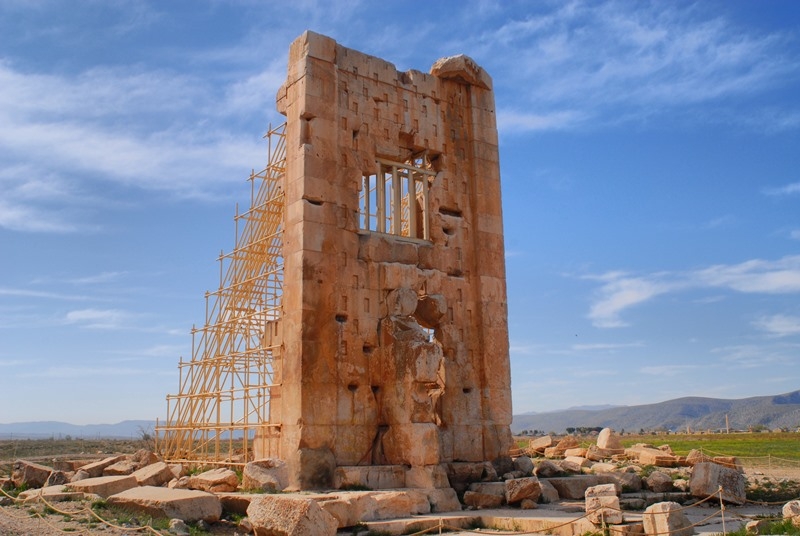
The World Heritage site of Pasargadae, in southern Iran, is the first dynastic center of the Achaemenid Empire in the 6th century B.C. Pasargadae’s palaces, gardens and the mausoleum of Cyrus the Great are outstanding examples of the first phase of royal Achaemenid art and architecture. The ruins of a solitary stone tower, known by the local name of Zendan-e Suleiman (prison of Solomon), dominates the Palace area at Pasargadae. The function of this tower and its counterpart at Naqsh-e Rustam, near Persepolis, has been the object of various studies. The towers, however, defy any convincing interpretation. The results of recent excavations at Pasargadae seem to shed some light on the function of these towers.
Contact Mathew Swanson
Email mswanson@ioa.ucla.edu
Phone
Speaker: Dr. Ioanna Kakoulli, Professor, Department of Materials Science and Engineering, UCLA
Fayum portraits are paintings mainly on wooden support reflecting Greek painting traditions and Egyptian funerary practices. These paintings are naturalistic portraits of the deceased and provide a snapshot of Greek civic life and customs in Egypt during the Ptolemaic and Roman rule. Non-invasive and non-destructive evaluation (NDE) of these portraits from the macro to the molecular length scale using combined imaging and spectroscopic techniques supported label-free fingerprint identification of pigments and binding media revealing raw materials selection, production technology and the operational sequences (chaîne opératoire) of the processes associated with the making of the painting. Results from the analyses integrating hyperspectral cubes in reflectance luminescence and X-ray fluorescence (XRF) and forensic imaging investigations combined with fiber-optic reflectance spectroscopy (FORS) and portable XRF, indicated the use of a variety of natural and synthetic organic, inorganic and composite pigments mixed with melted beeswax in ‘encaustic’ [εγκαυστική] painting technique. The significance of this research is twofold: 1) research has been conducted without the need to take any samples and 2) results from the analyses revealed key information on the fashion and practices in Egypt during the Greek and Roman period. For example, the production of the green pigment, a synthetic organic-inorganic complex, giving the green color to the ‘gemstones’ of the necklaces in women’s portraits, is similar to the processes in alchemical manuals of the third century AD, describing a method how to color rock-crystals green, in imitation of precious stones. Similarly, the pigment madder lake used to paint the red-purple garments in the portraits replicates technology employed for the production of mordanted dyes to tint yarns for the textile ‘industry’. These results further illustrate the close affinities and interconnections between the various ‘chemical arts’, such as mining, metallurgy, corrosion and dyeing, to the art of painting and how the cultural and socio-political milieu in Egypt during the Greek and Roman period, with philosophies driving experimentation, influenced material choices and processes involved for the production and use of pigments in art.
Contact Matthew Swanson
Email mswanson@ioa.ucla.edu
Phone
Speaker: Dr. Christine Lee, Assistant Professor, Department of Anthropology, Cal State LA
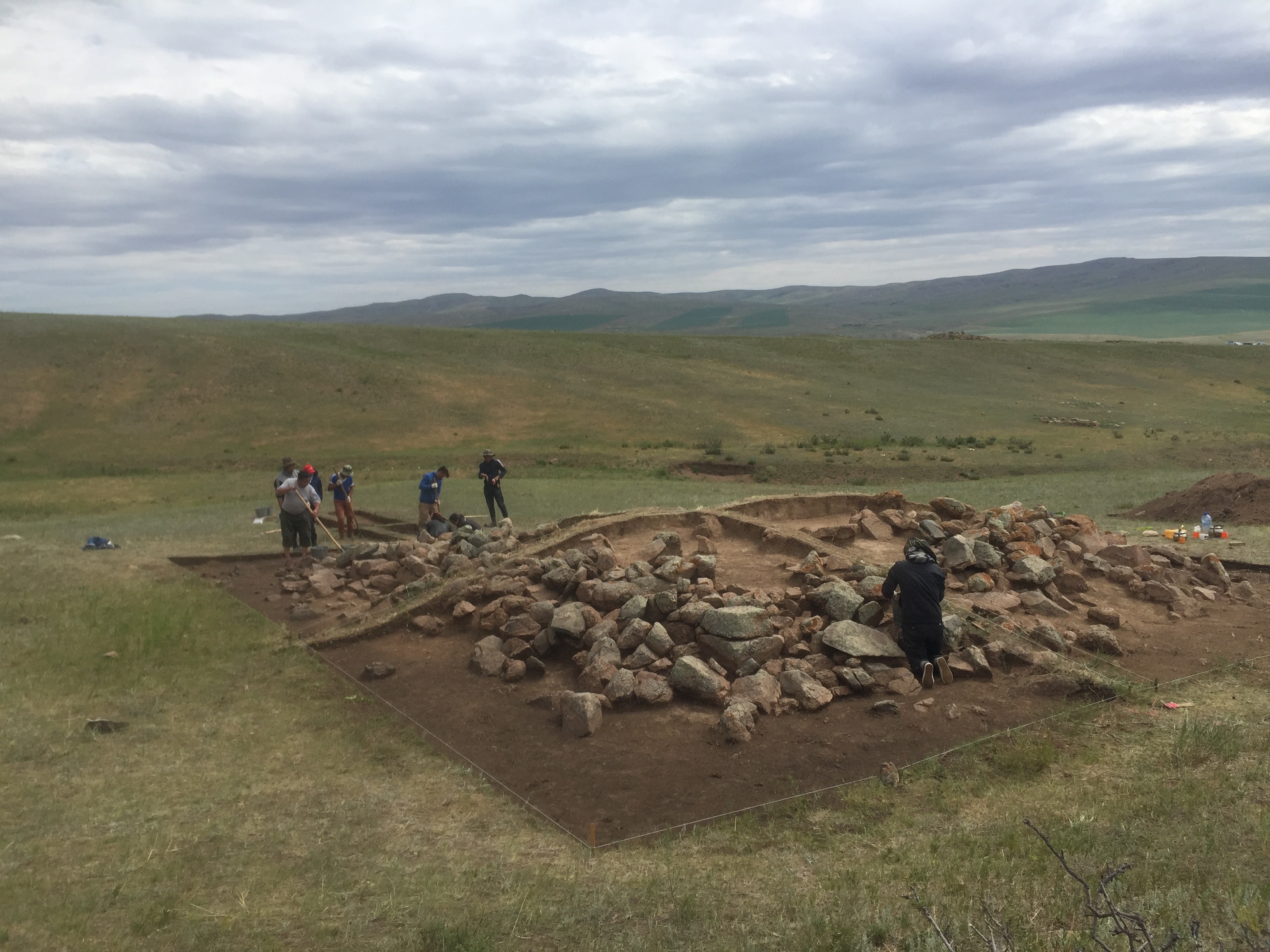
My research focuses on ethnic identity and how it is expressed in the human skeleton and its burial context. The populations I study were seldom represented in contemporary historical texts. These people included nomadic pastoralists, migrants and merchants, and finally women and children. The first population sample represents the Uighur dynasty in Mongolia. This cemetery dates to the end of the dynasty which was plagued by epidemics and famine before its collapse. Bioarchaeological analysis of Manichaean temple burials show a high mortality rate among infants and periods of high stress among the surviving adults. A second rare archaeological sample dates to Ming-Qing dynasty China. This is the only archaeological site known to have women with bound feet. A complete analysis was done on the occurrence and prevalence of footbinding from the Song –Qing dynasty burials. Next,four archaeological sites from the Western Regions (China and Mongolia) will be discussed regarding trauma patterns along the Silk Road. These are frontier sites from non-Asian Sogdian (Persian) and Pazyryk (Scythian) populations. Finally, current field excavations of several sites which date to the Period of Disunion (Dark Ages), after the collapse of the Han and Xiongnu empires. Little is known about this time other than there was widespread unrest and migration in Mongolia and Northern China. Preliminary findings suggest a change in burial patterns and ethnic identities.
Contact Matthew Swanson
Email mswanson@ioa.ucla.edu
Phone
Speaker: Tao Shi, PhD Candidate, Cotsen Institute of Archaeology, UCLA
The rise of Erlitou not only declares the end of the Longshan Age, but also open a new era of the Luoyang-centric social network. However, how the political landscape was formed and what the knowledge root of Erlitou was have not been discussed. In this paper, I will discuss the Longshan Network as the process of knowledge preparation for the rise of Erlitou. Moreover, I will introduce my survey in the Qinling Mountain Range, and see the Dan River in the Qinling Mountain Range as an expressway of knowledge transmission for the Erlitou state.
Contact Matthew Swanson
Email mswanson@ioa.ucla.edu
Phone
Speaker: Dr. Yanjun Weng, Assistant Professor, Jingdezhen University
Dr. Weng will speak about his current archaeological excavation project at the Luomaqiao Kiln site in Jingdezhen, a city with more than 1,000 years of continuous ceramic industry history. This lecture will explore the changing configuration of porcelain production along the long timeline as well as the corresponding distribution of products to royal needs, government divisions, and civilian markets of both domestic China and overseas.
Yanjun Weng obtained his PhD in archaeology in 2017 from Peking University and has been active on field works of Chinese ceramic archaeology since 2010. Before that, he received master's and undergraduate's degrees in economics and international trade.
Contact Matthew Swanson
Email mswanson@ioa.ucla.edu
Phone
Speaker: Dr. Li Min, Associate Professor, Department of Anthropology, UCLA
In this lecture Dr. Li Min will discuss the current trends of Chinese archaeology based on his observations of the conference "In Search of Early China through Archaeology: Celebrating the 70th Anniversary of Chinese Archaeology at UCLA" co-sponsored by the Cotsen Institute of Archaeology. This review of current state of research is followed by a re-visit to the highly contentious topic of the Xia (ca. 2100-1600 BCE), the first dynasty in Chinese historiography and the fountainhead of many important political institutions in Bronze Age China. Instead of debating on the historicity of this legendary regime and the stages of evolutionary typology, Dr. Li Min will approach this topic from the perspective of political experimentation and social memory by asking these questions: What made the late third millennium BCE an important watershed in sociopolitical history of China as seen through the archeological lens? What were the contributions of the Longshan and Erlitou legacy of the early second millennium BCE to the emergence of the Shang civilization during the late second millennium BCE? How was the social memory of the pre-Shang legacy transmitted to the Zhou society at the end of the second millennium BCE? How did the Zhou narratives about the Xia civilization correlate to the archaeological landscape of the second millennium BCE? Against the backdrop of societal collapse in lowland Neolithic centers and intensified interactions with Eurasian exchange networks among the highland communities, I argue that the emergence of major Longshan centers in highland basins during the late third millennium BCE and the subsequent rise of the first Bronze Age city at Erlitou in the Luoyang Basin during the early second millennium BCE had critical contribution to the formation of the Xia legacy in Zhou storytelling about the past. Far from a myth invented by the Zhou to justify its conquest of Shang, the pre-Shang legacy served as major source of political knowledge for the Zhou state-building enterprise and the Xia corresponded to a culturally constructed constellation of political concepts, institutions, and social memories of different episodes of state building from the Longshan and Erlitou periods.
Contact Matthew Swanson
Email mswanson@ioa.ucla.edu
Phone
Speaker: Professor James McHugh, Associate Professor, School of Religion, USC
Professor James McHugh explores the complex world of drinks and drinking in pre-modern India. From rice wine to palm toddy, a huge variety of drinks were made. In the early centuries of the common era, another drug—betel—joined the mix too, though cannabis and opium appeared much later. How and where were these drinks and drugs consumed? Were they forbidden or permitted? How did medical scholars think they worked? And how are they related to religion and mythology?

Contact Matthew Swanson
Email mswanson@ioa.ucla.edu
Phone
- ‹ previous
- 17 of 23
- next ›