


Past Events
Interested in Cotsen events? Sign up for our mailing list.Speaker: Dr. Alan Farahani, Postdoctoral Scholar, Cotsen Institute of Archaeology, UCLA
This talk is a summary of the research conducted by the research participants of the Ancient Agriculture and Paleoethnobotany Laboratory at the UCLA Cotsen Institute of Archaeology under the supervision of Postdoctoral Scholar Alan Farahani. Each research participant will present the results of their individual analyses on material deriving from the archaeological site of Dhiban, Jordan, inhabited ca. 1000 BCE to the present. The site of Dhiban (ancient Dibon) was the center of an Iron Age (ca. 800 - 600 BCE) polity known as Moab, and participants will present the results of archaeobotanical and artifactual analyses of a unique midden context from the most recent 2017 excavations. Moreover, laboratory members will also discuss the results of ceramic, faunal, and metallurgical analyses of material recovered from a Late Byzantine (ca. 550 CE) storeroom uncovered at Dhiban in 2013 and 2017. The cultural and historical implications of these data will be discussed with respect to the wider region of the southern Levant.
Contact Matthew Swanson
Email mswanson@ioa.ucla.edu
Phone 310-825-4169
Speaker: Dr. Chin-hsin Liu, Assistant Professor, Department of Anthropology, Cal State University, Northridge
A specialized craft industry in prehistory is often studied from perspectives such as social organization, labor and product distribution, and exchange network. While these angles indeed provide significant insight to the past, the biological impact of craft production on community members is a critical component offering a nuanced view on people’s lifeways. Pre-industrial metalworking is a biologically and environmentally demanding process that frequently involved arduous labor, landscape alteration, and waste management. In this talk, I use a cluster of metalworking sites in prehistoric central Thailand to illustrate how each stage of the metallurgical process can manifest into skeletally detectable markers (morphological and chemical), and how these markers can lead us to understand people’s actions as they faced the consequences of a long and intensive metallurgical tradition.
Contact Matthew Swanson
Email mswanson@ioa.ucla.edu
Phone 310-825-4169
Speaker: Dr. James Snead, Associate Professor, Department of Anthropology, Cal State University, Northridge
In 1913 Elizabeth Deuel, a student of archaeology and resident of Los Angeles, wrote a letter to a friend describing a situation that modern readers can only interpret as sexual harassment. Coded with the discretion of the age, her brief account nonetheless resonates to modern readers conscious of the complex history of this topic in the field of archaeology.
The Deuel letter is an example of scattered material in archaeological archives that documents power relationships within communities of interest in American archaeology at the turn of the last century. Her participation and subsequent activities also brought her into contact with several of the principal archaeological figures in the United States, providing considerable insight into the sexual politics of the era. This presentation examines the Deuel case, with reference to the "relevance" of the history of archaeology to issues of considerable relevance in archaeological practice.
Contact Matthew Swanson
Email mswanson@ioa.ucla.edu
Phone 310-825-4169
Speakers: Dr. Marilyn Kelly-Buccellati & Dr. Giorgio Buccellati, UCLA
During the last seven years when war has raged in Syria, foreign archaeological projects have come to an almost total standstill. But then, the question arises: what were the presuppositions that, instead of allowing archaeology to disappear or, worse, to be kidnapped by a violent iconoclastic fundamentalism, could have given archaeology an impetus in fostering stronger group identity precisely at a moment of crisis? Our talk will answer this question with reference to the site of ancient Urkesh, where we have had been excavating since 1984. We talked about it already on other occasions, but innovative projects have been burgeoning at a steady rhythm around this site. We will talk about these various new activities, and draw some conclusions about the nature of community archaeology as we have experienced it in ways that were unimaginable only a few years back: it is truly community archaeology "from below," where the "below" includes all of us, the community of archaeologists alongside the many other communities that find themselves nurtured by the distant past embedded in their territory.
Contact Matthew Swanson
Email mswanson@ioa.ucla.edu
Phone
Speaker: Dr. Joseph (Seppi) Lehner, Assistant Professor, Department of Archaeology, University of Sydney
The ship that sank at Cape Gelidonya (Turkey) ca. 1200 BC is one of only three known wrecks dating to the Late Bronze Age, though this was an era of intensive overseas exchange in the Mediterranean. It was also one in which metals had an importance like that of oil today, and the cargo found on the seabed at Cape Gelidonya consists primarily of copper and tin in the form of ingots and ingot fragments, along with broken bronze tools intended to be remelted and refashioned into useful implements. The ship likely belonged to a tinker traveling a circuit along the coasts of Cyprus, Syria, and southern Anatolia.
The shipwreck was among the first to be scientifically excavated, when in 1960 George Bass announced to the world the exciting discoveries he made. Newer discoveries at Cape Gelidonya have now shed new light onto this important site, and cutting-edge scientific analyses of the cargo now gives us brand new insight into Bronze Age technologies and trade networks. Even more, we get a view into the life of a maritime metal at the end of the Bronze Age when the famous civilizations and empires of the Mediterranean and Near East experienced significant upheaval. Here Dr. Lehner presents the Cape Gelidonya shipwreck in its cultural and historical context, revealing how maritime cultures and trade in this crucial time period functioned and what new problems now emerge in the study of ancient societies in this dynamic region.
Contact Matthew Swanson
Email mswanson@ioa.ucla.edu
Phone 310-825-4169
Speaker: Gazmend Elezi, Ph.D. Candidate, Cotsen Institute of Archaeology, UCLA
The large amount of ceramic sherds in archaeological contexts and the variety of ceramic wares, shapes and dimensions during the Late Neolithic period in the Balkans is an indication that pottery was involved in many social activities. As such, it is among the best proxies to understand the daily life of Neolithic communities. In this paper, I am going to present the first preliminary results of a multidisciplinary and multidimensional approach of the Late Neolithic pottery from the Korçë region in SE Albania. In order to investigate the sociocultural dimensions of the pottery, I have used a number of methods including typological and stylistic classification, ceramic petrography, X-ray analysis, and residue analysis. The first results of this study show that, although there are significant similarities between different sites, there are also technological, stylistic, and functional differences that characterize the ceramic assemblage of each settlement. The variety of pottery is also evident within each site, while there are some indications for sharing technologies between different media. The potters have used different clay sources or recipes for manufacturing their vessels, while a number of techniques were used for finishing and elaborating their surfaces. Ceramic vessels were also involved directly or indirectly in the extended exchange networks developed in the area during this period. Moreover, some of the ceramic containers seem to have an additional social value that probably was not related to their function as their life was extended by repairing them.
Contact
Phone
Speaker: Michael Moore, PhD Candidate, Department of Near Eastern Languages and Cultures, UCLA
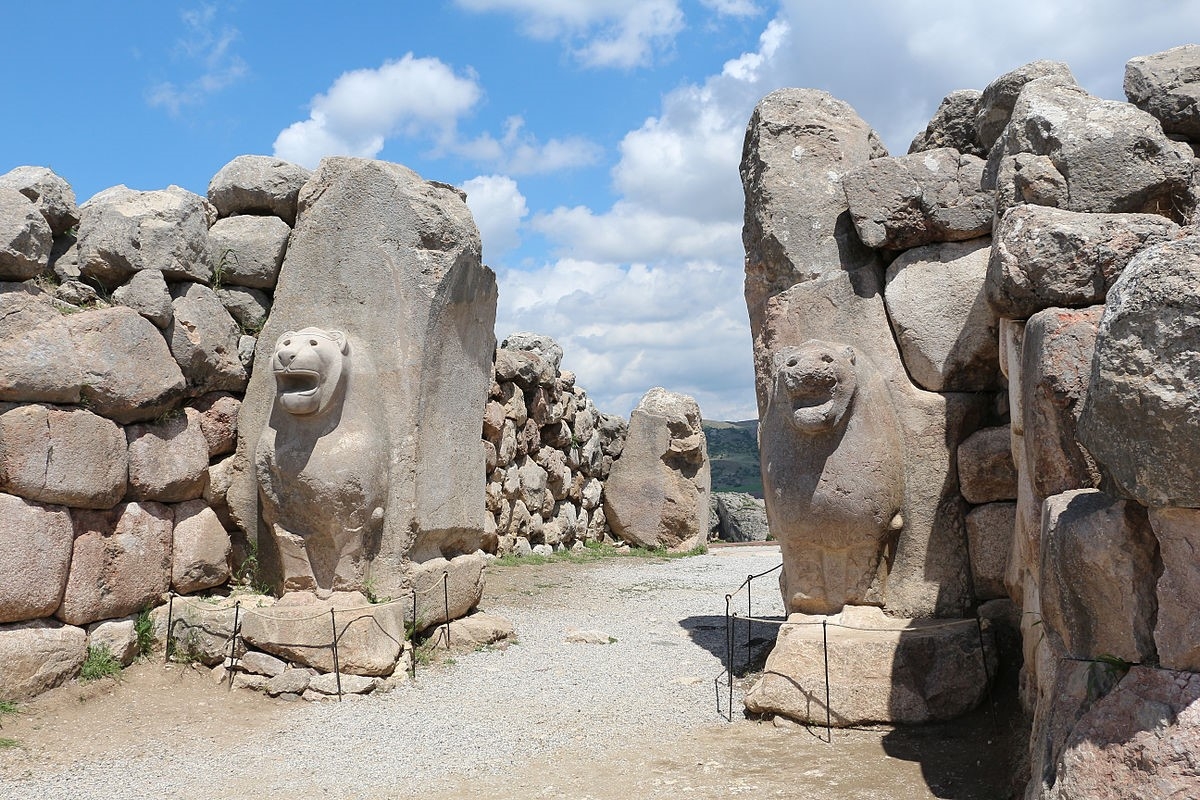
Virtually all studies of Hittite festivals have focused on philological issues and the cultural and religious background of the festivals (Hattic, Hittite, Luwian, Hurrian, or Mesopotamian). Studies of the roles of the participants, the political ramifications of festivals, the sensorial experience of participants, and other aspects of Hittite festivals remain unexamined. Taking the festival celebrations and sacred landscape of the Hittite capital of Hattusa as its points of departure, this talk examines the sociopolitical aspects of Hittite festivals and how spectacle was used to display and contest power in the Hittite court.
Contact Matthew Swanson
Email mswanson@ioa.ucla.edu
Phone
Speaker: Dr. John Papadopoulos, Professor, Department of Classics, UCLA
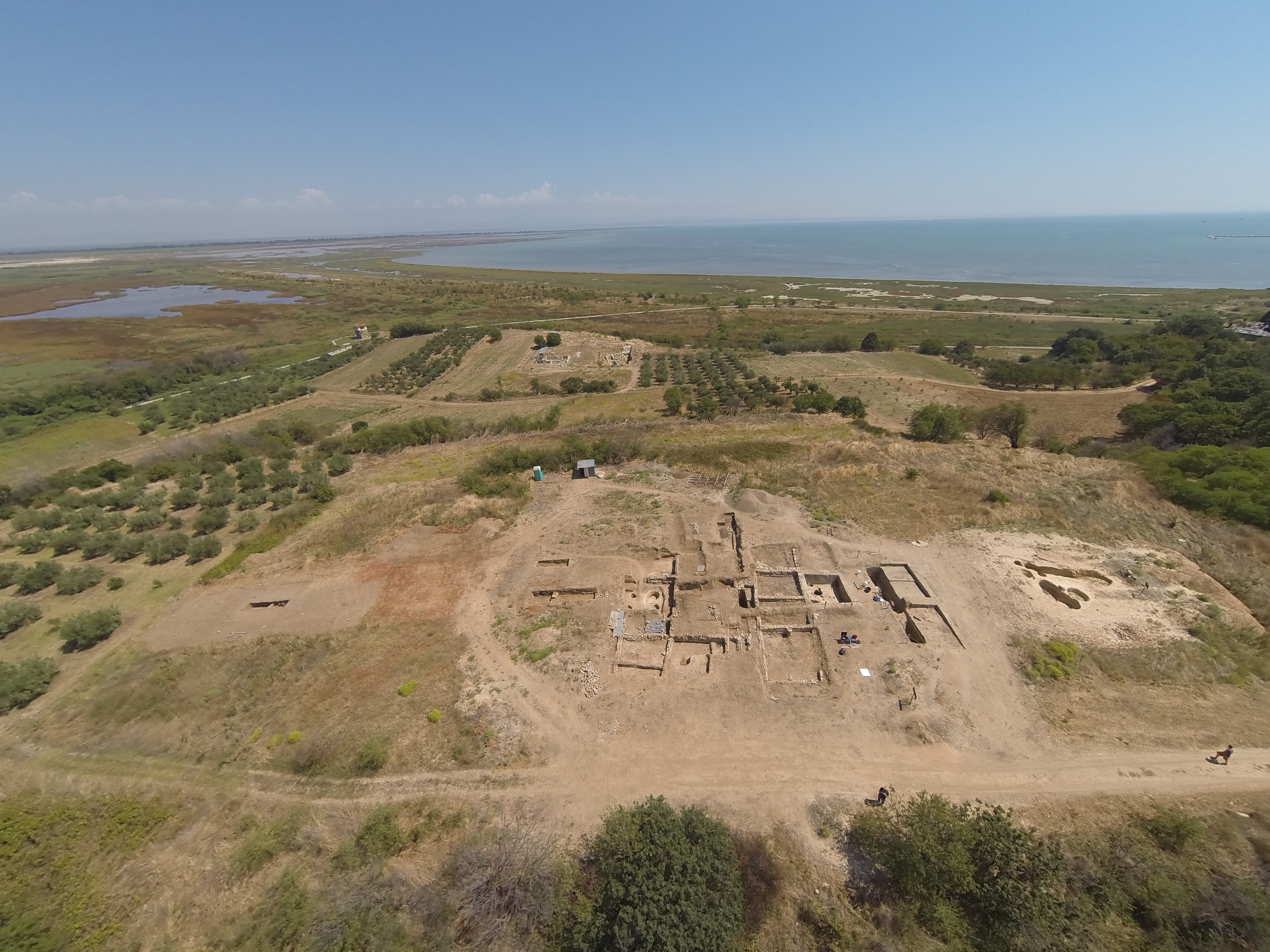
The final season of fieldwork on the Ancient Methone Archaeological Project—a collaboration of Greek Ministry of Culture and UCLA under the auspices of the American School of Classical Studies at Athens—was concluded in the summer of 2017. This presentation is an overview of our fieldwork at the site during the 2014-2017 seasons, and incorporates earlier fieldwork by our Greek colleagues beginning in 2003.
Contact Matthew Swanson
Email mswanson@ioa.ucla.edu
Phone
Speaker: Dr. Jade d'Alpoim Guedes, Assistant Professor, Department of Anthropology, UC San Diego
Research on agriculture's spread in East Asia has followed an underlying assumption: that farming produced equally reliable returns across the vast expanse of territories into which it spread and always placed farmers at a demographic advantage. Significant ecological barriers to growing crops on the Tibetan Plateau meant that the opposite was true. Using ecological niche modeling to illuminate how foragers and farmers interacted in environments marginal to crop cultivation, this paper demonstrates that the higher elevation reaches of the “third pole” constituted a barrier for expanding millet farmers. In these areas foragers maintained a competitive advantage. Following the end of the climatic optimum, decreasing temperatures effectively ended millet farmer’s expansion. It was only following the introduction of a suite of new crops and animals that the Tibetan economy as we know it today was able to flourish, but also that pastoralists and farmers finally began to truly encroach on forager territory.
Contact Matthew Swanson
Email mswanson@ioa.ucla.edu
Phone 310-825-4169
Speaker: Adam DiBattista, PhD Candidate, The Cotsen Institute of Archaeology, UCLA
The early Iron Age was a time of profound social change in Greece in which new ideas about materials like bone and ivory develop. At the same time, textual and iconographic evidence speaks to the importance of animals and animal sacrifice in the Greek world. As the remnants of living animals, objects made from tooth or bone carry special potential for the creation and negotiation of meaning. Beginning in the Early Iron Age, these objects are frequently deposited in votive contexts where they function as a novel form of social behavior and organization based around sanctuary sites. Analysis of the technical aspects of worked animal object production helps reveal the attitudes of producers towards the materials. Additionally, contextual studies of worked animal objects reveal patterns of use and deposition of these objects.
Contact Matthew Swanson
Email mswanson@ioa.ucla.edu
Phone
- ‹ previous
- 16 of 23
- next ›