


Past Events
Interested in Cotsen events? Sign up for our mailing list.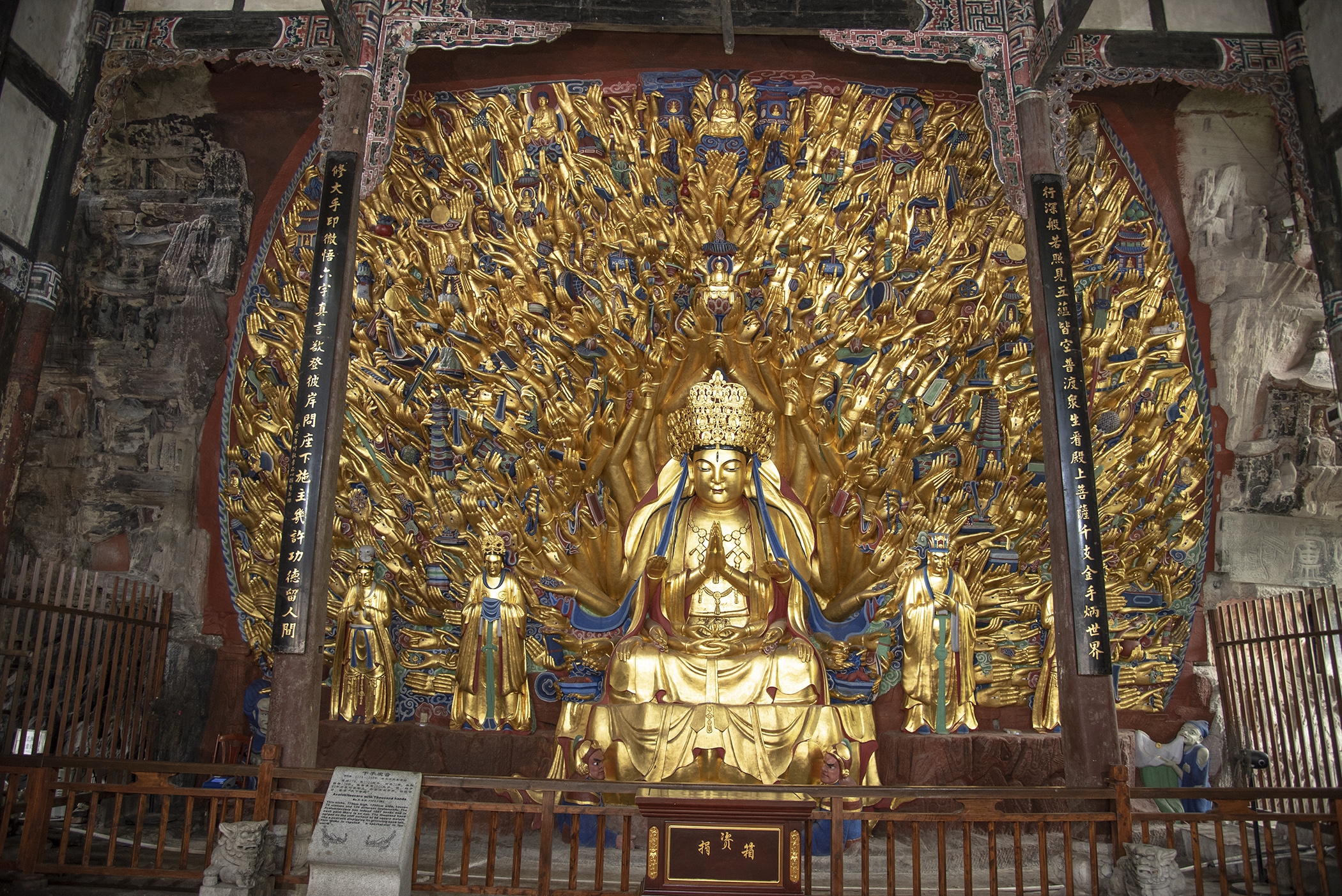
Bio:
Dr. Sonya Lee is Associate Professor of Chinese Art and Visual Cultures at the University of Southern California, where she holds a joint appointment in the Departments of Art History, East Asian Languages and Cultures, and Religion. A specialist in religious art and architecture of pre-modern China, Dr. Lee has published widely on the material culture of Chinese Buddhism. Her reserach interests also include material culture of the ancient Silk Road, art and ecology, Asian art collecting, and heritage conservation.
Abstract:
The recent restoration of the Thousand-Armed Avalokiteshvara at Baodingshan in Dazu has generated a lively debate about the state of heritage conservation in modern China. This talk discusses this project from an ecological perspective that highlights the restorers’ sensitivity to the local climatic conditions and geological properties in preserving monumental cliff-side rock carvings. It also contextualizes the project as part of a long history of restoration in the region in which past restorers likewise pursued eco-compatibility in the materials and methods needed to repair cave temples for present and future visitors.
Contact Sumiji Takahashi
Email sutakahashi@ioa.ucla.edu
Phone 310-825-4169
 Bio:
Bio:
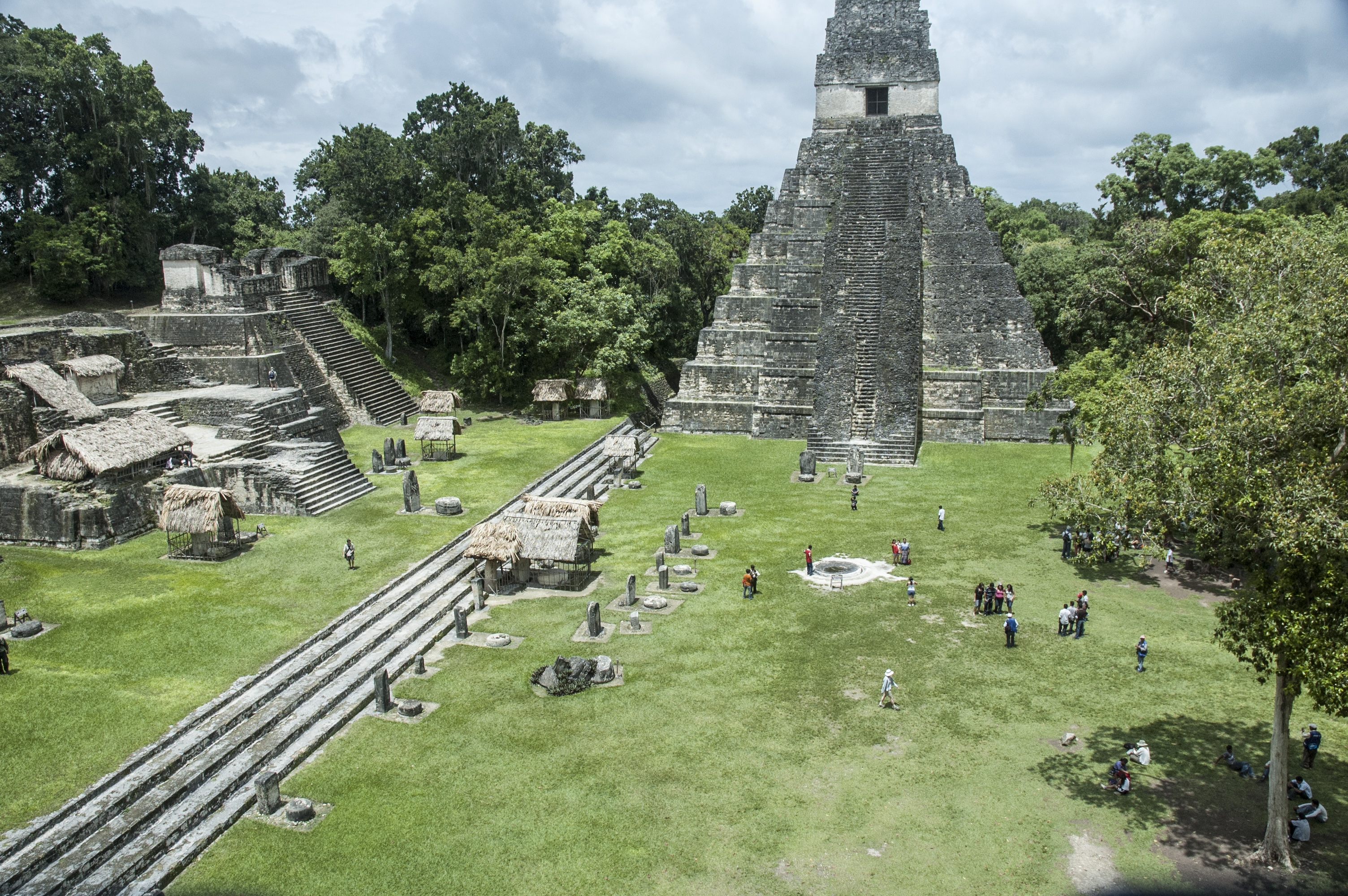
Professor Tsukamoto is an anthropological archaeologist who received his Ph.D. from the University of Arizona in 2014. His research centers on the interplay between social relations and embodied practices that are reflected in the spatial and material settings of early complex societies. He seeks to refine different theoretical and methodological approaches in order to better understand the nature of power and ideology; the intersection of social change and theatrical performance; and the materiality of social inequality. Methodological interests include spatial analysis, material analyses through petrographic microscopy and particle-induces X-ray emission (PIXE), and epigraphic studies. He currently conducts fieldwork in the Maya lowlands of southern Mexico where he has directed the El Palmar Archaeological Project since 2007. This project examines the urbanization processes resulting from the mutual entanglement between public and private practices in El Palmar during the Classic period (ca. A.D. 250-950).
Contact Sumiji Takahashi
Email sutakahashi@ioa.ucla.edu
Phone 310-825-4169
 Bio:
Bio:
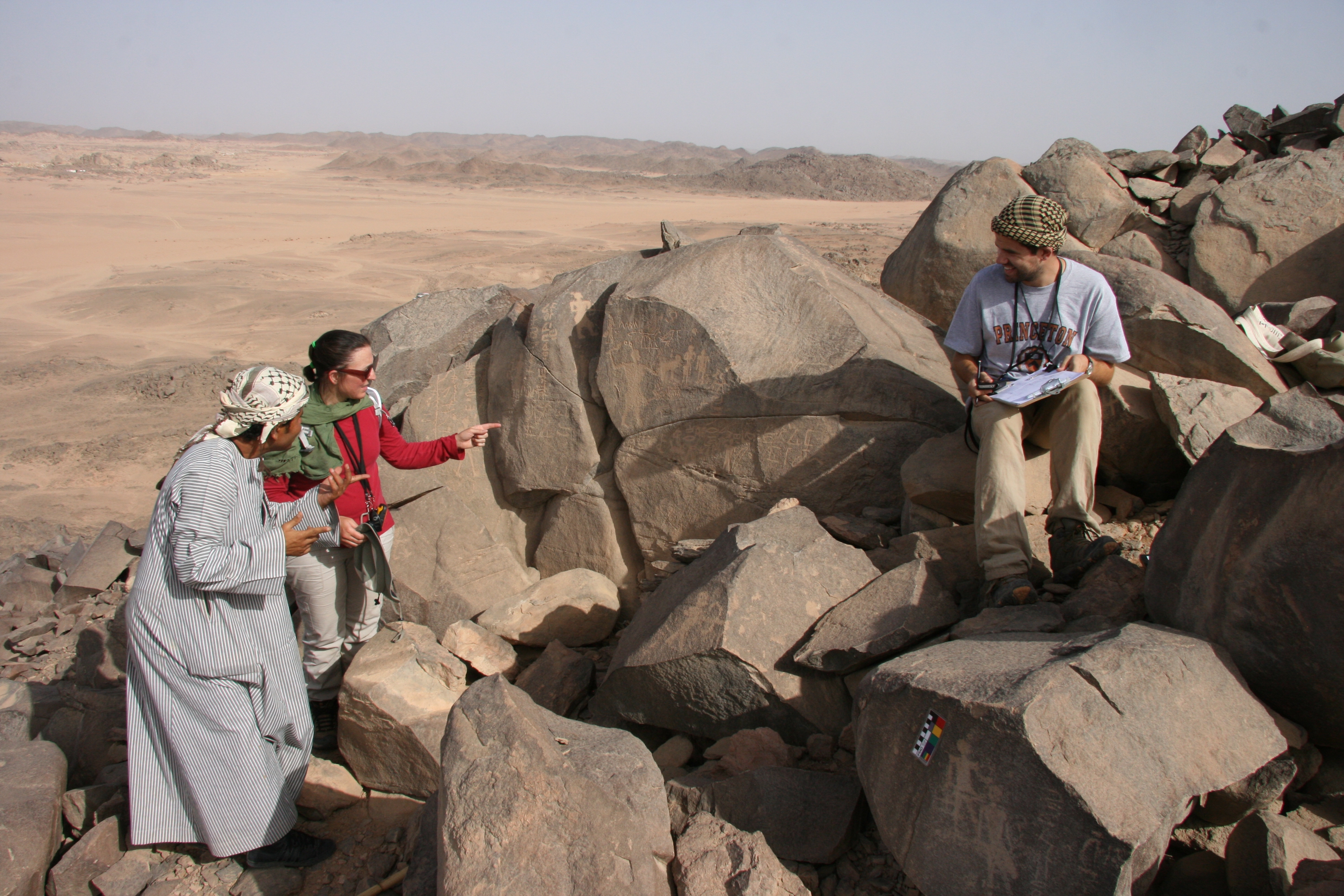
Dr. Kate Liszka is Assistant Professor with the Department of History at California State University, San Bernardino, and holds her degrees from the University of Pennsylvania (Ph.D.), and from 2012 to 2015 was a Cotsen Postdoctoral Fellow and Lecturer with Princeton University. Her areas of specialization are Nubians in Egypt, the Medjay, ethnicity and identity in Antiquity, multicultural Interactions in frontier regions, the Pangrave Archaeological Culture, and large-scale mining expeditions in Antiquity. Dr. Liszka is the Director of the Wadi el-Hudi Expedition in the Egyptian Eastern Desert.
Contact Sumiji Takahashi
Email sutakahashi@ioa.ucla.edu
Phone 310-825-4169
Dr. Cathy Lynne Costin, Professor, Department of Anthropology, CSU Northridge
Revisiting North Coast Formative Period Ceramic Iconography: the Case for Foundational Ritual Power
In my current research, I am building an argument that a larger proportion of North Coast Formative ceramic iconography reflects the consumption of therapeutic and psychoactive substances than is generally acknowledged in recent scholarship and that both the content and mode of these images inform us about the processes through which emerging elites began to consolidate their power. First, I propose that far more of the three dimensional forms reference psychoactive substances than current interpretations enumerate and that many images allude to mental and bodily experiences associated with altered states of consciousness. Then, I suggest that two dimensional motifs rendered in faint, postfire incisions discernable only to those in close proximity to the vessels record tightly-controlled esoteric knowledge concerning the preparation and ingestion of psychoactive substances and/or the interpretation of visionary experiences. All told, I demonstrate how ritual specialists controlled and deployed sacred imagery and ritual knowledge during the time in which social complexity first developed in the Andean region.
Contact Sumiji Takahashi
Email sutakahashi@ioa.ucla.edu
Phone 310-825-4169
Dr. Salim Faraji, Professor, Department of Africana Studies, CSU Dominguez Hills
Contact Sumiji Takahashi
Email sutakahashi@ioa.ucla.edu
Phone 310-825-4169
The Bubasteion and its New Kingdom Tombs at Saqqara. Results and Challenges.
Dr. Alain Zivie, Director, French Archaeological Mission of the Bubasteionat Saqqara
Contact
Email sutakahashi@ioa.ucla.edu
Phone 310-825-4169
Dr. Henner von Hesberg, Visiting Scholar, Getty Villa
Fragments of the imitations of smaller buildings are known from different sites in archaic Selinunte: the agora, the sanctuary of Demeter and from the acropolis. They can be reconstructed in three different types, or as a sort of open or closed box, or as a small temple with columns. The dating is possible in one part from the context, f.i. in the agora, where there are mainly strata from the archaic period until the end of the 5th century (destruction by the Carthagians). The main problem is the function. There is no doubt they are votives, but what kind do we have to consider? Interesting in the configuration of the models is the use of elements of the Doric order to express a special sort of monumentality.
Contact Sumiji Takahashi
Email sutakahashi@ioa.ucla.edu
Phone 310-825-4169
Speaker: Dr. Travis Stanton, Professor, Department of Anthropology, UC Riverside
Contact Sumiji Takahashi
Email sutakahashi@ioa.ucla.edu
Phone 310-825-4169
Speaker: Dr. Brian Alofaituli, Visiting Scholar, Asian American Studies Department, UCLA
The syncretism of Sāmoa’s past and new religion blended different ideas that defined the way these Polynesians understood Christianity. The new belief system unsuccessfully suppressed the pre-Christian past of myths and legends, and faʻa-sāmoa (Sāmoan way of life and culture) navigated through the new terminologies and beliefs through Sāmoan practices. The matai (Sāmoan chief) played a significant role in the spread of Christianity. The hybrid of aspects of both the old tradition and the new lotu (church) impacted Sāmoa so immensely that within twenty years since the arrival of the Gospel there “were practically no self-confessed heathen left.” The following Sāmoan saying provides an apt description of the hybrid nature of the church and faʻa-sāmoa: ua vaʻavaʻalua le talalelei ma le aganuʻu (the Gospel and faʻa-sāmoa travel in the same canoe). Other relevant sayings inclued e puipui ele aganuʻu le talalelei (faʻa-sāmoa protects the Gospel), e mamalu le talalelei ona ole aganuʻu (the Gospel is prestigious and honored in Sāmoa because of faʻa-sāmoa). Both institutions were desirous of benefits, in need of support to achieve their goals, and more importantly they demanded as much control over the other as possible. This hybridity of culture and religion plays a significant role in Sāmoan communities in the diaspora today.
Contact Matthew Swanson
Email mswanson@ioa.ucla.edu
Phone 310-825-4169
Speaker: Dr. Jana Skrgulja, Visiting Scholar, UCLA
The aim of the lecture is twofold: on the one hand, to survey main archaeological sites in the area between the eastern Adriatic and the river Drava, where the remnants of the material culture ascribed to the Goths have come to light in the past hundred years or so, with particular emphasis on southern Pannonian region, as well as to present and analyze the types of artifacts found; on the other hand, to address the still ongoing debate about the relationship between material culture and ethnic identity based on the selected examples of artifacts attributed to the Goths (in opposition to the so-called ethnic ascription method). Building upon the post-processualist approach, lecture also intend to contextualize the material evidence in terms of possibilites offered by the artifacts to provide information about burial customs, social identity and gender status.
Contact Matthew Swanson
Email mswanson@ioa.ucla.edu
Phone 310-825-4169
- ‹ previous
- 15 of 23
- next ›