


Armenian Lab
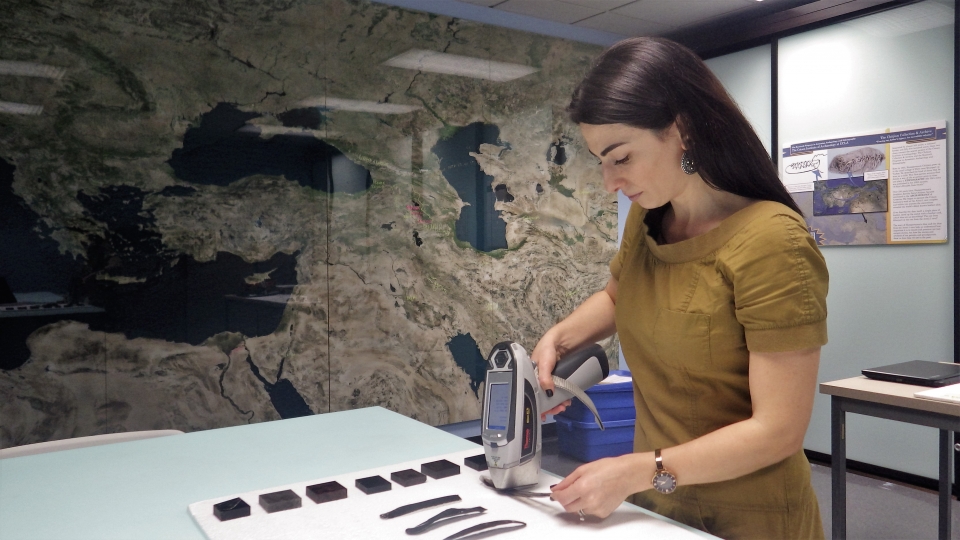
Photo by Ellen Hsieh
Contact: Dr. Kristine Martirosyan-Olshansky
Email: kristineolsh@ucla.edu
Lab: Fowler A204
Hours:
Drop in Mondays, Wednesdays, and Fridays, 11 AM - 4 PM
To visit with a group, please contact Dr. Martirosyan-Olshansky directly.
To tour all the labs, join us at the annual Cotsen Institute of Archaeology Open House!
Mailing Address:
Armenian Archaeology Lab
308 Charles E. Young Dr. North
A204 Fowler Building, 151006
Los Angeles, California 90095-1510
The Armenian Archaeology Lab is a collaborative research space dedicated to the archaeology and early history of Armenia. The lab is directed by Kristine Martirosyan-Olshansky, who has been conducting field research in Armenia since 2008 with a focus on the early agricultural communities of the region. She is currently co-directing the excavations of the Masis Blur Neolithic settlement, an 8000-year-old agro-pastoral village located in the Ararat Plain. The project investigates the adaptation of farming, exploitation of natural resources, and socio-economic connections in the region c. 6200-5400 BCE through the analysis of the artifacts left behind by the inhabitants of the Masis Blur settlement. Dr. Martirosyan-Olshansky research broadly deals with lithic technologies of the Neolithic period and provenance of obsidian to investigate resource acquisition, utilization, and exchange by the first farmers of the Ararat Plain.
Volunteer Opportunities
The Armenian Archaeology Lab welcomes all interested in archaeology! Undergraduates, graduate students, and community members are encouraged to utilize the resources available here at the lab. As a volunteer, you have the opportunity to process materials from the Masis Blur Archaeological Project excavations and see what happens behind-the-scenes after the field season concludes. Interested students can also inquire about internship opportunities that are more project focused with tangible outcomes (e.g., writing sample, conference presentation, public outreach). We also invite you to consult with Dr. Martirosyan-Olshansky on your personal research questions and interests as they pertain to the research foci of the program!
The Armenian Lab often has volunteer and internship opportunities in the following core areas:
Sorting Heavy Fraction
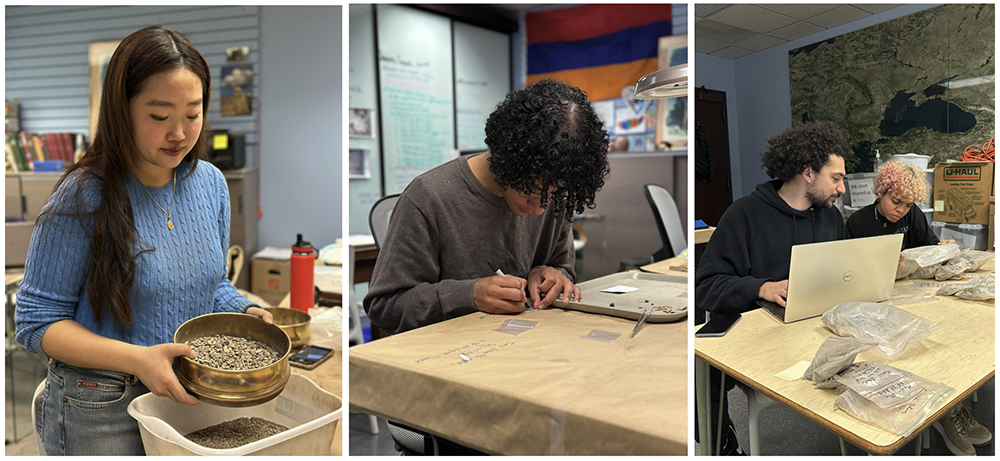
As we excavate, we collect soil samples that represent the different stratigraphic contexts of the site. Each soil sample is subjected to flotation. Flotation is a method that uses water to separate materials from dirt. Unlike dry sieving, where you simply run the soil through a 1 mm mesh in the field, flotation allows us to collect miniscule fragments of light, organic artifacts, including carbonized seeds, charcoal, and bone. Volunteers in the lab will sort those small artifacts into size groups and material types, building their skills in identification, precision, and critical analysis. By piecing together these data, we are better able to understand the various tasks undertaken in each area of the settlement, the foods that form their ancient diet, and the way in which they changed their built environment based on their changing needs. Volunteers will also familiarize themselves with the MBAP database and learn how to organize data from an active excavation.
Building Maps with GIS
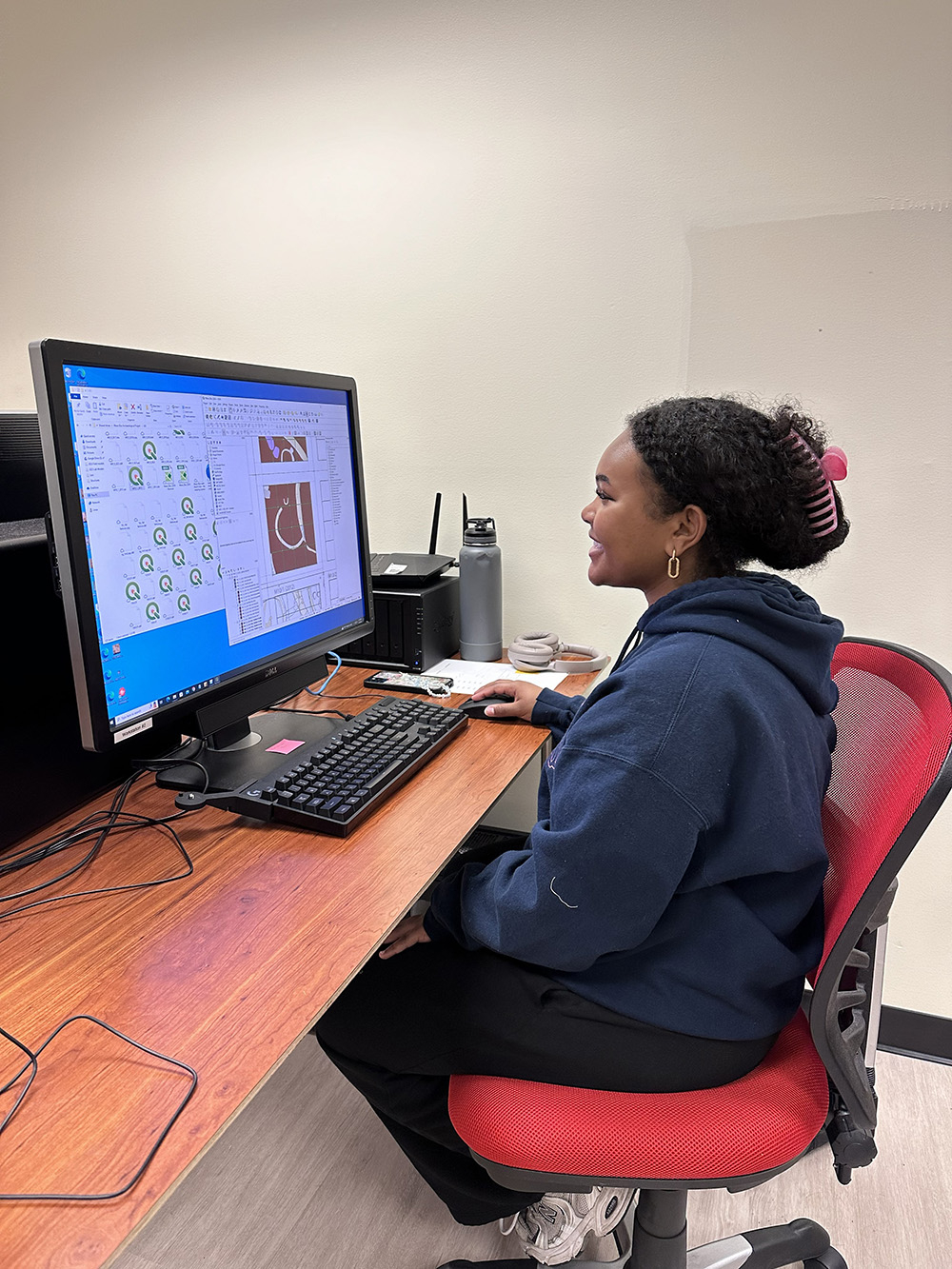
At Masis Blur, we identify finds, features, structures, and loci. A find is a portable object that was made, used, or modified by humans, such as stone tools or beads. A feature is evidence of human activity that cannot be moved without being destroyed, including fire pits and storage bins. A structure consists of architectural remains constructed by past people, including wall foundations and post holes. A locus is a stratigraphic context with a distinct soil composition, color, and compaction. After the excavation, we digitize the site map with each of these items and their elevations using GIS. Volunteers with experience using QGIS/ ArcGIS will create these layers and gain valuable experience with digital data management, cartographic design, and spatial analysis.
Transcription and Translation of Excavation Notebooks
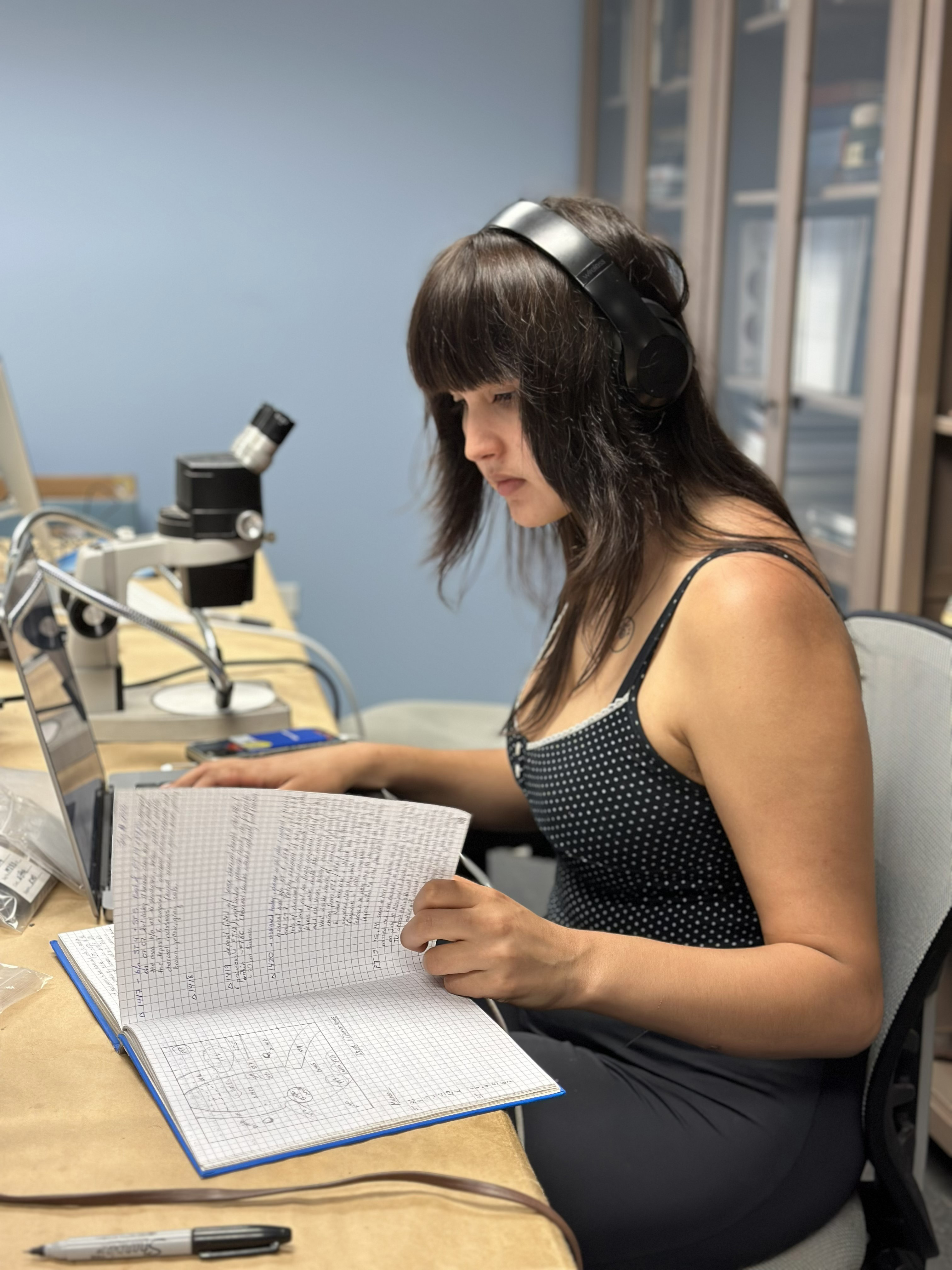 We are in the process of digitizing our past excavation notebooks to have searchable archives which will facilitate research and collaborations with our colleagues, as well as preserve the details of the day-to-day activities in a digital format. From scans of the physical notebooks, volunteers can transcribe the notes of previous excavators. They will see how observations in the field slowly evolve into big-picture interpretations of past human behaviors. Volunteers can see the responsibilities of trench supervisors in the field, including recording finds, drawing contexts, and listing elevations. Additionally, volunteers will also be able to better understand the context of the excavation, reconstructing momentous discoveries in the site’s history.
Lithic Analysis and Obsidian Sourcing
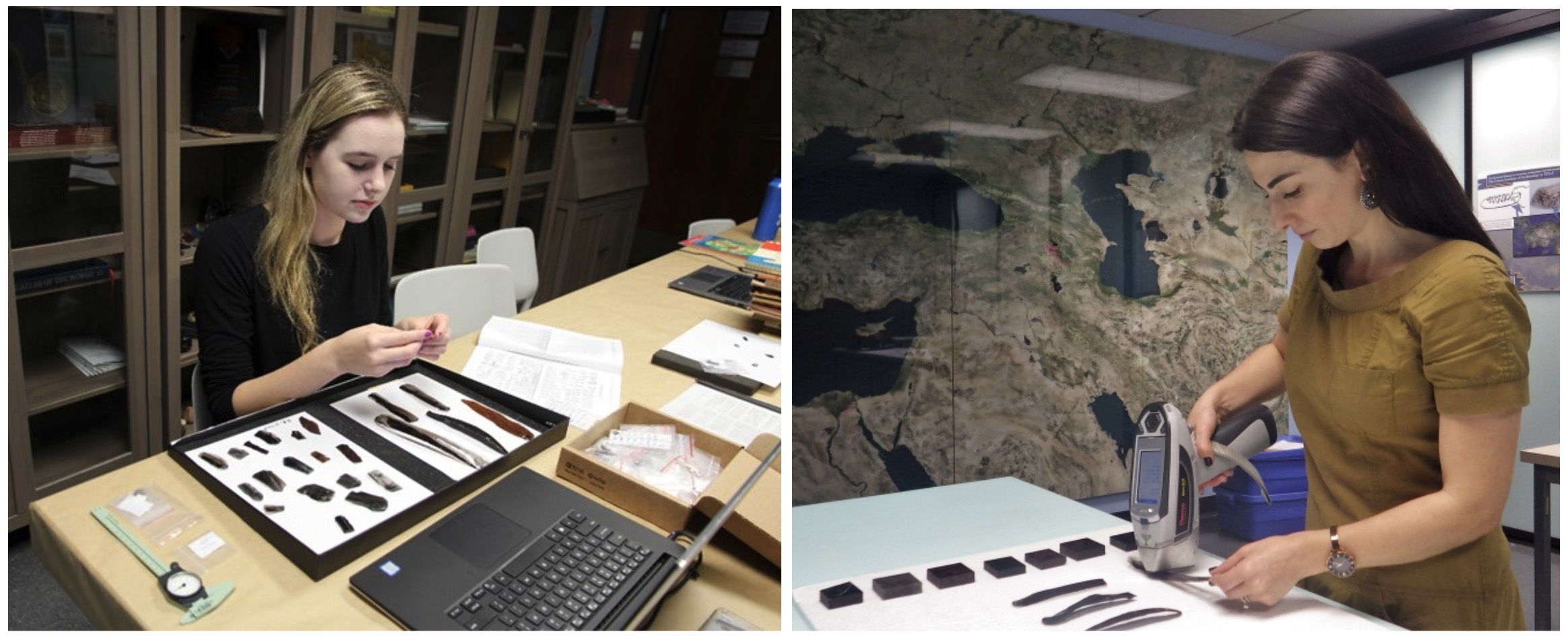
Volunteers can work closely with chipped stone artifacts recovered at Masis Blur through lithic analysis and obsidian sourcing. For lithic analysis, volunteers can examine the artifacts for knapping techniques and tool typology to help us understand the entire life history of an artifact - from raw material procurement to manufacture, use, reworking, and discard. Obsidian sourcing uses geochemistry to establish a correlation between the obsidian artifact and the volcano of the raw material from which it was made. Obsidian sourcing can reveal resource procurement strategies, resource utilization, and ancient trade networks. Volunteers will be trained in the portable X-Ray Fluorescence (pXRF) machine and learn to read spectra measuring trace elements in the artifacts. The trace elements are matched to raw material sources, allowing us to determine if the obsidian was sourced locally or brought from distant regions.
Please note, the use of radiation producing instruments is controlled by UCLA’s Environmental Health and Safety office and users must complete radiation safety training with UCLA. Therefore, this opportunity is limited to UCLA students.
Illustration
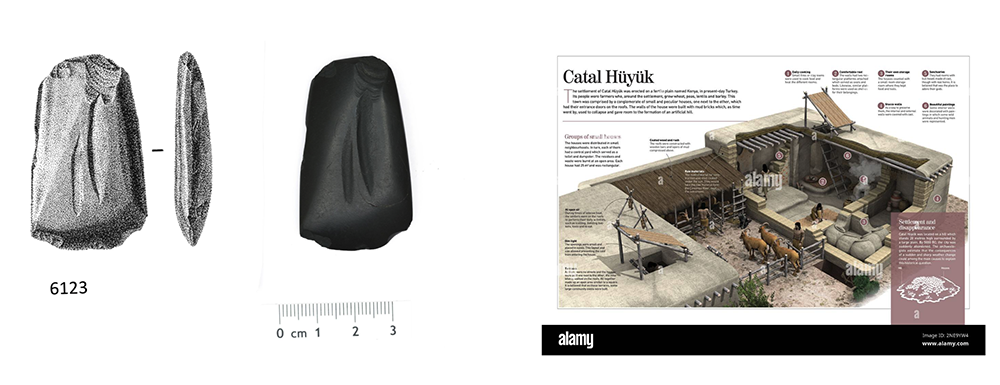
Those trained in the fine and digital arts can assist the project in creating artifact drawings and interpretive illustrations. Artifact drawings are hand-drawn visual documents of artifacts (stone and bone tools, pottery, ornaments, etc.) drawn to scale, typically showing a profile (cross-section) alongside a front-view. These reveal forms, thickness, and manufacturing or use marks in a way photographs cannot. Interpretive illustrations are artistic reconstructions, based on archeological evidence, showing what the site, buildings, or artifacts may have looked like when in use.
Publication
We are preparing our site publication following over a decade of excavations at Masis Blur. Volunteers who are interested in contributing to our report of activities can aid in this process by creating data tables, photographing finds, designing figures, photoshopping labels, assembling a literature review, and perfecting citations. Volunteers can also preview the draft and complete copy edits in anticipation of final submission.

The Research Program in Armenian Archaeology and Ethnography
The Armenian Archaeology Lab is only one part of the Research Program in Armenian Archaeology and Ethnography, which was established through a generous endowment by Zaruhy Sara Chitjian in 2013. To learn more about our other research projects, please visit our program website!
- Masis Blur Archaeological Project: Early Farming Communities in the Ararat Plain, Armenia (2012 - Present)
- Berekian Family Archive: Survivors of the 1915 Armenian Genocide (2016)
- Karashamb Necropolis: Obsidian Provenance Research of Middle Bronze - Early Iron Age Funerary Objects (2014 - 2015)
- Arpa River Basin Survey: Diachronic Corridor for Human Movement (2011)
- Areni-1 Cave Complex: Excavations of a Chalcolithic Period Site (2007 - 2011)
Join our team
(Group photo coming soon!)
2025-2026 Cohort: Katrina Kuxhausen-DeRose, Narelly Santiago, Rachel Hsieh, Emma Bertoutian, Vera Mkhsian, Sophia Emens, Natalie Sellers, Narod Arisian, Angelina Backrien, William MacNeil, Aidan Snead, Carmen Efferson, Ona Inkratanakul, Prudence Rakamnuaykit, V Malian.
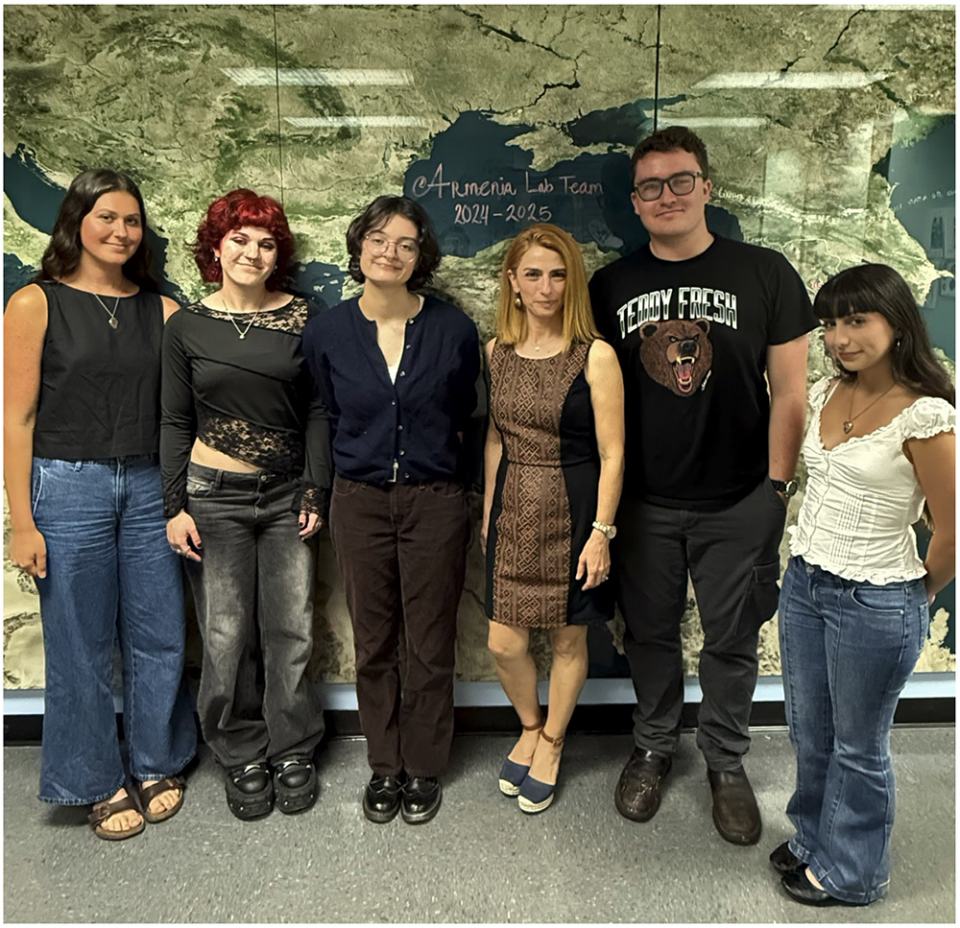
2024-2025 Cohort (left to right:) Maggie Chapin, V Malian, Chloe Gupta, Kristine Martirosyan-Olshansky, Eric Large, Chloe Gupta, Emma Bertoutian. Not pictured: Elizabeth Petrick, Sujeyla Barrios Lopez, Travis Crane.
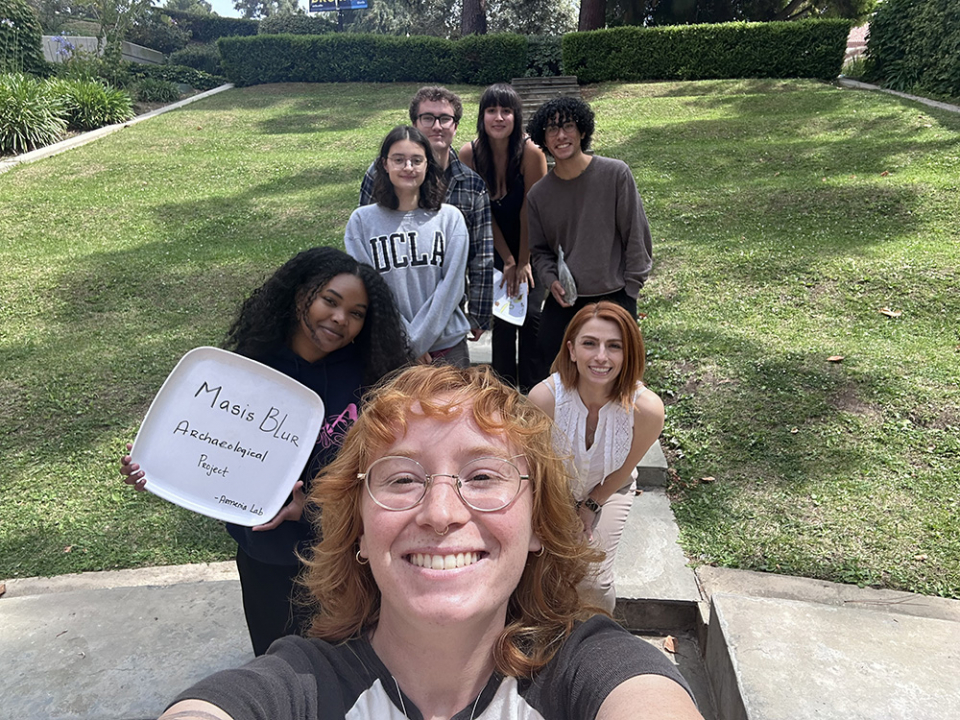
2023-2024 Cohort: Holland Fox, Mona Gorashi, Kristine Martirosyan-Olshansky, Chloe Gupta, Eric Large, Isaiah Lytle Hernandez, and Elizabeth Petrick.
Not pictured: Melissa Mejia Rodas
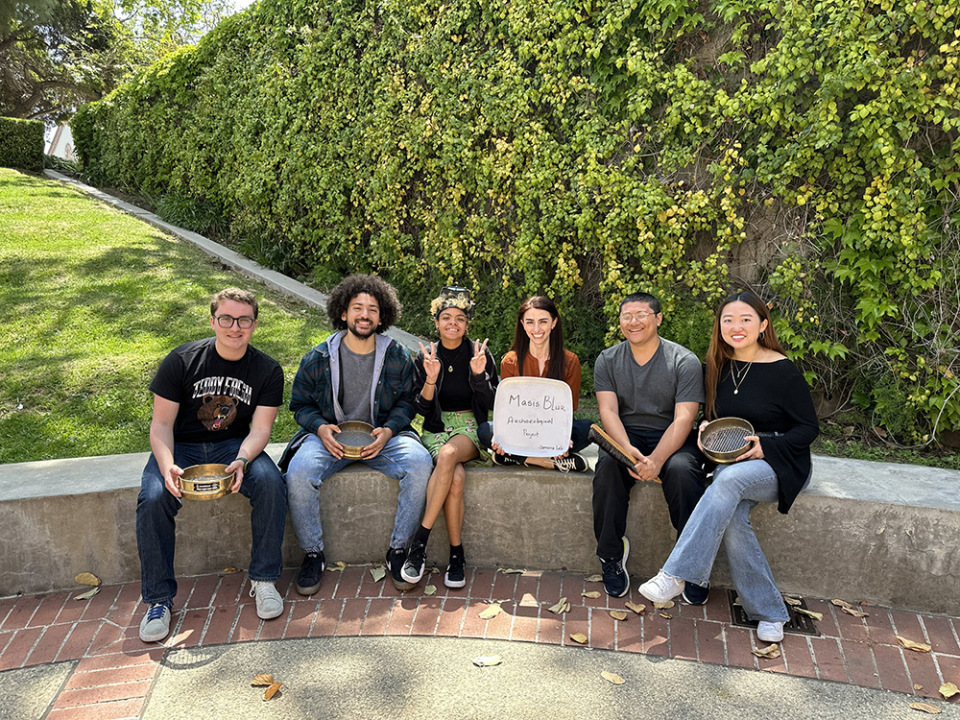
2022-2023 Cohort: Eric Large, Fahad Bagdadi, Shaolin Lee, Kristine Martirosyan-Olshansky, Aidan Choi, and Taylor Han.
2019-2020 Cohort: Erica Brown, Eli Cohen, Natalie Diaz, Madison Elder, Zachary Ferguson, and Johnathon Henderson
2018-2019 Cohort: Erica Brown, Eli Cohen, Natalie Diaz, Madison Elder, Zachary Ferguson, and Johnathon Henderson