


Past Events
Interested in Cotsen events? Sign up for our mailing list.The Teen Friends of Archaeology is excited to invite you to a lecture on the extensive site of Çatalhöyük by Dr. Ian Hodder:
The joys and blunders of 25 years of work at the 9000 year-old town of Çatalhöyük
Register at https://bit.ly/3BBWF0N
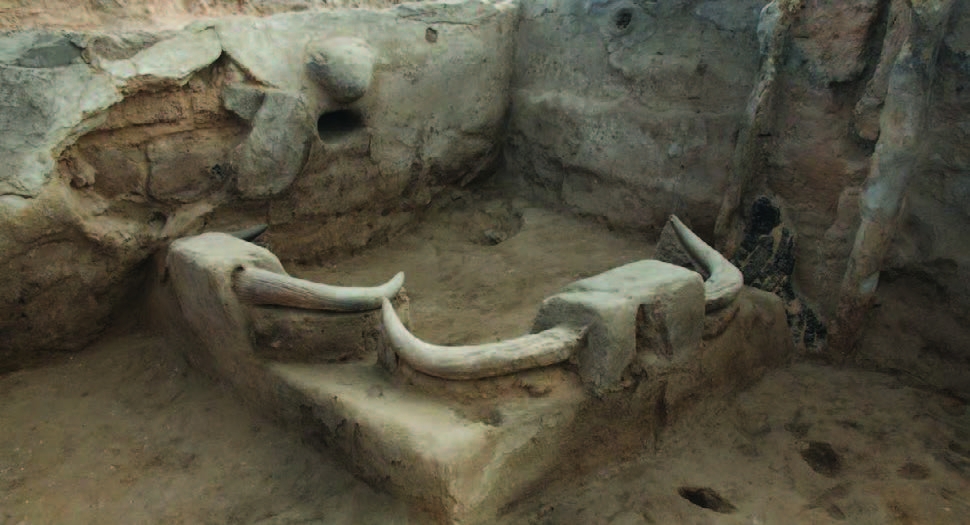
 Ian Hodder is the Dunlevie Family Professor in the Department of Anthropology at Stanford, and Director of the Stanford Archaeology Center. He previously taught in the Cambridge Archaeology department. Professor Hodder has also been conducting the excavation of the 9,000 year-old Neolithic site of Çatalhöyük in central Turkey since 1993. He is a well-published author who is known for his numerous books and papers on a wide variety of archaeological subjects.
Photos by Jason Quinlan, courtesy of the Çatalhöyük Research Project.
Contact Michelle Jacobson
Email mjacobson@ioa.ucla.edu
Phone
Contact
Phone
UCLA SNF Center for the Study of Hellenic Culture | UCLA Cotsen Institute of Archaeology | Archaeological Institute of America–LA County Society | Pan-Laconian Federation of United States and Canada present
Stavros Vlizos Associate Professor, Ionian University
Vicky Vlachou Université Libre de Bruxelles, Brussels
Register here
After registering, you will receive a confirmation email containing information about joining the meeting.
The Sanctuary of Apollon at Amyklai (Sparta) was inextricably associated in antiquity with the celebrated festival of the Hyakinthia. Ancient literary sources describe salient aspects of the festival and the cult that was centered around the tomb of the hero Hyakinthos and the altar of Apollo in two succeeding stages that never overlapped each other. Material evidence from the sanctuary area demonstrates the early beginnings of the cult and ritual, already since the mid-10th century BC. By the late 8th to early 7th century BC, the formal delimitation of the sanctuary area, the quantity and quality of the material deposits support the importance of the sanctuary and its festival within the formal institutions of the Spartan polis. It can be argued that the importance of the sanctuary may be related with the seniority of the shrine and the continuity of the ritual activities in this area over the centuries. The lecture shall focus on shifts in use and function of material culture that are parallel to transformations and changes of the social, political, and religious landscape of Sparta. Furthermore, the connection of the cult site to neighboring areas in proximity, further away, and parallel trajectory to the rest of the Spartan sanctuaries shall be discussed.
 After completing his studies at the University of Ioannina and the Ludwig-Maximilian University of Munich (Dr.Phil.), Stavros Vlizos first worked as a contract archaeologist at the Ministry of Culture (1997-2001) and then as a researcher and scientific associate at the Benaki Museum (2002-2013). As an Associate Professor, he teaches a wide range of courses in Museology and Archaeology in the Department of Archives, Library Studies and Museology at Ionian University. He is director of the Amykles Research Project, associate of the Athens Archaeological Society, corresponding member of the German Archaeological Institute, and co-founder of the Athens “Roman Seminar.” His research interests and publications refer to issues of promotion and management of cultural heritage and archaeological goods, as well as topics highlighting the material culture of Ancient and Roman Greece and the importance of ancient sanctuaries diachronically.
Vicky Vlachou studied History, Archaeology and History of Art at the University of Athens. She is currently a scientific member (Belgian) at the École française d’Athènes (EfA, membre). She is a scholar of the Early Iron Age Aegean (ca. 1000-600 BC). Her doctoral thesis (2010) was awarded the G.P. Oikonomos prize of the Class of Letters and Fine Arts of the Academy of Athens. She is a member of fieldwork and publication projects at Xobourgo on Tenos (Cyclades), Amykles (Sparta), Itanos, and Anavlochos (Eastern Crete). She is the editor of the collective volume Pots, Workshops and Early Iron Age Society: Function and Role of Ceramics in Early Greece (Études d’archéologie 8, Brussels 2015).
Contact Ellen Evaristo
Email eevaristo@humnet.ucla.edu
Phone
Gurmeet S Rai
Ms. Director, CRCI (India) Pvt Ltd
The Rajbagh Silk factory is a strand of the cultural legacy of Kashmir. Silk from Kashmir finds references in ancient, medieval and modern period narratives. In the 19th-20thC the bivoltine silk and crafts such as pashmina shawls from the valley were much in demand across the globe.
Embedded in the legacy of silk are also memories of pain. Kashmir has been embroiled in geo politics for decades which has caused much suffering in the valley. Further it was in 2014 that a massive flood hit the valley that devastated many lives and properties. The Rajbagh Silk factory was inundated with flood waters for over four weeks. Not losing hope, the workers managed to repair about 10 of 150 looms and several preloom machines and work at the factory resumed.
The Government is supporting conservation and revitalisation of the factory under a flood recovery program. The conservation plan seeks to use this opportunity as a trigger to conserve the built heritage, revitalise silk and handicraft based economy using innovation and creativity to enhance lines of communication between artisans and entrepreneurs across the nation and abroad, thus ushering in opportunities and hope for the artisans in the valley.
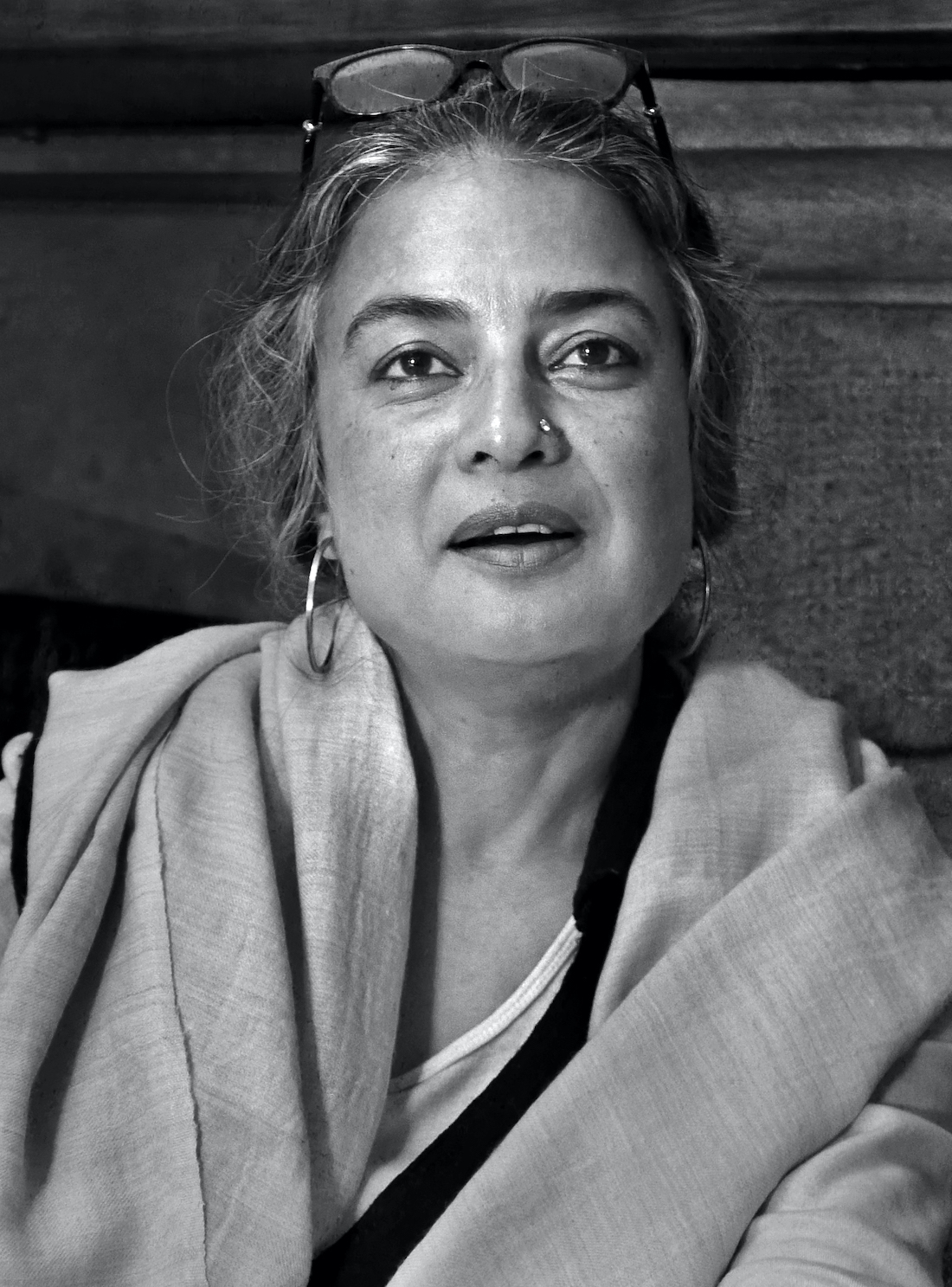 Gurmeet S Rai is an architect with specialisation in heritage conservation and management. She is among the first generation conservation architects in India and has undertaken projects across India related to architectural conservation, management plans for world heritage sites, urban conservation and development strategies for historic settlements, sustainable cultural heritage tourism plans, preparation of advisory and policy documents. Gurmeet was awarded ‘Award of Distinction’ by UNESCO under the Asia Pacific Architectural Heritage Awards in 2002 and 2004 following which she has been on their jury for over 15 years. In 2011, UNESCO appointed her as the lead consultant for preparation of ‘Cultural Heritage policy for Punjab’. She has also undertaken international assignments in Nepal and Myanmar and has been an advisor to UNESCO in heritage sector in several countries in South East Asia. She is currently a member of the Steering committee of TERRA2022, World Congress on Earthen Architectural Heritage (Getty Conservation Institute).
Contact Céline Wachsmuth
Email wachsmuthc@g.ucla.edu
Phone
Join us for a virtual Round Table to celebrate Marija Gimbutas (1921–1994), UNESCO's 2021 Centennial honoree. Marija Gimbutas was a professor of archaeology at UCLA and internationally renowned for her study of the arrival of the Proto-Indo-European languages and culture in Europe. One of her most original (and controversial) contributions has been validated recently by aDNA: the Kurgan Hypothesis and the arrival into Europe of the Proto-Indo-European speakers around 3500 BC. Introduced by Ernestine S. Elster, the participants include James Mallory, David Anthony, and Dorcas Brown with Willeke Wendrich as moderator.

James Mallory was born in 1945 in California and educated at Occidental College (AB, 1963) and UCLA where he received his PhD in Indo-European Studies (European Archaeology) in 1975. In 1977 he joined the Archaeology Department at Queen’s University Belfast from which he retired as Professor of Prehistoric Archaeology in 2011. He has specialized in both Indo-European archaeology where he has published In Search of the Indo-Europeans (1989), The Encyclopedia of Indo-European Culture (1997), and The Oxford Introduction to Proto-Indo-European and the Proto-Indo-European World (2006) and Irish Archaeology (The Archaeology of Ulster, 1991; The Origins of the Irish, 2013; and In Search of the Irish Dreamtime, 2016). He is a member of the Royal Irish Academy.
David Anthony is an archaeologist of the Eurasian steppes (esp. Russia, Ukraine, & Kazakhstan), known for his interdisciplinary research on the origins and spread of Indo-European languages, combining evidence from archaeology, ancient human DNA, linguistics, and comparative mythology. His most significant book, The Horse, the Wheel, and Language: How Bronze Age Riders from the Eurasian Steppes Shaped the Modern World, won the Society for American Archaeology prize for best scientific book in 2010. His entry into the Indo-European debate was facilitated by Marija Gimbutas’s groundbreaking English-language syntheses of eastern European archaeology. He is an associate in the Department of Human Evolutionary Biology at Harvard University, working in David Reich’s ancient DNA lab; and an emeritus professor at Hartwick College, Oneonta, NY.
Dorcas Brown was co-director of grant-supported studies of museum collections in Russia, Ukraine, Kazakhstan, and Hungary (her advanced degree is in Museum Studies); and later of archaeological excavations in the steppes near Samara, Russia and Razdolnoe, Ukraine. Singly or together, Brown and Anthony have published 70+ articles and chapters, including since 2015 three co-authored in Science and three in Nature on a variety of related topics: Bronze Age migrations out of the steppes proven by ancient DNA, with profound implications for the Indo-European debate; the domestication of the dog, from ancient wolf & dog DNA; the domestication of the horse, from ancient horse DNA; the origin of dairying in the steppes, based on dairy peptides preserved in dental calculus; and male adolescent initiation-into-warrior rituals, connected with their discovery and excavation of a Bronze Age boys’ initiation site in the Volga steppes. She is retired from Hartwick College.
Introductions by Ernestine S. Elster. Elster was a graduate student of Gimbutas and participated in four of her archaeological expeditions. She is currently the director of the Mediterranean Laboratory at the Cotsen Institute.
Moderated by Willeke Wendrich, Professor, UCLA Department of Near Eastern Languages and Cultures, is the Director of the Cotsen Institute of Archaeology.
Contact Michelle Jacobson
Email mjacobson@ioa.ucla.edu
Phone
In person with pizza
General introduction to the program and experimental archaeology with Dr. Wake demonstrating and teaching cordage making
Our first ever in person event
Contact
Phone
UCLA SNF Center for the Study of Hellenic Culture | Embassy of Greece in USA | UCLA Cotsen Institute of Archaeology | Archaeological Institute of America–LA County Society | present
Vassilis Lambrinoudakis
Professor Emeritus of Classical Archaeology
University of Athens
Register here
After registering, you will receive a confirmation email containing information about joining the meeting.
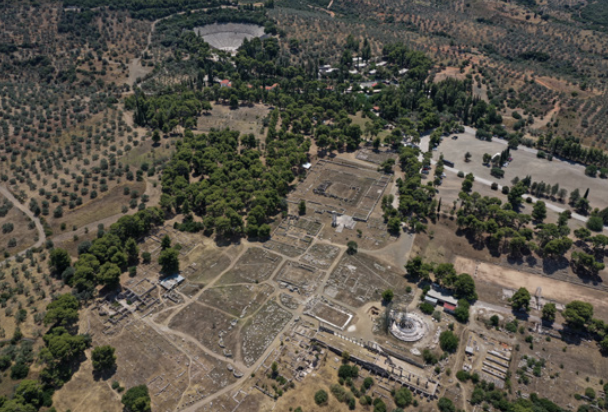
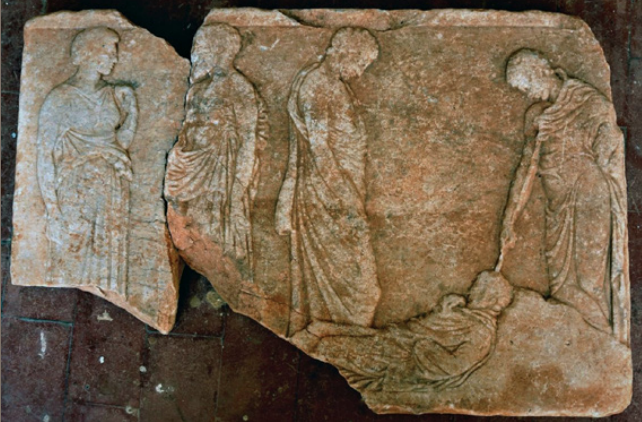
The unexpected finds during recent excavations in the sanctuary of Asclepius at Epidauros shed new light on the origins, cult, and function of Asclepius, the main Divine Healer of the Graeco-Roman world. An amazing ground-floor building that features α peristyle and basement hewn into the rock was excavated at the Tholos, the famous classical circular building with underground, meander-like passages. It defines the highly debated and mysterious function of the Tholos as the cult place of chthonic Asclepius, and explains his presence in Epidauros in the 7th century BC. A small portico, found under the later Abaton, preceded the latter as a primitive dormitory hall. It provides evidence for healing through incubation already in early archaic times. An ash altar and accommodations for ritual meals around it explains the parallel magic cure through the consumption of sacred food from the very beginning of the cult. The new finds enrich our knowledge of the sanctuary’s history and general healthcare in antiquity.
Her Excellency Alexandra Papadopoulou, Ambassador of Greece to the United States, will provide introductory remarks.
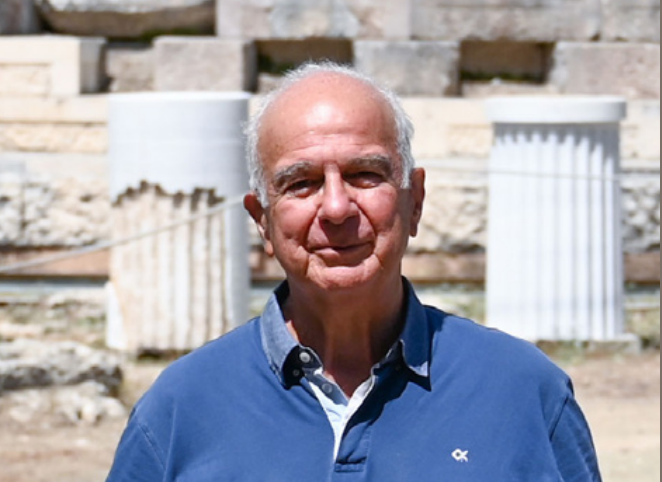 Vassilis Lambrinoudakis is professor emeritus of the University of Athens; corresponding member of the Académie des Inscriptions et Belles-Lettres, Paris; and the Akademie der Wissenschaften, Vienna. He studied History and Archaeology at the Universities of Athens, Munich and Bonn. He is member of the German Archeological Institute and the Austrian Archaeological Institute. He excavates mainly in Epidauros/Argolid and the island of Naxos in the Aegean See. He also conducted excavations on the island of Chios, in Marathon/Attica and in Palaiomanina/Acarnania. He directs projects of enhancement of archaeological sites in Naxos and Epidauros. In 2003, he earned the first prize of Europa Nostra for the excavation and the enhancement of the sites Yria and Sangri/Naxos. He has published 14 books and monographs, as well as 186 papers on ancient Greek architecture and art, ancient topography, ancient Greek religion, epigraphy, theory of Archaeology, and management of monuments. He was co-editor of the Lexicon Iconographicum Mythologiae Classicae (LIMC I-VIII) and of the Thesaurus Cultus et Rituum Antiquorum (ThesCRA I-VIII). In 2003, he was honored by the President of the Hellenic Republic “for promoting the Archaeology and the History of Greece throughout the world.”

Contact Ellen Evaristo
Email eevaristo@humnet.ucla.edu
Phone
UCLA SNF Center for the Study of Hellenic Culture | UCLA Cotsen Institute of Archaeology | Archaeological Institute of America–Los Angeles County Society present
Dr. Anastassios C. Antonaras
Head of Exhibitions, Communication and Education Department
Museum of Byzantine Culture, Thessaloniki
Register here
After registering, you will receive a confirmation email containing information about joining the meeting.
This lecture examines the diverse population that lived in Byzantine Thessaloniki and the surrounding area through three case studies: a young girl with African religious beliefs who lived in the late 3rd century, a Slavic lady of the late 8th century, and a group of archers from the 14th - 15th century who were trained in the east. The first case study is a young girl who was buried in a simple pit tomb in the eastern necropolis of Thessaloniki. She wore two amulets: a wooden one, probably of ebony, in the shape of a male head with strong African features, and an amber one in the shape of feline bust. A Slavic lady, the second case study, is identified by a special bead that was found during excavations in the castle of Rentina, east of Thessaloniki. Such beads are characteristic of the Slavic tribes and similar examples have been found from the Volga region and Germany to Greece. A special type of men’s utilitarian jewelry, the ring of an archer, presents the third case study. This is a type of ring that initially had the sole purpose of protecting the thumb when the reflective bow’s string was released. These case studies demonstrate that among the population that lived in Byzantine Thessaloniki were a number of foreigners whose identity is only revealed through the careful examination of excavated objects.
Dr. Anastassios C. Antonaras, a specialist in the history of glass, jewelry and textiles, is an archaeologist and curator. He is Head of the Exhibitions, Communication and Education Department at the Museum of Byzantine Culture in Thessaloniki. His books include: Glassworking, Ancient and Medieval: Terminology, Technology and Typology (2008); Roman and Early Christian Glassworking: Vessels from Thessaloniki and Its Region (which received a prize from the Academy of Athens in 2010); Fire and Sand: Ancient Glass in the Princeton University Art Museum (2012); Artisanal Production in Ancient and Byzantine Thessaloniki: Archaeological, Literary and Epigraphic Evidence (2016; repr. 2019); Glassware and Glassworking in Thessaloniki: 1st Century BC – 6th Century AD (2017); and The Art of Glass. Works from the Collection of the Museum of Byzantine Culture (2019). He is currently researching different aspects of glass production and glassware in Byzantine and Ottoman Empire and publishing the rich and diverse, ancient and Islamic glass collection of the Getty Villa Museum.

Contact Ellen Evaristo
Email eevaristo@humnet.ucla.edu
Phone
 Ayesha Fuentes
Stride Lecturer in Arts Conservation
Northumbria University
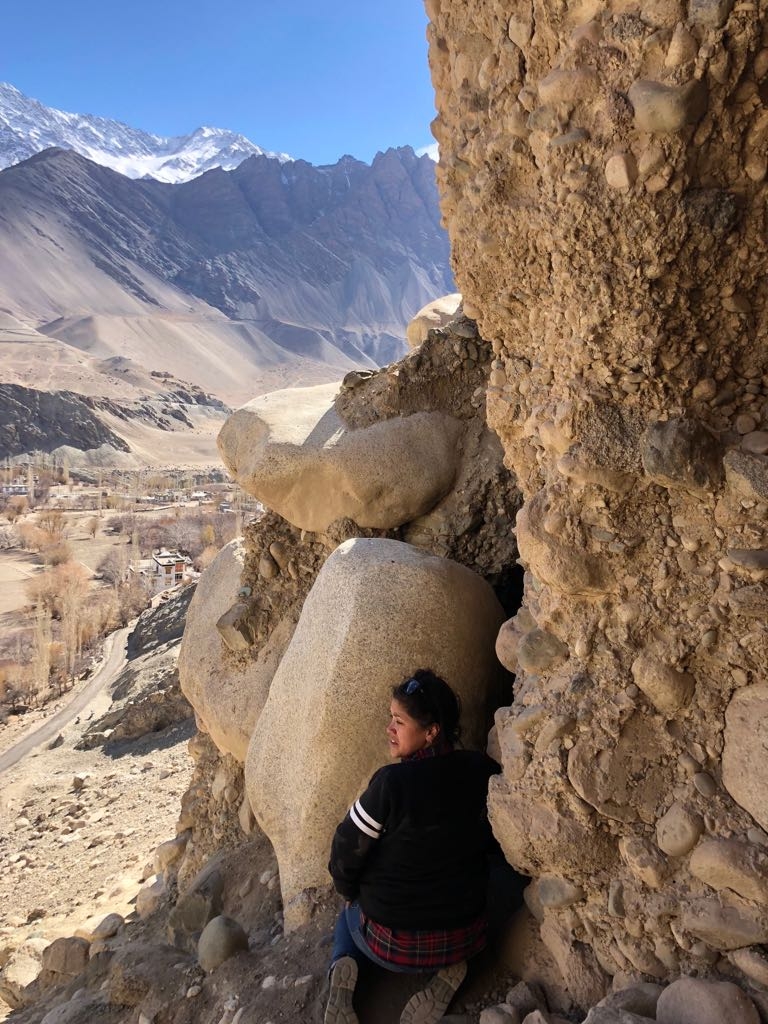
Ayesha Fuentes will discuss Tibetan and Himalayan religious use of ritual objects made with human skulls and femurs. Fuentes incorporates conservation methods, documentation, and interpretation of the material knowledge and techniques used to select, prepare, activate, maintain and exchange these objects. This project combines the technical examination of objects in museum collections with interviews and observations made across the Himalayan region and investigations of historical sources and cultural narratives. Her research highlights the longevity, function and value of these ritual instruments within diverse communities.
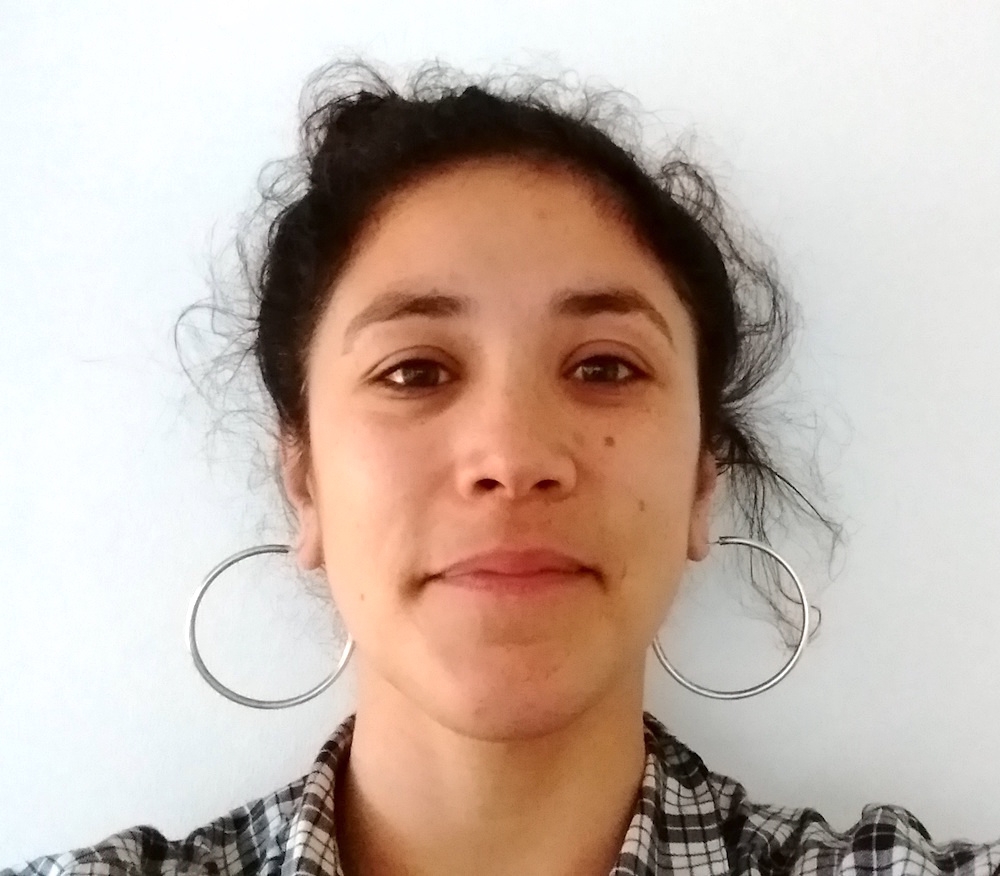 Ayesha Fuentes, Stride Lecturer in Arts Conservation at Northumbria University, is an objects conservator and technical art historian specializing in Asian material heritage. She is a graduate of the UCLA/Getty MA program in Conservation of Ethnographic Materials (2014) and a former employee at the Fowler Museum at UCLA. She recently submitted her doctoral dissertation on the use of human remains in Tibetan ritual objects at School of Oriental and African Studies (SOAS), University of London, where she was a Neil Kreitman and Overseas Research Scholar.
Contact Michelle Jacobson
Email mjacobson@ioa.ucla.edu
Phone
Jerry Moore
Department of Anthropology
California State University Dominguez Hills
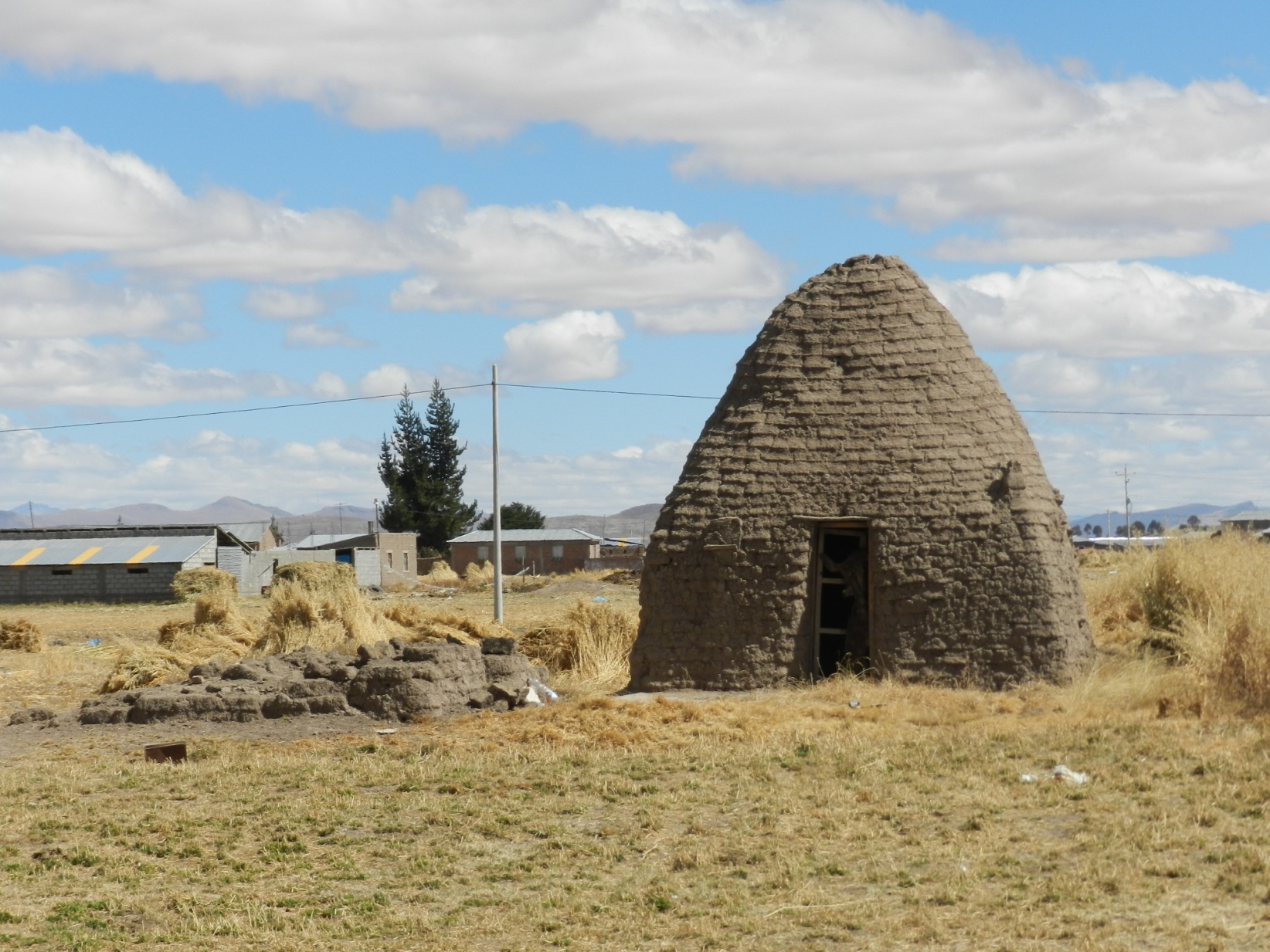
Moore's principal expertise is on the prehistoric architecture and cultural landscapes in the Andes. Archaeologists typically view architectural features of dwellings and other domestic architecture as built projects in which materials are modified according to a preconceived design in the builders’ minds. Although archaeologists usually acknowledge the different processes that transform buildings into archaeological features and sites, they tend not to understand how different buildings and construction methods inherently shape the archaeological record. This has direct implications for archaeological inferences about ancient households. Dr. Moore will discuss these issues referencing select case studies from Mesoamerica and the Andes.
Contact Michelle Jacobson
Email mjacobson@ioa.ucla.edu
Phone
- ‹ previous
- 18 of 52
- next ›