


Past Events
Interested in Cotsen events? Sign up for our mailing list.Presented by
Dr. Stephen Acabado
Associate Professor, Department of Anthropology, UCLA
 Current research in Philippine archaeology is pushing back against the colonial foundations of the discipline and the hegemonic status of the Three Age System in the region, including the broader Southeast Asian archaeology. The Three-Age Model, developed for Scandinavia, was imposed on Southeast Asia through its application in Northeast Thailand archaeological record, particularly the reference to the Bronze Age and the farmer-led migration in island Southeast Asia and the Pacific. Recent archaeological data now refute these models. In the Philippines, the long-accepted Neolithic migration by rice farmers, is repudiated the absence of wet-rice in the archaeological record that predates the 16th century. Following the lead of recent scholars, Acabado stresses that Philippine archaeology, in particular, and Southeast Asian archaeology, in general, must reject these essentialist frameworks in favor of forward-facing “emergent” paradigms. Doing so allows Southeast Asian archaeologists to decolonize chronology building and devote less time to worrying about origins to focus instead on understanding process and to incorporating Indigenous perspectives in archaeological interpretation.
Register in advance for this meeting:
https://ucla.zoom.us/meeting/register/tJMlf-2qpzIuGt02NbLgx-ULeGHi1lDJWNmC
After registering, you will receive a confirmation email containing information about joining the meeting.
 Stephen Acabado is associate professor of anthropology at UCLA. His research revolves around indigenous responses to colonialism, particularly in the Philippines. He is a strong advocate of an engaged archaeology where descendant communities are involved in the research process.
Grace Barretto-Tesoro is professor of archaeology at the University of the Philippines Diliman. Her archaeological work is focused on changing representation of various segments of society from the late precolonial period to the early Spanish period Philippines.
Contact Michelle Jacobson
Email mjacobson@ioa.ucla.edu
Phone
Lylliam Posadas
Friday January 29th, 11:00am - 12:00pm (PT)
Conservators can play a significant role in the repatriation process and in addressing concerns in the care of sensitive collections. Conservators and repatriation staff can work together with tribal and community representatives to address some of the unjust histories of museum acquisitions and develop new approaches for collections stewardship. Professional ethics in the conservation field,as well as technical knowledge and skill sets, can be a source of support for repatriationand ethical stewardship. Diversity, equity and inclusion (DEAI) policies and programs are critical in building systems that encourage considerate and conscientious professional practices that can support tribal and community ownership and control of collections.This program will discuss how conservators, both students and professionals, can support the repatriation of Indigenous belongings under the Native American Graves Protection and Repatriation Act (NAGPRA). It will also explore how conservators can address concerns beyond NAGPRA that are relevant to the repatriation process and experience and to the training of future generations of conservators.
 Lylliam Posadas has experience with repatriation and collaborative and community-driven research within museums, universities, and community organizations. She is interested in how institutional policies support the development and sustainability of collaborative research and collections care practices. Lylliam focuses on systemic institutional change in support of repatriation, collections care and access, representation and diversity initiatives, and the use of non-destructive and non-invasive methods of investigating community-driven research questions. She received an MSc in the Technology and Analysis of Archaeological Materials from University College London and a double BA in Anthropology and Psychology from the University of California, Los Angeles. Lylliam has participated in field research, including preservation efforts in Ghana, Peru, Louisiana, and California and also serves on several boards and committees, including the Mellon Opportunity for Diversity in Conservation. Lylliam is also involved in community-driven research, policy development, and advocacy in public health which informs her approach to heritage work

Contact Jennifer McGough
Email jenmcgough@g.ucla.edu
Phone
Dr. Piphal Heng, ACLS Postdoctoral Fellow, Northern Illinois University
Tuesday, January 19, 2021 10:00 AM (Pacific Time) Zoom Webinar
“Compassion” was an instrumental state’s infrastructure in building, maintaining, and expanding Angkor’s power from the 9th through 15th centuries CE. Angkorian civilization is known for its intricately carved monumental architecture, large water reservoirs, and interconnected road and canal systems. The relative importance of religion in Angkorian state governance has been debated for more than a century: to what extent can we separate Angkorian “church” from Angkorian state? This lecture provides a background to Angkor and emphasizes two rulers. The first was Yaśovarman I (889-910 CE), who established religious foundations throughout his polity to support his population and nurture religious pluralism. Attention concentrates on Jayavarman VII (1181-1218 CE), whose embrace of Buddhism and state projects were undergirded by a commitment to compassion. His many religious foundations (temples with reservoirs, etc.) housed religious specialists, hosted universities, and served as community anchors. They also expressed state power, marked its territories, and provided myriad social services to Angkorian Khmers.
Dr. Piphal Heng is a postdoctoral fellow at the Center for Southeast Asian Studies at Northern Illinois University. He received his PhD degree in Anthropology from the University of Hawai‘i at Mānoa. Heng’s archaeological research themes include religious change, urbanism, settlement patterns, political economy, and sociopolitical organizational shift. He is also interested in the intersection between heritage management, collaborative/public archaeology, knowledge production, and urban development. His current project explores the transformation of urban and rural settlements in response to the demographic and political changes that took place with the adoption of Theravada Buddhism in Angkor (14th-18th century Cambodia).
Registration for Zoom Link:
Sponsored by the UCLA Center for Southeast Asian Studies
Contact UCLA Center for Southeast Asian Studies
Email cseas@international.ucla.edu
Phone
Brittany Cox
Horological Conservator, Memoria Technica
Friday December 18th, 11:00am - 12:00pm (PT)
In conservation there is always the question of tangible versus intangible qualities. Is one more important than the other? Should form follow function, or function follow form? If a functional object is beautifully presented and preserved, but doesn’t actually work, is it successful? The conservation of dynamic objects, especially in the case of automata and mechanical magic, confront these questions head-on. We will examine these questions by looking at a number of objects and their treatments.
 Brittany Nicole Cox founded her private conservation practice and studio Memoria Technica in 2015. Her lifelong passion for horology has seen her through nine years in higher education where she earned her WOSTEP, CW21, and SAWTA watchmaking certifications, two clockmaking certifications, and a Masters in the Conservation of Clocks and Related Dynamic Objects from West Dean College, UK. Her original work has been exhibited at the Museum of Arts and Design in New York and she is currently working on a series of bestiary automata inspired by illuminated texts and a manuscript to be published by Penguin Press.


Contact Jennifer McGough
Email jenmcgough@g.ucla.edu
Phone
Jeanne Marie Teutonico
Associate Director, Strategy and Special Initiatives
Getty Conservation Institute
Friday November 20th, 11:00am - 12:00pm (PT)
Please note, this talk will not be recorded.
The Getty Conservation Institute (GCI) is best described as a private, international research organization that is part of a larger philanthropic enterprise dedicated to the understanding, conservation and enjoyment of the visual arts. In this, the GCI is somewhat unique in the constellation of not-for-profit organizations operating in the heritage sector.
The presentation will provide an introduction to the Getty Conservation Institute – its mission, strategic priorities and methodological approach to heritage conservation. Select examples of GCI field work (in Egypt, Peru and the Mediterranean) will be used to illustrate diverse conservation contexts and challenges, and to reflect on the evolution of conservation practice over the last twenty years.
The presentation will conclude with some consideration of future challenges –both global concerns and specific issues facing the heritage conservation field.
 Jeanne Marie Teutonico is currently Associate Director, Strategy and Special Initiatives,atthe Getty Conservation Institute (GCI) in Los Angeles where her responsibilities include the development of strategic priorities for the Institute and oversight of GCI publications. An architectural conservator with over thirty years of experiencein the conservation of buildings and sites, she holds an A.B. (Hons) in art history from Princeton University and an M.Sc. in historic preservation from Columbia University, Graduate School of Architecture, Planning and Preservation. Prior to joining the GCI in 1999, Jeanne Marie was a conservator and educator on the staff of the International Centre for the Study of the Preservation and Restoration of Cultural Property (ICCROM) in Rome and, later, of English Heritage in Londonwhere she led a large technical research and publications program. She is published widely and maintains research interests in the conservation and sustainable use of traditional building materials. She was an invited Resident at the American Academy in Rome in 2008 and is a Fellow of the Association for Preservation Technology, the Society of Antiquaries, and the International Institute for Conservation.
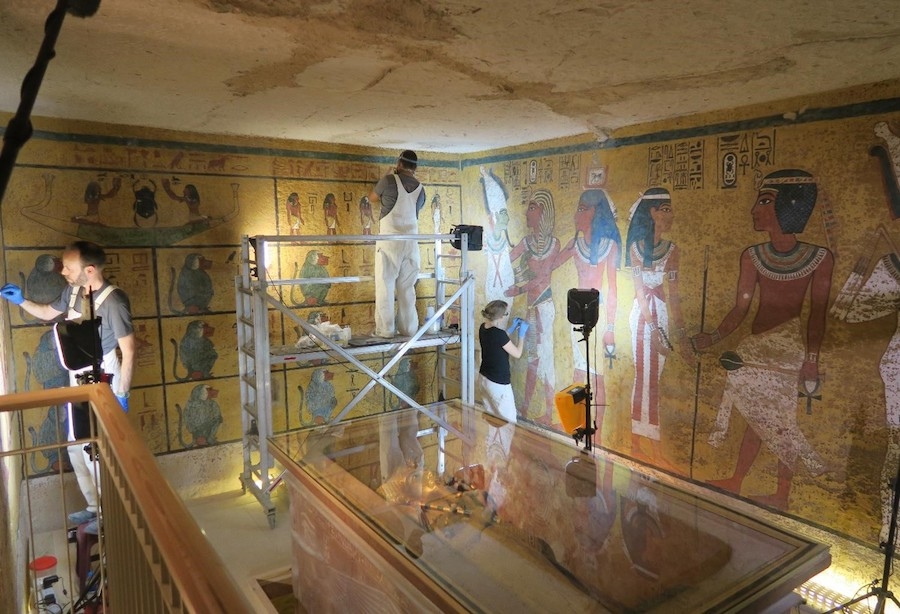
Figure 1. Conservation of the wall paintings in the burial chamber of the Tomb of Tutankhamen in the Valley of the Kings, Egypt. The Getty Conservation Institute, in collaboration with Egypt’s Ministry of Antiquities, has recently completed a multi-year project that included study and conservation of the tomb’s wall paintings, environmental and infrastructure improvements, and training for future care of the site.
Figure 2. Training regarding the conservation and management of archaeological sites and 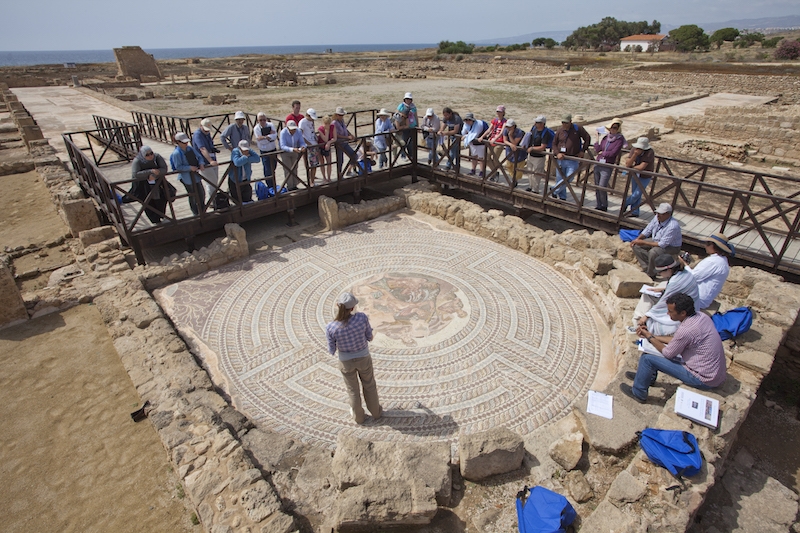 mosaics at the ancient site of Paphos in Cyprus. Over the last ten years, the Getty Conservation Institute has collaborated with the Getty Foundation, ICCROM and the International Committee fortheConservation of Mosaics(ICCM) in an initiative known as MOSAIKON with the aim of improving the conservation, presentation and maintenance of archaeological mosaics in the Mediterranean region. Activities have included education and capacity building, the development of locally sustainable conservation practices, model field projects, and the dissemination of information in a variety of forms.
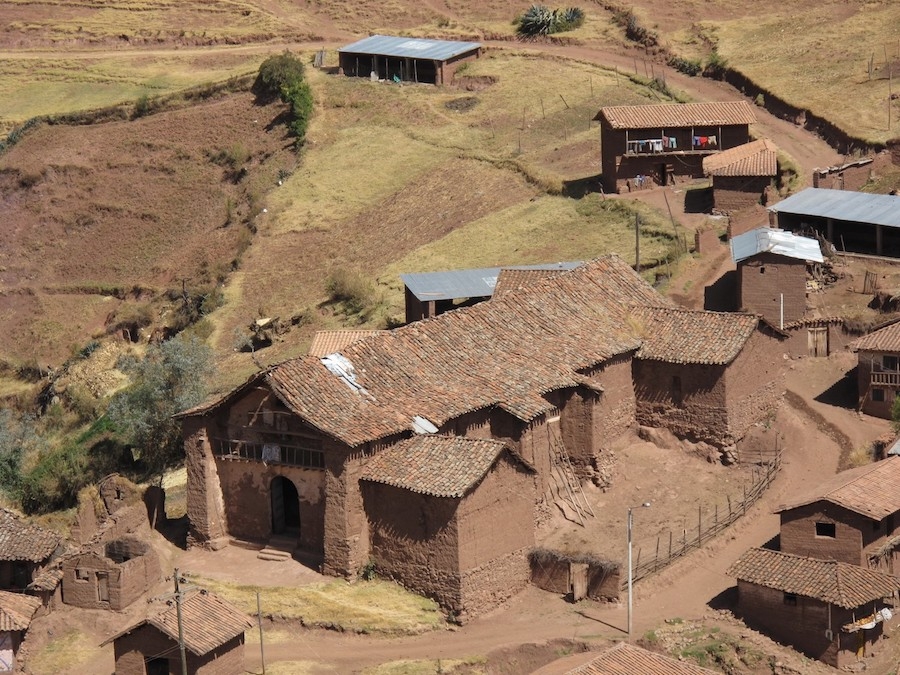 Figure 3. The church of Santiago Apóstolin Kuño Tambo, Peru. This seventeenth century earthen building, located in a remote village high in the Andes, is richly decorated with wall paintings and has been in continuous use as a place of worship since its original construction. As part of its Earthen Architecture Initiative, the Getty ConservationInstitute, in collaboration with the School of Science and Engineering at the Catholic University in Lima and the Peruvian Ministry of Culture, has developed and implemented seismic retrofit techniques that will enhance the building’s performance without negatively impacting the significant decorative finishes.
Contact Jennifer McGough
Email jenmcgough@g.ucla.edu
Phone
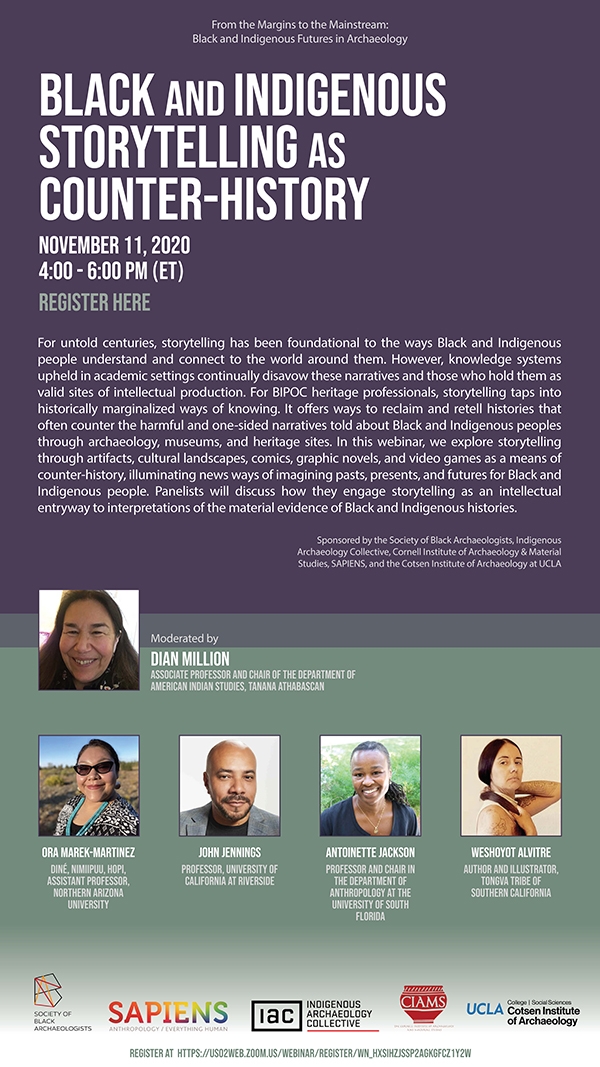
For untold centuries, storytelling has been foundational to the ways Black and Indigenous people understand and connect to the world around them. However, knowledge systems upheld in academic settings continually disavow these narratives and those who hold them as valid sites of intellectual production. For BIPOC heritage professionals, storytelling taps into historically marginalized ways of knowing. It offers ways to reclaim and retell histories that often counter the harmful and one-sided narratives told about Black and Indigenous peoples through archaeology, museums, and heritage sites. In this webinar, we explore storytelling through artifacts, cultural landscapes, comics, graphic novels, and video games as a means of counter-history, illuminating news ways of imagining pasts, presents, and futures for Black and Indigenous people. Panelists will discuss how they engage storytelling as an intellectual entryway to interpretations of the material evidence of Black and Indigenous histories
November 11th from 4-6 pm ET / 1-3 pm PT
Register here: https://us02web.zoom.us/webinar/register/WN_HXSihZjSSP2AgkgFCz1y2w
Contact
Phone
Artur Petrosyan
Archaeologist, Researcher, Department of Early Archaeology
Institute of Archaeology and Ethnography, National Academy of Sciences Republic of Armenia
November 6th 2020 12:00pm PT (contingent on the developing situation in Armenia)
Register here
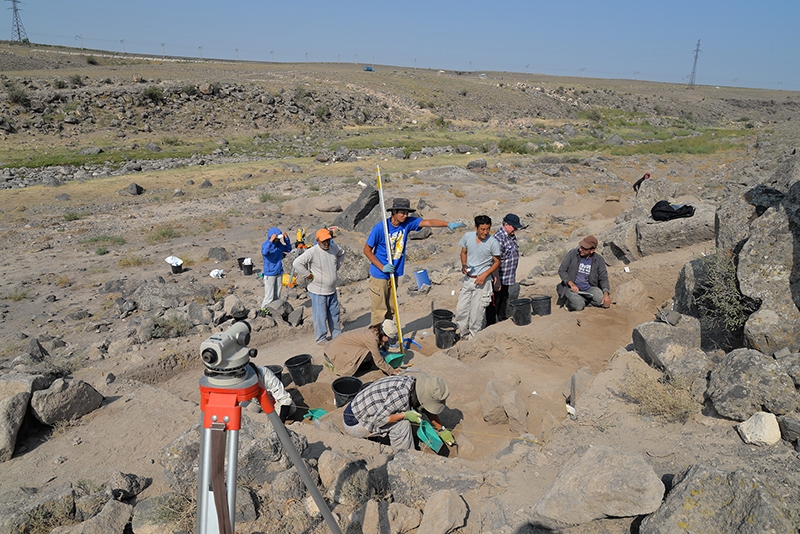
Until recently the Early Holocene sites of the Kura and the Araxes river basins were not known and the question of Neolithization in the region were based on the study of Late Neolithic-Chalcolithic settlements grouped into the “Aratashen-Shulaveri-Shomutepe” tradition, located in valleys and plains. Fieldwork activities implemented during last 20 years led to the discovery of series of Old and Early Holocene sites in Armenia, Georgia and Azerbaijan including a stratified cave and rock-shelter as well as open-air sites and settlements, filling the gap between the 10th and early 6th millennium BC. While excavations and research of the Early and Middle Holocene sites continues, the accumulated information to date allows us to look at the process of Neolithization in the Kura and the Araxes river basins from a new perspective. The data suggests dividing the Early Holocene archaeological sequence into two chronological groups or steps. Group 1/Step 1 with chronometric dates between 10.000 – 7300 Cal BC is described by seasonal hunting and habitation camps on higher elevations organized inside caves and rock-shelters in combination with built structures in front of them as well as short-term open-air activities. Some shifts in the economic lifeways and technological production of tools (so-called “apnagyugh” tools) is obvious even though many similarities can be noticed with the lifestyle of the Late Pleistocene hunter-gatherers. Group 2/Step 2 span between 7300 – 6200 Cal BC, when the first settlements and sites with ritual function appeared, in parallel with the cave sites. New data indicate that the origin of the early farming culture in the Araxes River valley is local even though there is noticeable influence from the southern cultural centers.
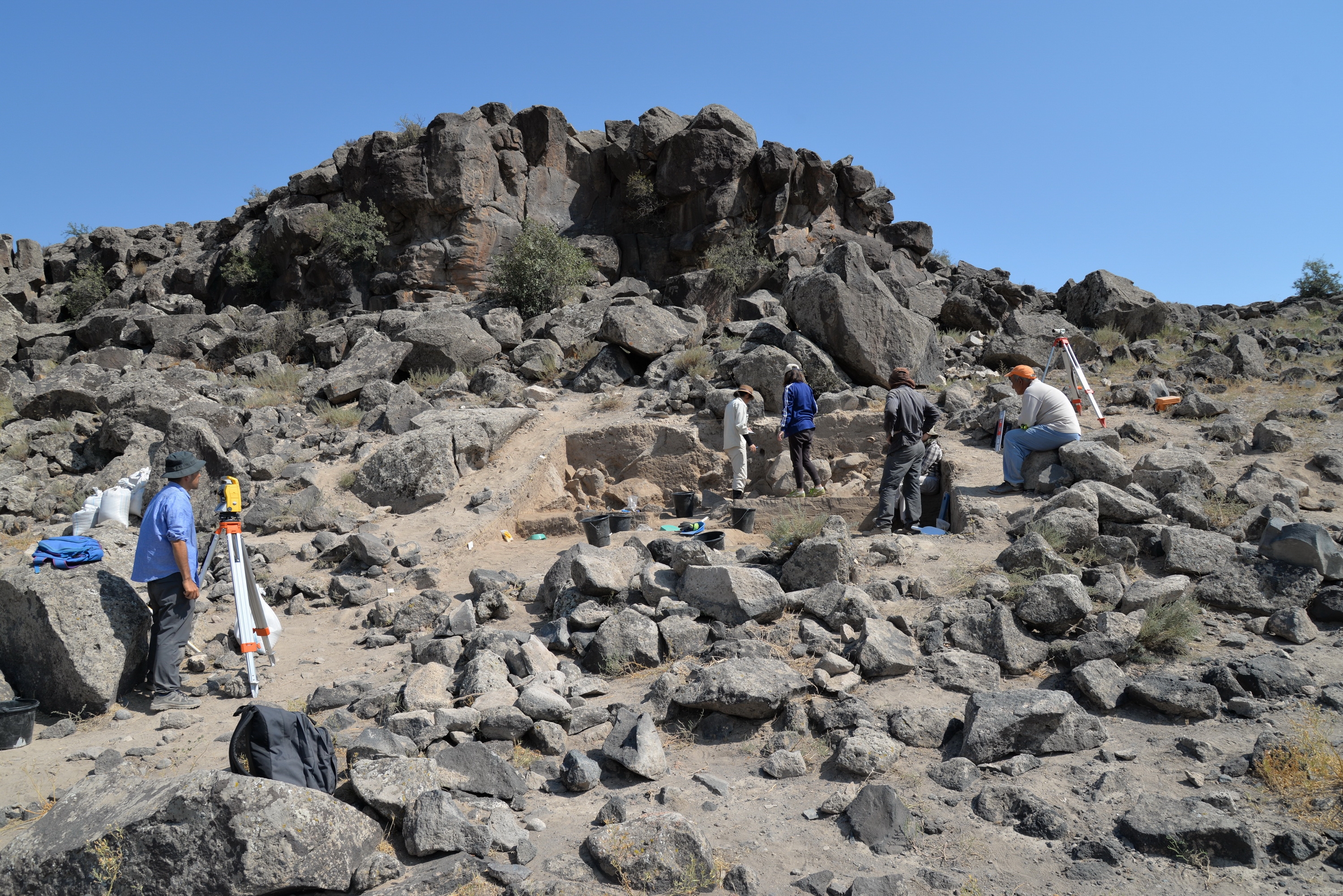
Artur Petrosyan received his PhD at the Institute of Archaeology and Ethnography of NAS RA in 2010, where he has worked since 2007 as an Archaeologist and Researcher. He has participated in a number of archaeological expeditions in Armenia, Italy (Calvatone, Sassofortino) and UAE (Vadi al Hello). Currently he is the co-director of Armenian – Italian, Armenian – Japanese, Armenian – German and Armenian – Chinese expeditions in Kotayk, Vayots Dzor, Ararat and Armavir regions of Armenia. Petrosyan has published extensively.
Contact Michelle Jacobson
Email mjacobson@ioa.ucla.edu
Phone
Dr. Ziad Al-Saad
PhD, Professor of cultural heritage conservation and management at the Faculty of Archaeology and Anthropology Yarmouk University
Friday October 30th, 11:00am - 12:00pm (PT)
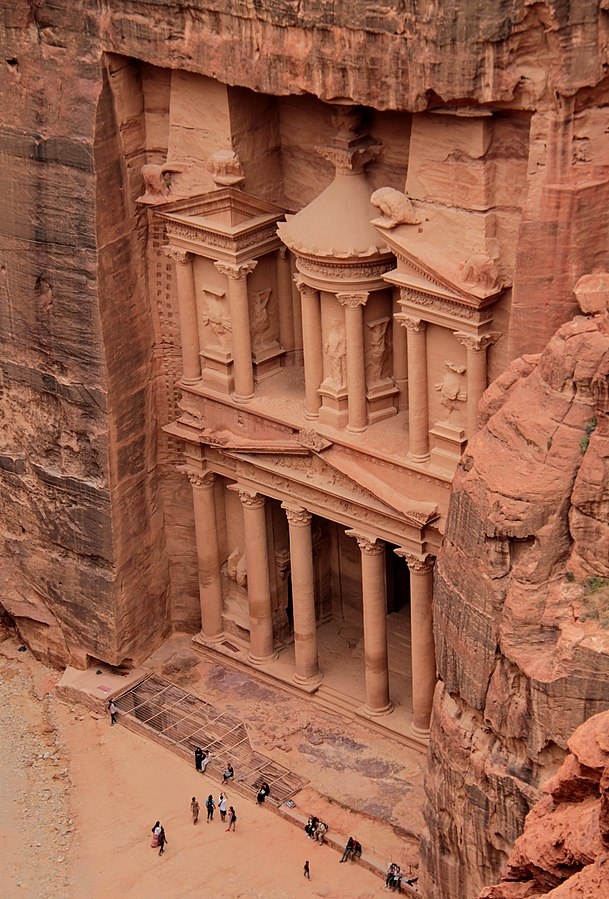 Petra has been classified as being of World Heritage standards and is included on the world heritage list.The entire site of Petra, with its 2000 listed rock-carved monuments of outstanding cultural and historical importance, is in real danger. Over the last decade the process of deterioration of the Petra monuments has dramatically increased. The destruction of the monuments is induced by a combination of natural and human factors. Weathering and erosion caused by environmental agents have caused a lot of severe damage to the monuments. The impact of weathering and eroding factors on the monumentshave been exacerbated by natural faults in the rock; infiltration of water and growth of plants in rock fissures. In addition to natural damage, cultural and socio-economic factors represent a principle threat to the integrity of the site. It is quite obvious that the monuments of Petra need an urgent care. If the deterioration processes are allowed to continue, this irreplaceable heritage will disappear and tourism, which centers on these monuments, will diminish. It is of no doubt that the conservation and preservation of Petra monuments is a very challenging and difficult task. The complexity of the situation is apparent and the efforts needed are tremendous. Different types of
 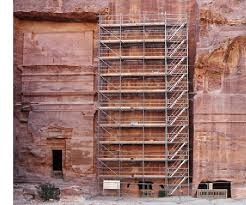 preventive and remedialmeasures are needed to be adopted and executed in order to control the fast growing threats faced by the monuments. Although preventive measures to arrest the principal causes of weathering by adopting certain actions such as repairing the ancient Nabateans hydrological system, certain remedialsteps seem to be inevitable. The fragile monuments are in bad need for consolidation to be able to resist the threat of the natural weathering. This task is the main aim of a research project that has been conducted by the Faculty of Archaeology and Anthropology at Yarmouk University in cooperation with the Bavarian State Conservation Laboratories.
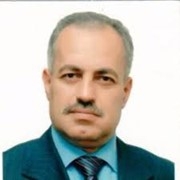 Prof. Ziad Al-Saad, Professor of cultural heritage conservation and management at the Faculty of Archaeology and Anthropology Yarmouk University; Obtained Ph.D. in conservation and archaeometry from University of London in 1992. He served as Chair of Department of Archaeology in the period 1994-1999 then became the Director of the Insitutue of Archaeology and Anthropology at Yarmouk University which he managed to transform into a full-fledged faculty in 1999 and became its first Dean for two terms until 2007. He then moved to the newly established German-Jordanian University as Vice President for Academic affairs for two years and led the university strategic planning and quality assurance programs for two years. In 2010 he returned to Yarmouk University as Vice President for Research and International Affairs. He was then appointed by the Cabinet as Director General of the Department of Antiquities of Jordan until the end of 2011 when he returned to Yarmouk University.
Prof. Al-Saad's research interest generally is in the areas of conservation and scientific analysis of archaeological materials with a particular interest in the conservation and stabilization of archaeological finds especially metallic artifacts and stone monuments. Has been actively involved in the preservation and conservation of spectacular stone-carved monuments of the Nabatean city of Petra.
Contact Jennifer McGough
Email jenmcgough@g.ucla.edu
Phone
Miqayel Badalyan
Director of the “Erebuni” Historical & Archaeological Museum-Reserve, Yerevan, Republic of Armenia.
Friday, October 23, 2020 – 12:00pm PT (contingent on the developing situation in Armenia)
Register here
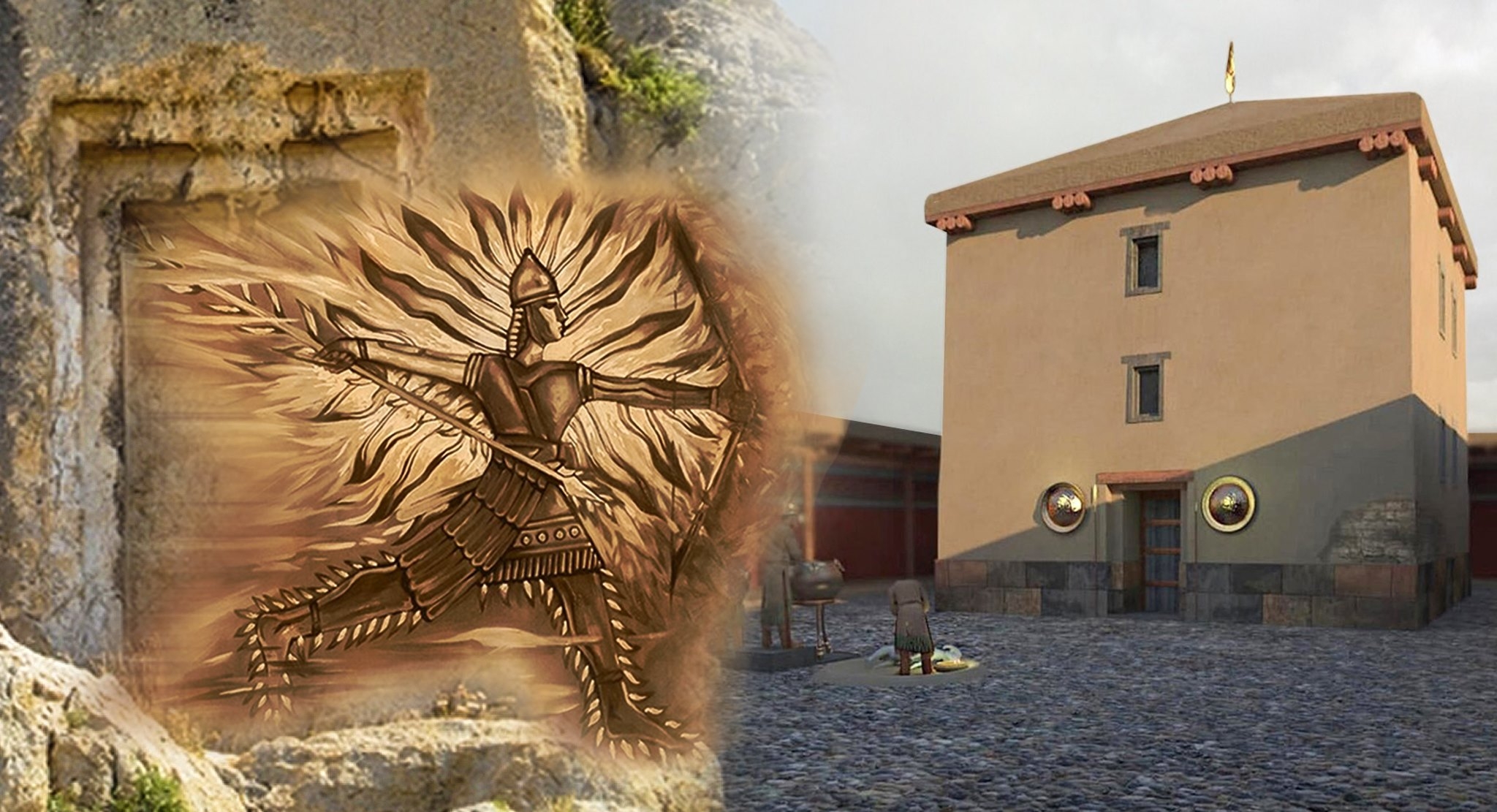
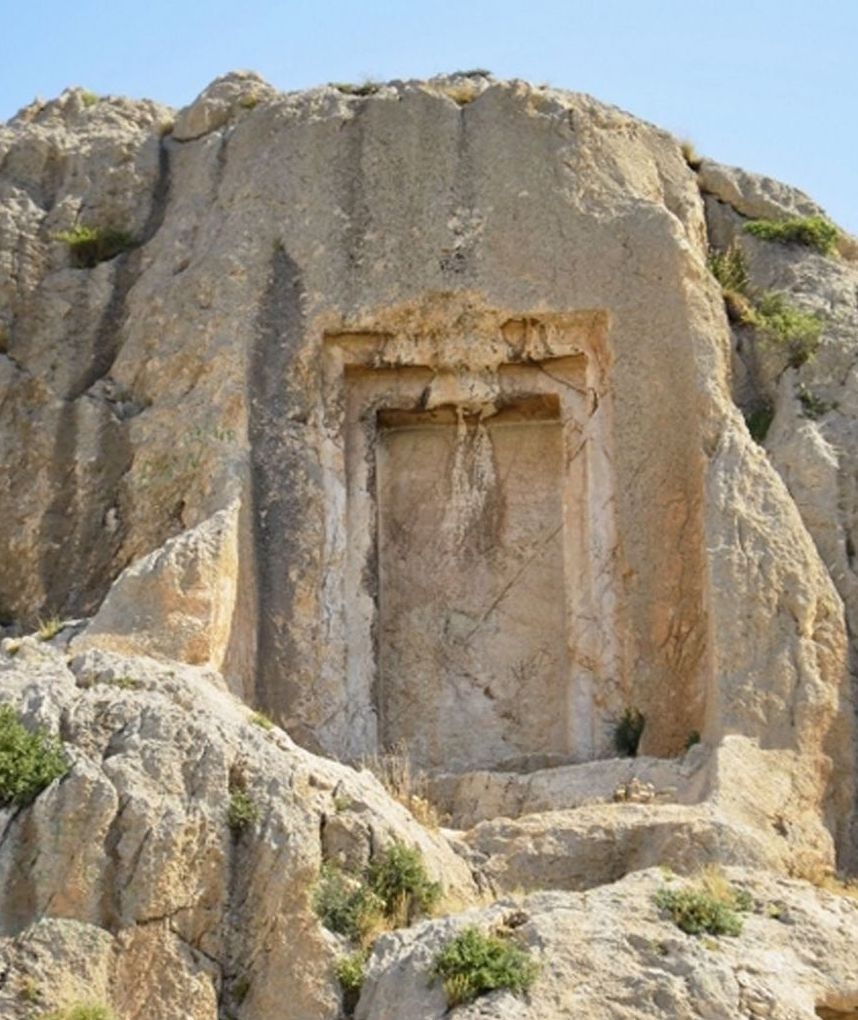
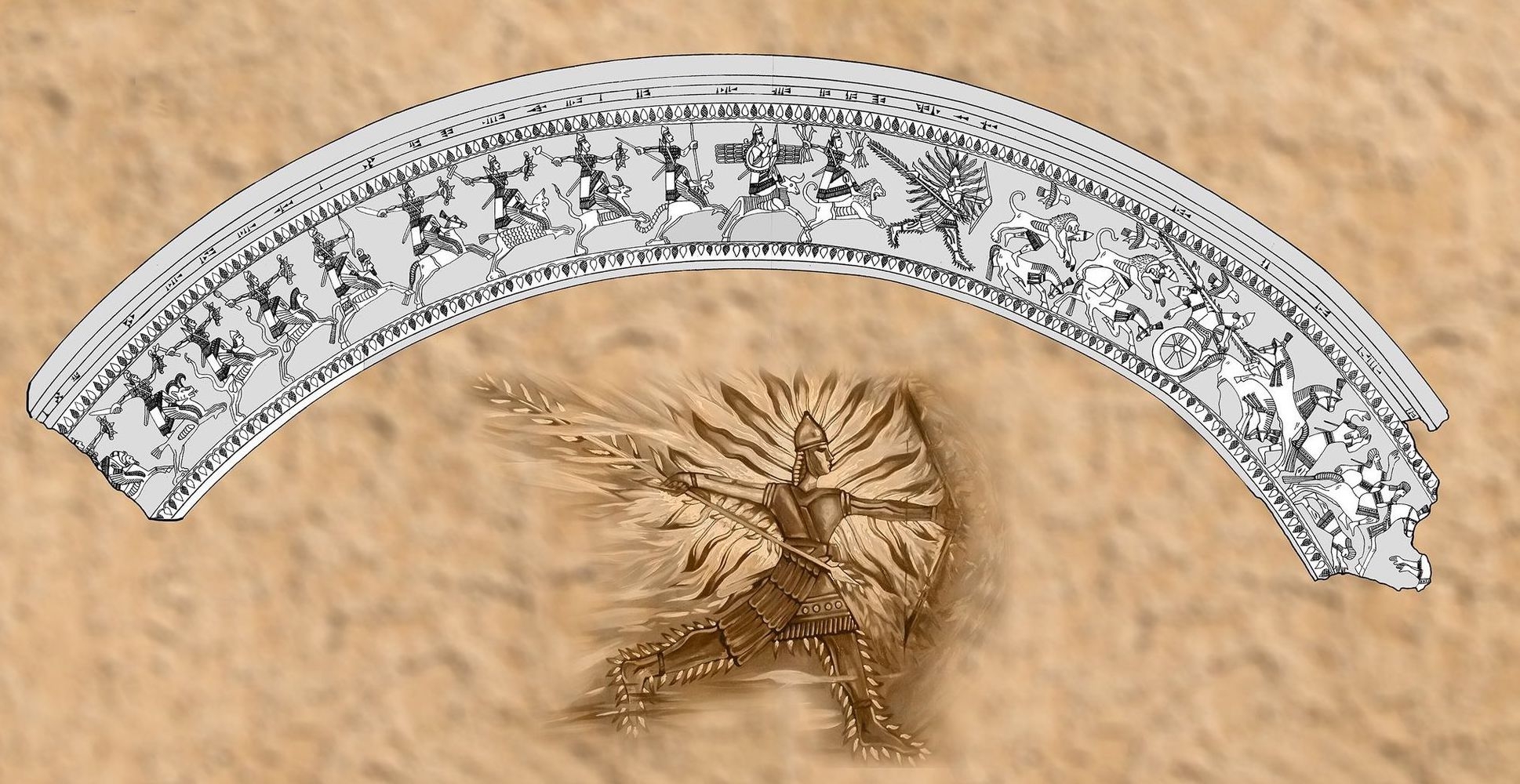
Based on archaeological data, as well as philological and visual art sources, the presentation focuses on the religious beliefs of the Urartian kingdom. In this regard, the role of religion in Urartian royal ideology, the cultic activities, symbols, and iconography of the gods of the Urartian pantheon will be discussed as well.
Contact Michelle Jacobson
Email mjacobson@ioa.ucla.edu
Phone
Marisa E. Marthari, Director Emerita Of Prehistoric & Classical Antiquities For The Cyclades And Samos
Saturday, October 17th, 10:00am PST
The site of Skarkos, the largest of all known Early Cycladic II sites, stands on a commanding hill overlooking a coastal plain and one of the largest sheltered 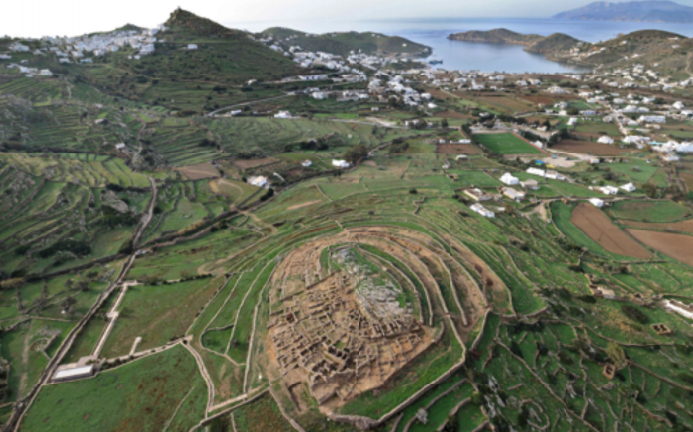 harbors in the Cyclades. The excavations conducted by the author brought to light a multiperiod prehistoric site and, most significantly, a settlement of the mid-third millennium BC. More than one-third of the settlement has been excavated over the last fifteen years. The walls of the buildings are preserved to a maximum height of four meters. This unique preservation provides a clear idea of the layout, architecture of settlements in the Cyclades during the peak of the Early Cycladic world. Skarkos has a well-organised plan, with wide streets and squares, two-storey rectangular buildings (at least 55 have been uncovered) and a complicated drainage system. The inhabitants developed agricultural, craft, and trading activities, and especially prominent were masons, marble-carvers (two early marble workshops were excavated), and potters. Skarkos has also produced evidence of seals and sealing, including a large number of clay sealimpressed objects marking ownership or personal identity.
Marisa Marthari is a graduate of the National and Kapodistrian University of 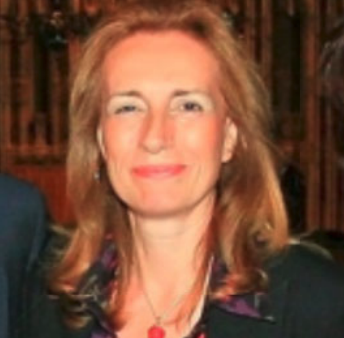 Athens (MA and PhD in Aegean Archaeology: “Akrotiri, Thera: The Pottery of the Volcanic Destruction Level.” Dr. Marthari is Ephor of Antiquities (Emerita) of the Greek Archaeological Service, Director of the excavations at Skarkos on Ios, and Kastri on Syros. She was formerly Director of the Ephoreia of Prehistoric and Classical Antiquities for the Cyclades and Samos, where she conducted numerous excavations and museum exhibitions. Her presentation on Skarkos was the winner of 2008 Grand Prize for the European Union Europa Nostra Award.
This talk will be offered on Zoom. Please RSVP by clicking here to receive the link.
Contact
Email hellenic@humnet.ucla.edu
Phone
- ‹ previous
- 4 of 7
- next ›