


Event: WEDS TALKS: The Land Past: Transylvania and the Transformation of Bronze Age Europe
Date & Time
March 4, 2026 - 12:00pm to 1:00pm Save to your calendar
Contact Information
Sumiji Takahahshisutakahashi@ioa.ucla.edu
310-825-4169
Location
Fowler A222 (Seminar Room)Event Type
Pizza TalkEvent Details
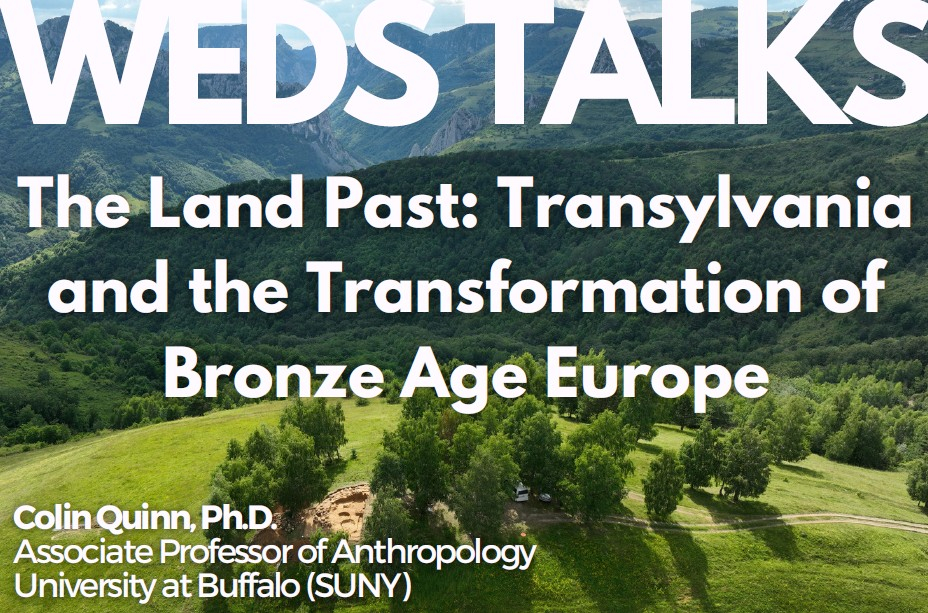
ABSTRACT: We are in the middle of a boom of innovations in archaeological science – including ancient DNA, isotopic analyses, paleoenvironmental reconstructions, geospatial techniques, and Bayesian chronological modeling – which are providing previously unmatched insights into the lives of people and cultural dynamics in the past. Anthropological archaeology is poised to take advantage of these innovations through the development of new models of transformative change that prioritize human agency within larger systems, do not rely on prime movers, and avoid previously rejected concepts of unilineal social evolution. In this talk, I draw upon the theoretical concept of shatter zones to better understand the conditions, causes, and consequences of transformative changes that resulted in the establishment of permanent social hierarchies with inequality in Bronze Age Europe (2700-1300 BCE). I center my work in Transylvania – the land past the forest – which with its rich copper, gold, tin, and salt deposits was one of the most important resource procurement zones in Europe. I argue that changes that resulted in the establishment of permanent social hierarchies with inequality were made
possible by the convergence of integrative institutions and large disruptive events, including waves of large-scale migrations, climate change, warfare, and new innovations that created the opportunity for people to transform economic networks and infrastructures. People in Transylvania’s mining regions used their landscape to navigate this complex social world as new systems of hierarchy rose and fell and rose again around them. Ultimately this is a story of disruption, and what comes next.
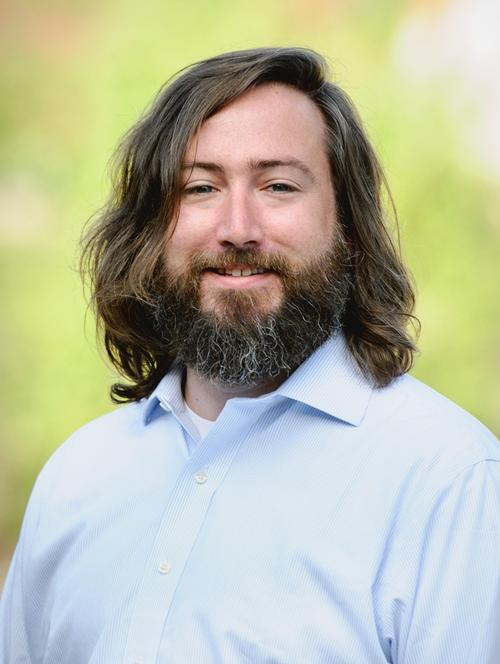
BIO: Colin Quinn is an Associate Professor of Anthropology at the University at Buffalo. His research interests center on emergent inequality, human-environment interaction in mining landscapes, and social transformations.