


The Stones of Tiahuanaco
Backlist
Series: Monographs 75ISBN: 978-1-931745-67-3
Publication Date: Feb 2013
Price: Hb $57.00, eBook $35.00
Order this book here!
- Print: Order from our distributor
- Electronic: Kindle eBook
- Open Access: PDF
Return to catalog
Jean-Pierre Protzen and Stella Nair
The remains of the artful gateways, platforms, walls, and sculpture at Tiahuanaco, an important Middle Horizon site at the southern end of Lake Titicaca in Bolivia, have for centuries sparked what has seemed like unanswerable questions about how they were made. The masons’ highly sophisticated knowledge of mathematics, geometry, and stonecraft is evident in the tight joints and perfectly sharp, right angles of these fine examples of Andean cut-stone architecture. 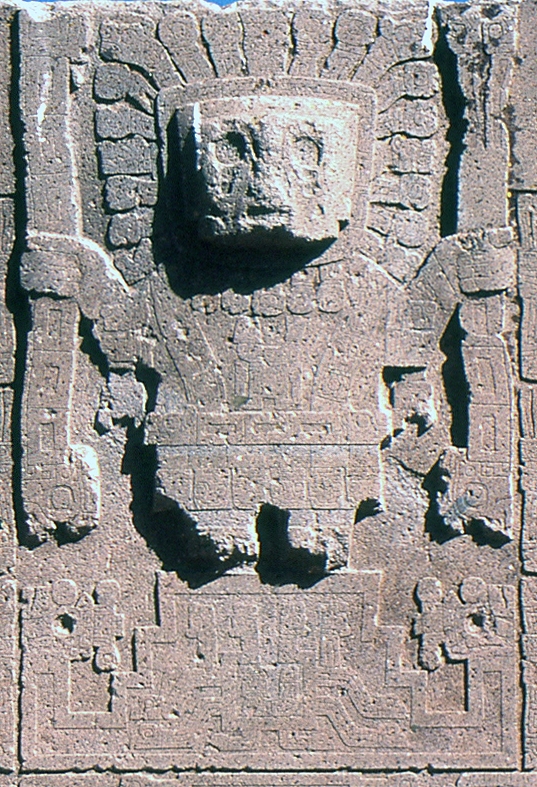 The Inca prized the precise stone masonry of this important site, which is considered by many scholars to be the precursor of the stonebuilding traditions of their civilization, which flourished four hundred years after the decline of Tiahuanaco. Protzen and Nair refute this long-held theory, arguing that Inca architecture could have been inspired by Tiahuanaco, but was not derivative of it. Looking to the stone itself for answers, the authors performed original experiments with stone tools to better understand how the artisans had shaped and finished the stone, revealing a new appreciation for their pre-metallurgic accomplishments.